
As Deadly Virus Spreads, Burial Teams Become Targets of Public Anger
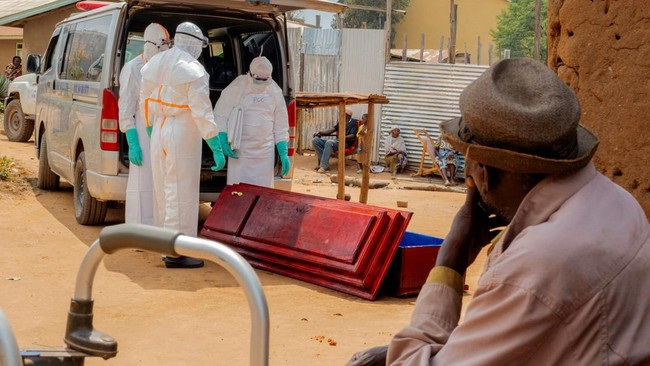
Jakarta, CNBC Indonesia - The Ebola outbreak in the Democratic Republic of Congo (DRC) threatens not only patients and medical personnel, but also the officers who handle the deceased.
In Ituri Province, burial teams must work amid exhaustion, fear of infection, and anger from victims’ families. Yuma Adolphe, a member of one burial team, said the pressure of the work has grown heavier as the death toll rises.
“It is difficult, but we try to push ourselves beyond our limits,” he told The Associated Press, quoted on Monday (7/9/2026).
Since the outbreak spread in mid-May, small teams like Adolphe’s have been deployed to various transmission hotspots to dig graves, prepare the deceased, and ensure burials proceed safely. They are paid around US$20, or approximately Rp352,000, per day, forming part of the frontline workforce striving to halt transmission.
However, the task brings them face to face with grieving families. The bodies of Ebola patients must be handled by trained officers because the virus can remain active after death, meaning families are not free to touch the deceased or carry out all their traditional funeral rituals.
“Normally, the body is handed over to the family, who can then arrange it as they wish according to our African customs,” said Adolphe, noting that the ban on performing certain rituals has become a source of misunderstanding and sparked anger towards the officers.
Since May, health workers and burial teams have reportedly been attacked several times by victims’ families in the epicentre of the outbreak. Jeanne Alasha, the military governor of Ituri’s adviser on health and humanitarian affairs, stressed that attacks on officers can carry legal sanctions.
Public anger was evident at the funeral of Justine Habineno, a 36-year-old choir member who died of Ebola. Her mother, Sofia Wanito, said she was only allowed to view the body through a hospital window and could not touch the coffin.
“In the past, we did not die like this. I could not even wrap her body myself and pay my last respects,” she said.
Amid armed conflict, displacement, a weak health system, and high population movement, containing the outbreak has become increasingly difficult. Another burial team member, Benjamin Muhindo, said his family worries he might bring the virus home, yet he continues to carry out his duties.
“We work under pressure and are constantly racing against time,” he said.
“We have no choice. We are here to protect our community,” he added.
Source: jawawa.id (https://jawawa.id/newsitem/as-deadly-virus-spreads-burial-teams-become-targets-of-public-anger-1788792722)
Originally published by CNBC Indonesia (https://www.cnbcindonesia.com/news/20260907141856-4-765820/virus-mematikan-menyebar-tim-pemakaman-jadi-sasaran-kemarahan-warga), translated from Indonesian