
As Connectivity Needs Become Increasingly Dynamic, National Banks Strengthen Digital Infrastructure
Massive digital transformation is driving the national banking industry to strengthen technological infrastructure that possesses not only large capacity but also the ability to adapt quickly to changing business needs.
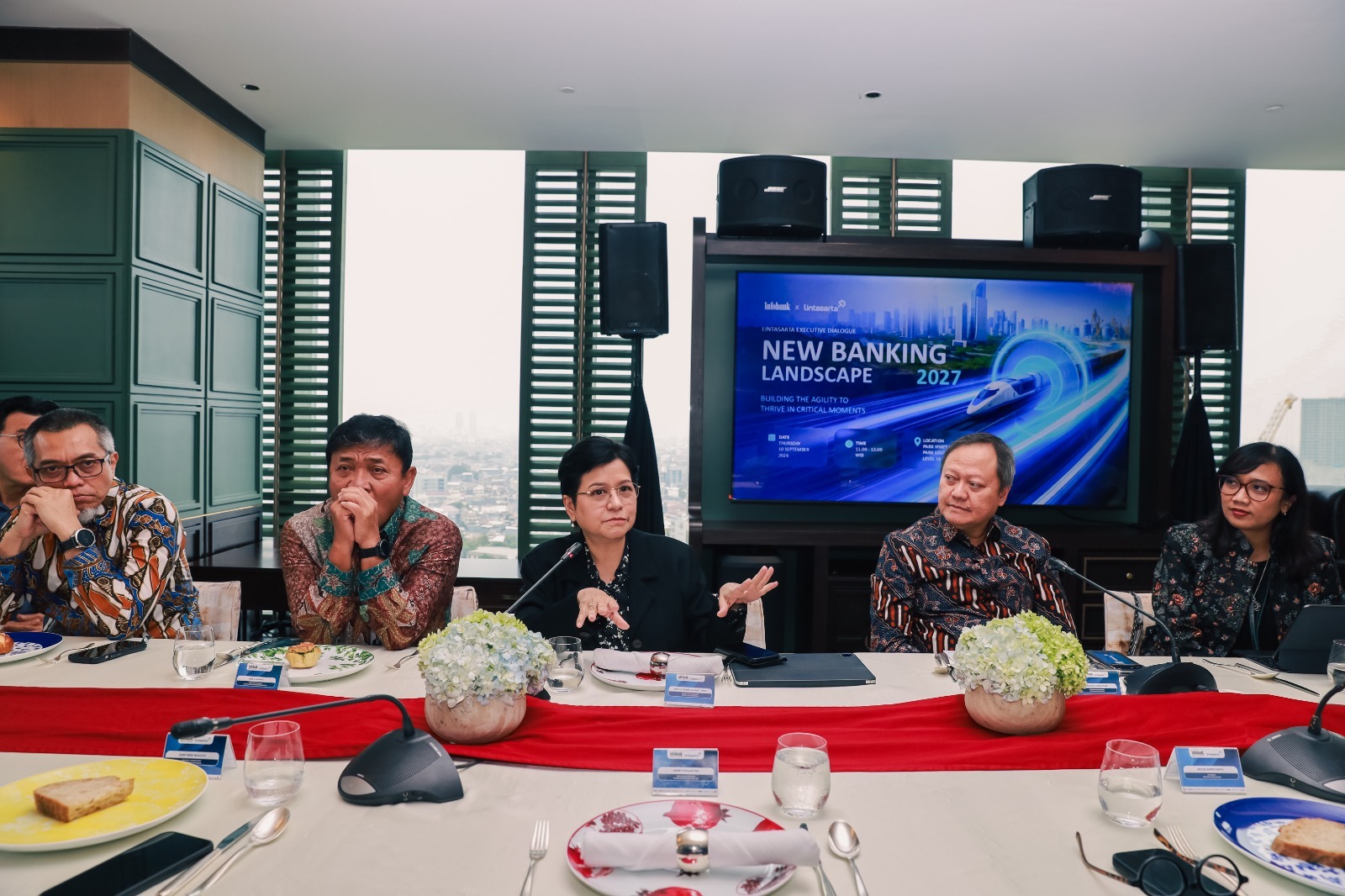
This requirement was the focus of the Lintas andarta Executive Dialogue, themed ‘Mastering Digital Infrastructure in the Intelligent Banking Era Through Bandwidth on Demand (BWoD)’, held by Lintasarta alongside Infobank in Jakarta on Thursday (10/09/2026). The forum brought together leaders from national and multinational banks within Himbara, Perbanas, and Asbanda, alongside high-ranking officials from Bank Indonesia and the Financial Services Authority (OJK). The meeting served as a strategic space to discuss digital infrastructure readiness in facing the increasingly dynamic developments of the banking industry.
One of the primary challenges faced by the banking sector is the change in technological capacity requirements, which can occur within specific periods and unexpectedly. Periods such as month-end, year-end closing, payroll processing, disaster recovery, and the launch of new applications can significantly increase connectivity capacity needs.
To address these needs, Lintasarta introduced the Bandwidth on Demand (BWoD) solution, which allows banks to adjust bandwidth capacity more flexibly and independently. This solution offers capacities of up to 1 Gbps in technically ready areas, the ability to increase or decrease capacity as needed, and self-service capabilities through the Ultima Super App. Lintasarta President Director & CEO, Armand Hermawan, stated that banking digitalisation requires infrastructure capable of following business changes rapidly.
“Digital infrastructure is not enough to just have large capacity; it must be able to adapt quickly, flexibly, and measurably,” said Armand. According to Armand, banking capacity can fluctuate following month-end, year-end closing, payroll processing, disaster recovery, application launches, and unscheduled conditions. Therefore, connectivity needs to evolve from fixed infrastructure to something more adaptive.
This transformation needs to be supported by four main capabilities: being agile in responding to change, scalable in adjusting capacity, resilient in maintaining reliability, and ready to face peak events, disaster recovery, and regulatory demands. Through BWoD, Armand noted that after the initial setup process, subsequent bandwidth changes can be performed independently via Ultima without manual ordering or new installations. Capacity can be adjusted based on the subscribed service, with support of up to 1,000 Mbps on certain tiers. “We want to provide agility to banks to manage connectivity capacity according to their operational needs,” said Armand.
BWoD is one of the implementations of Lintasarta’s Intelligent Core, which integrates customers, the Ultima Super App, the Intelligent Core Engine, and the core network in a process that supports real-time execution and autonomous decision-making. This approach allows connectivity management to be carried out more quickly and automatically.
In the initial phase, BWoD is available in 84 cities across Java in 2026, with coverage expansion planned gradually towards a national scale. “This innovation strengthens our commitment as a digital banking infrastructure partner with connectivity that is more adaptive to business needs,” concluded Armand.
OJK Board of Commissioners member for the 2022-2026 period, Sophia Isabella Wattimena, emphasised the importance of strengthening technological infrastructure to support banking digital transformation. “Banking digital transformation needs to go hand-in-hand with the strengthening of technological infrastructure capabilities. Reliability, security, risk management, and the infrastructure’s ability to support industry needs are becoming increasingly important,” she concluded.