
As Argo Service Marks 31 Years, KAI Continues to Enhance Intercity Travel Comfort
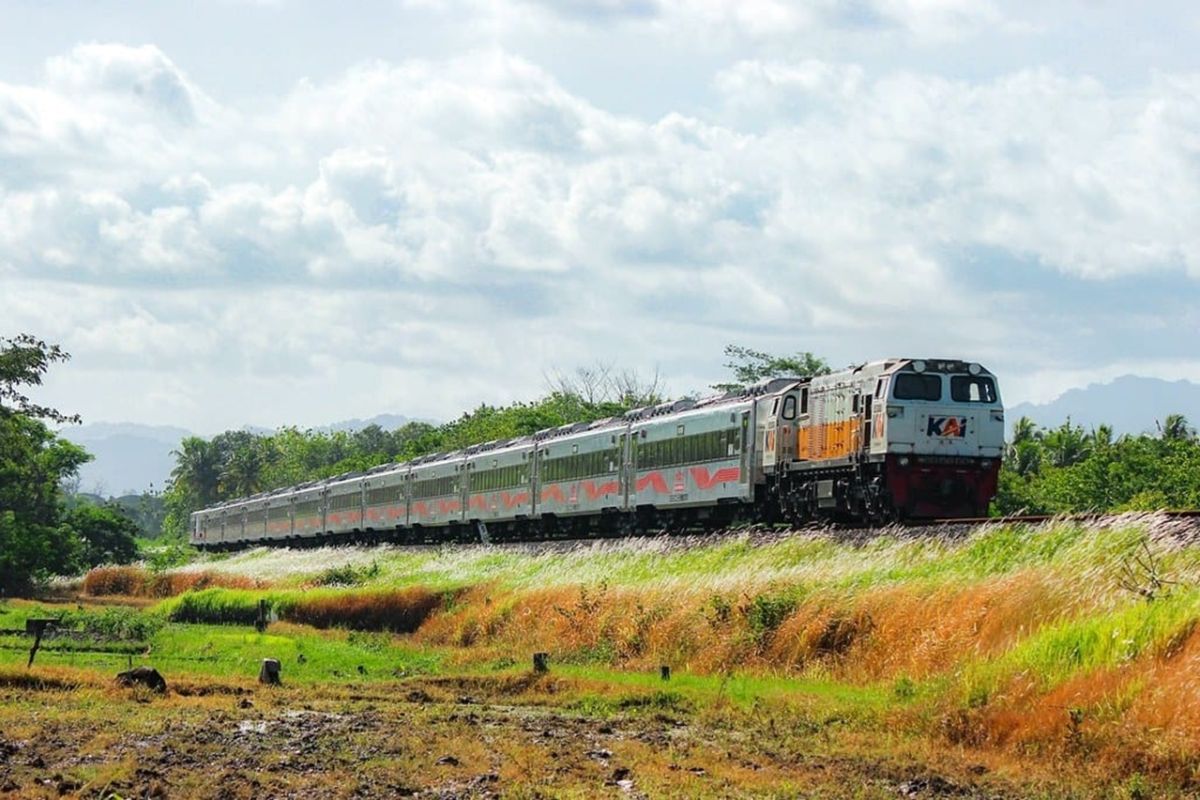
The transformation over three decades has been marked by updates to rolling stock, increased capacity, and faster travel times. The launch of the Argo Bromo JS-950 by Perumka, the predecessor of PT Kereta Api Indonesia (Persero), on 31 July 1995 became a milestone in the development of intercity train travel in Indonesia. Two years later, Argo Bromo Anggrek began operations on 24 September 1997, expanding the Argo service family.
Over more than thirty years, intercity travel standards have continued to evolve in line with customer needs. Updates have encompassed rolling stock, interior design, seating comfort, onboard facilities, travel time, service class options, and digital conveniences from the moment customers plan their journey.
Vice President of Corporate Communication at KAI, Anne Purba, stated that the Argo legacy forms an important part of KAI’s journey in improving intercity service quality while maintaining safety and punctuality as priorities. ‘For nearly 31 years, the Argo legacy has grown alongside customer needs. Updates to rolling stock, facilities, travel time, and digital services are continuously carried out to make intercity travel more comfortable and relevant to people’s mobility patterns,’ Anne said.
Currently, the Argo name is used on eight services, including Argo Wilis on the Bandung–Surabaya Gubeng round trip, Argo Semeru on the Gambir–Surabaya Gubeng round trip, and Argo Lawu and Argo Dwipangga on the Gambir–Solo Balapan round trip. The Argo name also applies to Argo Sindoro, Argo Muria, and Argo Merbabu on the Gambir–Semarang Tawang Bank Jateng round trip, as well as Argo Anjasmoro on the Gambir–Surabaya Pasar Turi round trip. These services are positioned in the premium executive segment with operational speeds of up to 120 kilometres per hour.
Data shows strong demand for intercity travel. Argo Merbabu served 277,780 customers in the first half of 2026, a 13.97 percent increase from 243,722 in the same period of 2025. Argo Wilis served 142,412 customers, up 11.62 percent from 127,582. Argo Lawu recorded 94,971 customers, a 5.64 percent rise from 89,903, while Argo Dwipangga served 100,576 customers, up 1.23 percent from 99,355 in the first half of 2025. Argo Anjasmoro served 84,871 customers during January–June 2026, though comparable annual growth data was not provided as the service period in the first half of 2025 was not equivalent.
‘Each service has distinct customer characteristics and travel patterns. Data on volume, customer feedback, fleet readiness, travel time, and route-specific needs all inform the evaluation of service development,’ Anne explained.
The evolution of the Argo brand has also involved identity adjustments. The service previously known as Argo Bromo Anggrek now operates as KA Anggrek, while Argo Parahyangan has become KA Parahyangan. In the first half of 2026, KA Anggrek served 234,299 customers, a 39.99 percent increase from 167,368 in the same period of 2025. KA Parahyangan served 570,192 customers, a 32.61 percent rise from 429,990.
According to Anne, name changes are part of product management aligned with travel characteristics and service development direction. Safety, reliability, punctuality, and comfort remain the standards upheld on every journey. ‘Service identities can be adjusted, while service quality continues to be developed. KAI wants every travel option to have a clear character and to meet customer needs on each route,’ Anne said.
The development of intercity travel is also marked by the introduction of the Stainless Steel New Generation Executive carriage, New Generation Economy carriage, Luxury, Panoramic, and Compartment Suite classes. These options give customers the freedom to choose facilities and travel experiences. The Compartment Suite carriage served 26,123 customers in the first half of 2026, a 64.76 percent increase from 15,855 in the same period of 2025, indicating demand for travel with more private space and personalised facilities.
The customer experience is further enhanced through Access by KAI, which supports ticket booking and management, journey planning via Trip Planner, seat selection, Railfood and hotel bookings, and real-time journey tracking through Live Tracking. ‘The Argo legacy shows that rail services continue to evolve over time. KAI will continue updates to make intercity travel safer, more reliable, comfortable, and aligned with society’s needs,’ Anne concluded.
Source: jawawa.id (https://jawawa.id/newsitem/as-argo-service-marks-31-years-kai-continues-to-enhance-intercity-travel-comfort-1784278553)
Originally published by Antara (Indonesian) (https://www.antaranews.com/berita/5653788/menjelang-31-tahun-jejak-layanan-argo-kai-terus-kembangkan-kenyamanan-perjalanan-antarkota), translated from Indonesian