
As AI Becomes More Advanced, Don’t Give Your Data Away
Artificial intelligence (AI) offers speed, efficiency and convenience that are increasingly needed in education. It can accelerate research, make learning materials easier to develop and improve data processing. Yet behind these benefits lies a risk that is often overlooked: personal data, research documents and institutional information may be exposed when AI is used without an understanding of security and privacy issues.
We must not become so caught up in technological euphoria that we forget every digital convenience has consequences. The issue is not simply how quickly AI helps complete a task, but how secure the data we put into it is. Productivity must not rise at the expense of control over important information.
I call this problem “data waqf”: a situation in which users hand valuable information to AI services without adequately understanding how it is processed, stored or protected. The term is a reminder that data has strategic value. Students, lecturers and educational institutions should therefore think carefully before uploading academic documents, research data or personal information to digital platforms.
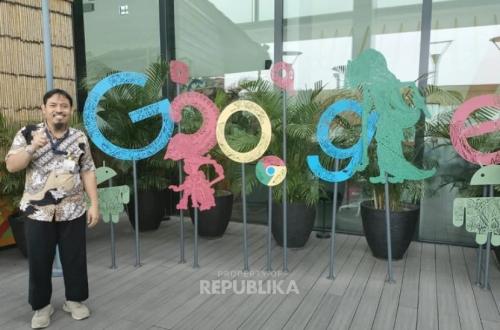
This warning is increasingly relevant as AI use expands rapidly in higher education. On Tuesday (27 October 2026), representatives of the Informatics undergraduate programme at Nusa Mandiri University (UNM) took part in the Google Digital Ecosystem Curriculum Partnership event organised by LLDIKTI Region III at the Google Indonesia Office in Jakarta. The event provided an opportunity to explore the potential of technology in learning while also considering the security challenges that come with it.
Presentations on the use of Gemini and Google Workspace showed how AI can support a range of academic activities. AI-powered features can assist with information searches, document processing, data visualisation and literature analysis. Used appropriately, these technologies could help lecturers and students devote more time to critical thinking, evaluating results and developing ideas.
But speed is not the only measure of success in using AI. Outputs still need to be checked for accuracy, their sources examined and their relevance to the research context assessed. AI can help prepare an analysis, but academic responsibility remains with the researcher. Automation must not eliminate verification, scholarly integrity or human judgement.
Another challenge requiring attention is “Shadow AI”: the use of AI applications or services without an institution’s approval, oversight or clear policies. This can happen when students or educators turn to tools they consider convenient without considering whether those services comply with campus security rules.
The risks extend beyond personal data breaches. Unpublished research documents, software code, information about industry partners and internal teaching materials may also be sensitive. If such data is entered into a service that does not comply with institutional policy, it may become harder to control.
Universities must therefore do more than teach people how to use AI. AI literacy should cover privacy, information security, intellectual property rights, output verification and the ethics of using technology. Students need to understand that not all information is safe to upload, not all services offer the same protections and not every AI-generated output can be trusted immediately.
In Informatics education, this must be reflected in a stronger curriculum. It is not enough for students to be able to build applications, write code or use AI to work faster. They must also understand how to protect systems, manage access, identify security risks and build applications that take privacy into account from the design stage.
Digital security cannot be left to users alone. Institutions need clear AI-use policies, services suited to academic needs and a strong culture of information security. Using approved platforms, restricting access according to need and educating people about sensitive data are important steps towards reducing risk. Security solutions, such as operational monitoring and device management, should also be tailored to each institution’s needs and governance arrangements.
I believe partnerships between universities and technology ecosystems are strategically important when they promote both innovation and responsibility. Technology should improve the quality of education, support research and broaden its positive impact on society. But all these benefits must rest on a strong foundation of security, ethics and governance.
In line with UNM’s role as a Digital Business Campus, the development of digital skills should equip people to create and use technology productively and responsibly. Informatics students must be prepared to meet industry needs, understand technological risks and maintain public trust in digital systems.
In my view, the future of Informatics education is not simply about producing graduates who can write code faster with AI. We must prepare graduates who understand the consequences of every technical decision they make. The ability to build technology must go hand in hand with the ability to secure data and protect users.
AI will continue to develop, and universities cannot shut themselves off from this change. What we must avoid is using technology without understanding its risks. Genuine digital progress is not just about completing work more quickly; it is about ensuring innovation delivers benefits without sacrificing security and trust.
We must not become so preoccupied with using artificial intelligence that we forget the intelligence required to protect data. Universities must produce a generation that is not merely skilled at using AI, but also capable of building a digital ecosystem that is safe, ethical and beneficial to society.
Source: jawawa.id (https://jawawa.id/newsitem/as-ai-becomes-more-advanced-dont-give-your-data-away-1793533873)
Originally published by Republika (https://news.republika.co.id/berita/tntjzq416/ai-makin-canggih-jangan-wakafkan-data), translated from Indonesian