
As AI Advances, Telkom University Opens Digital Anthropology Bachelor’s Programme
Applications can be developed in just a few months. Artificial intelligence can answer a range of questions in seconds. Yet people may still be reluctant to use certain digital services.
Why, then, might one group trust a piece of information while another considers the same information wrong? The answer is not always hidden in lines of code. In many cases, we need instead to understand the people behind the screen.
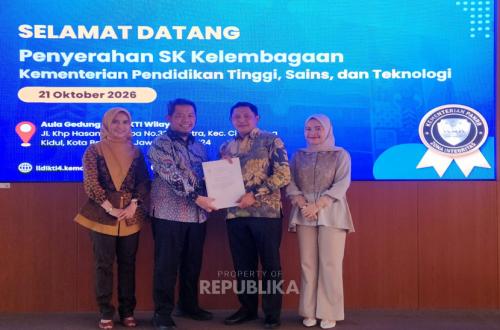
These questions prompted Telkom University to open an undergraduate Anthropology programme specialising in Digital Anthropology. Approval for the programme was issued on 13 October 2026 by the Director General of Higher Education at Indonesia’s Ministry of Higher Education, Science and Technology.
For an institution known for its strength in technology, the decision to explore anthropology raises an intriguing question: why make room for a discipline concerned with human beings at a time when technology is advancing so rapidly?
Anthropology is understood as the study of people and the many dimensions of their cultures. Digital Anthropology extends this field to aspects of life increasingly intertwined with technology: how people communicate on social media, how communities form, the changing nature of platform-based work, and efforts to preserve cultural identity in digital spaces.
Consider someone trying to access a public service through an app. The system may work perfectly, but confusing instructions or unfamiliar terminology can make it difficult to use. Developers may be able to identify the page on which users stop interacting with the app. To understand why, however, they need to investigate the experiences of the people who use it.
Similar challenges arise in the use of artificial intelligence. AI’s ability to produce answers does not explain how people assess, trust or use those answers. Habits, past experiences and social environments all help determine how a technology is adopted in everyday life.
Another example can be found on social media. A video may receive hundreds of thousands of views, but that does not necessarily mean it will change viewers’ behaviour. By contrast, interactions within a smaller group may prompt collective action. View counts can show how widely a message has spread, but understanding habits, beliefs and social relationships can explain what happens after people receive it.
Such issues show why technological progress cannot rely on technical capabilities alone. An advanced app may not meet users’ actual needs. Nor is an online service necessarily accessible to everyone, given differences in age, location and personal background.
Anthropology can offer a new perspective here. Through observation, interviews and in-depth research into people’s daily lives, researchers seek to understand not only what people do but also their reasons for doing it. In the digital sphere, this involves examining the close relationship between people, technology, culture and social change.
Understanding users also matters directly in professional settings. Technology companies, for example, need insight into how people experience their products. The creative industries must keep track of changing tastes and audience behaviour. Governments, meanwhile, often face difficulties when digital services intended to help the public are not adopted evenly.
Expertise in examining human behaviour and experience is relevant to careers such as UX researcher, social researcher, consumer culture researcher and digital policy analyst. These are career opportunities grounded in relevant skills, rather than a promise that every graduate will find a job.
The undergraduate Anthropology programme specialising in Digital Anthropology broadens the academic landscape at Telkom University. It brings the study of technology together with research into the people who live alongside it. Students will be expected not only to understand digital transformation, but also to assess its effects, offer constructive criticism and contribute insights that benefit the wider public.
The approval issued on 13 October 2026 is an important step in the programme’s development. Details of student admissions and the arrangements for classes will be announced in official communications from Telkom University.
As many organisations race to make machine intelligence more capable, an equally urgent question arises: how well do we understand the people who will use it? Anthropology’s presence at a technology-focused university offers one way to address that challenge.
Source: jawawa.id (https://jawawa.id/newsitem/as-ai-advances-telkom-university-opens-digital-anthropology-bachelors-programme-1794214266)
Originally published by Republika (https://opini.republika.co.id/berita/to865t371/ai-makin-canggih-telkom-university-buka-s1-digital-antrhopology), translated from Indonesian