
As a Global Giant, the US Holds a History of 10 Dark Economic Crises
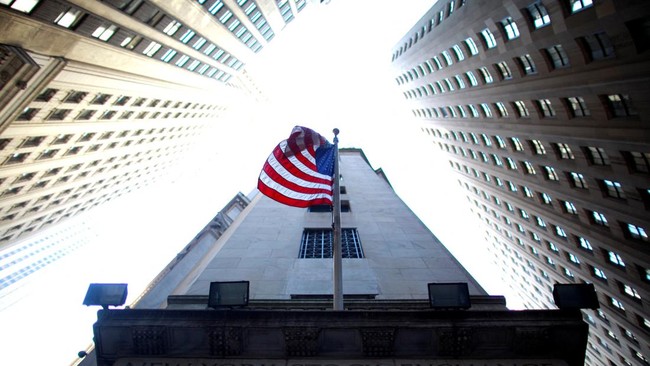
As a global giant, the US holds a history of the 10 darkest economic crises.
The United States (US) will mark its 250th anniversary on Saturday, 4 July 2026. Over a quarter of a millennium, the nation has grown into the world’s largest economic power, but it has also repeatedly entered the vortex of major crises.
In terms of the global economy, the US position is impossible to ignore. The US economy currently stands at approximately US$31.8 trillion in nominal terms, making it the largest economy in the world. Given such a scale, whatever happens in the US can quickly spread to other countries, ranging from stock markets, exchange rates, and trade to global capital flows.
This position makes the US not only a centre of global economic power but also one of the greatest sources of shocks when crises occur. History shows that several global economic crises actually originated within the United States.
One of the most significant examples is The Great Depression in the 1929-1930s. This crisis became one of the darkest periods in modern economic history. A more recent example is the 2008-2009 Global Financial Crisis, triggered by high-risk housing credit issues in the US, known as subprime mortgages.
According to the National Bureau of Economic Research (NBER), the US has repeatedly experienced recessionary phases throughout its long history. The NBER records US economic cycles through periods of expansion and contraction, with recessions marked as periods of declining economic activity from a peak to the trough of the business cycle.
In its 250-year journey of independence, recession has become an inseparable part of US economic history. Crises have arisen from many causes, ranging from financial market panics, banking sector collapses, wars, and inflation surges to asset bubbles and pandemics.
The Worst Recession: The Great Depression
The Great Depression was the most severe economic crisis in modern world history. The crisis began in 1929, and its impact was felt for more than a decade, particularly throughout the 1930s.
The crisis began with the massive crash of the Wall Street stock market on 29 October 1929, known as Black Tuesday. The stock market crash destroyed the wealth of many investors and caused confidence in the financial system to collapse.
One of the triggers was widespread speculation in the stock market. Many investors purchased shares using debt or margin trading. As stock prices continued to rise, market optimism grew. However, when prices reversed and fell, the losses spread rapidly and hit many parties.
The banking sector was also dragged in. Many banks had previously provided aggressive loans, including to investors and businesses. When the market collapsed and bad debts increased, thousands of banks failed to survive. Public savings disappeared, and panic spread as citizens engaged in massive bank runs.
The impact was devastating. Business activity plummeted, investment ceased, many companies went bankrupt, and unemployment occurred everywhere. The Federal Reserve Bank of St. Louis noted that US real GDP fell by 29% from 1929 to 1933. The unemployment rate also surged to approximately 25% in 1933, while consumer prices fell by 25%, marking profound deflationary pressure.
The crisis hit not only industrial cities but also the agricultural sector. Commodity prices dropped sharply, farmers’ incomes plummeted, and many families lost their livelihoods.
To combat the crisis, President Franklin D. Roosevelt launched a major programme called the New Deal. This programme consisted of various policies to create jobs, build public projects, assist the poor, and repair the financial system.
Several important institutions were born from this crisis. The US government established the Federal Deposit Insurance Corporation (FDIC) to guarantee public deposits in banks, as well as the Securities and Exchange Commission (SEC) to oversee the stock market.
The impact of the Great Depression did not stop in the US. The crisis spread to Europe, Latin America, and Asia. Worsening economic conditions exacerbated global political instability, including the rise of extremist ideologies in several countries. This situation was one of the factors that led the world towards World War II.
The Subprime Mortgage Crisis
The Subprime Mortgage crisis was a major financial crisis that originated from the housing credit bubble in the US during the mid-2000s. The crisis exploded in 2007-2008 and subsequently dragged the world into the Great Recession.
Initially, many banks and financial institutions in the US provided home ownership loans, or mortgages, to borrowers who actually had low repayment capacity. These types of credit are known as subprime mortgages.
As long as house prices continued to rise, the credit risk appeared covered. Many parties felt safe because the houses used as collateral were expected to continue increasing in value. Housing demand rose, property prices soared, and a housing bubble formed.
The problem grew larger because these housing credits were later repackaged into financial products such as mortgage-backed securities (MBS) and collateralised debt obligations (CDO). These products were sold to global investors, including banks, investment firms, and pension funds.
When interest rates rose and house prices began to fall, many borrowers defaulted. The value of mortgage-based financial products plummeted. The crisis spread from the property market to the global financial market.
The peak occurred in 2008, when major financial institutions such as Lehman Brothers collapsed. The fall of Lehman became the symbol of the crisis and triggered massive panic in global markets.
The impact on the US economy was enormous. Federal Reserve History notes that US real GDP fell by 4.3% from its peak in the fourth quarter of 2007 to its trough in the second quarter of 2009. The unemployment rate rose from 5% in December 2007 to 9.5% in June 2009, eventually touching 10% in October 2009.
Millions of people lost their jobs.
Source: jawawa.id (https://jawawa.id/newsitem/as-a-global-giant-the-us-holds-a-history-of-10-dark-economic-crises-1783162318)
Originally published by CNBC Indonesia (https://www.cnbcindonesia.com/research/20260703204419-128-747963/as-raksasa-dunia-simpan-sejarah-10-krisis-ekonomi-paling-kelam), translated from Indonesian