
Artificial General Intelligence: The Future Dajjal?
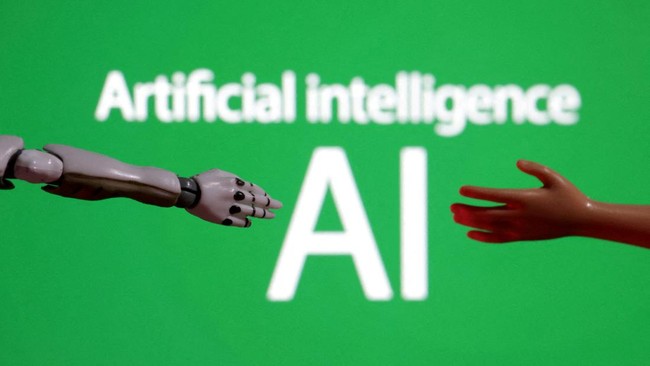
Artificial Intelligence (AI) is currently capable of passing professional exams for lawyers and accountants, demonstrating high cognitive proficiency when supported by robust databases. If this continues, AI will be able to pass competency tests for any functional position.
In short, AI that enters the category of Artificial Super Intelligence (ASI) and eventually leads to behaviours akin to super-intelligent humans (Artificial General Intelligence/AGI) will, hypothetically, become the smartest machine in the world. History records that Deep Blue defeated world chess grandmaster Garry Kasparov in 1990. Later, the AlphaGo phenomenon in 2016 showed that without human data input for 40 days, it could think independently, defeating humans in the ancient Chinese strategy game, Go, which is far more complex than chess.
Ultimately, all major communication technology companies—including Google, Meta, X, OpenAI, ChatGPT, DeepSeek, and Qwen—are racing to realise the concept of AGI. Furthermore, nations are competing to develop super-intelligent AI. Saudi Arabia, India, China, and the US are investing billions of dollars to develop this technology, aiming for AGI or ASI. Some computing experts are mesmerised by its potential to work without human control, while developers strive to lead the way in achieving AI autonomy. Although AGI and ASI remain in the stage of conceptual hypothesis, they are championed by optimists.
Conversely, some are panicking, viewing this as the beginning of humanity’s downfall, drawing parallels to the Hollywood sci-fi film ‘Terminator’. Others remain calm and positive. Current Machine Learning, known as Artificial Narrow Intelligence (ANI), is still considered a robot capable of error and stupidity. The progress of ANI is driven by three main pillars: the availability of Big Data, massive cloud computing capacity, and breakthroughs in Neural Networks.
AGI and the concept of ASI still require massive data inputs from servers the size of Bogor City. Hypothetically, ASI and AGI are still mere concepts, so is there a need to fear a mass extermination caused by machines taking over humanity?
After watching the Netflix documentary ‘The AI Doc: Or How I’ve Become an Apocaloptimist’, it is clear that super-fast neural networks, Big Data, and autonomy are the elements that could trigger a ‘Skynet’ scenario. The documentary encourages viewers to be critical of AI developments over the last decade, especially as autonomous features are being embedded into weaponry.
The central question is: will my child be able to survive, thrive, or instead face extinction due to AI technology? There is a profound anxiety regarding the actions of algorithms and AI manipulation. We may see the effects of this in incidents such as the bombings at SMA 72 Jakarta and other less-exposed incidents in Padang and Kubu Raya. How do machines lead victims with unstable minds toward harming many people?
Shortly after the high school bombing, Australia and other nations implemented rules to block social media content for children under 16, and aggressive online games were restricted. The internet is no longer purely a medium for online learning for students.
While the ‘Terminator’ phenomenon may be far from reality, international organisations are urging a global convention to ban the AI arms race and halt the development of lethal autonomous weapons systems that operate without full human control. The incident involving three students making bombs in a school requires further investigation. It is worth considering whether ‘adversarial attacks’ allowed algorithms to fail in detecting disturbing or provocative images intentionally embedded to satisfy users.
AI development in Indonesia is still at the ANI stage. Yet, some influencers already categorise AI as an agent that dulls intelligence and wisdom. Some Indonesian netizens have even gone as far as labelling it ‘Dajjal’.
If the hypothesis of AGI is achieved and one tech company leads the AI competition, it could transform into a ‘Dajjal’ figure in the end, if AI is used to spread slander, incite division, and cause conflict excessively.
My child, who lives in a boarding school, once reminded me in a family WhatsApp group: ‘Don’t feed the AI…’ As a member of Gen X, I did not fully understand the meaning, as I often post AI-generated content in the family group. However, after watching the documentary, I understand. AI will not manipulate us if we do not grant them autonomous access. Nevertheless, we must be wary of the challenges our children will face.
Gen X faces the fear of nuclear war; Millennials faced the computer blackouts and shutdowns of the year 2000. Now, Generation Alpha faces challenges regarding AI—will it facilitate them, accompany them, or will it be an imitation of intellect that destroys them?