
Article 33 of the 1945 Constitution Seen as Emphasising Balance Between State, Private Sector, and Cooperatives
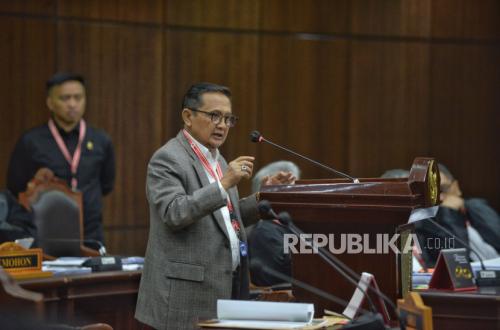
Article 33 of the 1945 Constitution is considered to place the roles of the state, the private sector, and cooperatives in a balanced manner in building the national economy. This balance is needed so that economic activity continues to promote public welfare while also providing room for market mechanisms.
Didin S Damanhuri, chairman of the expert council of the Association of Indonesian Indigenous Entrepreneurs (Asprindo), said the original idea of Article 33 of the 1945 Constitution did not position the state and the market as two opposing choices. According to him, the thinking of the nation’s founders, including Bung Hatta and Soemitro, placed the role of the state and market mechanisms proportionally.
“Bung Hatta himself in 1976 said that the economic structure that Article 33 seeks to build has as its actors state corporations or state-owned enterprises, the private sector, and cooperatives. These three are constitutional,” Didin said in a statement on Wednesday (19/8/2026).
According to him, Indonesia’s economic structure requires a credible state as well as a healthy market mechanism. Within that structure, state-owned enterprises, the private sector, and cooperatives have room to carry out economic activities with the aim of improving public welfare.
He explained that cooperatives can play a role in economic activities that have not yet entered the category of medium and large enterprises and do not yet have high productivity. Meanwhile, state-owned companies are needed to handle strategic sectors that cannot always be reached by the private sector, including to maintain economic stability.
“But there is a message: that MSMEs and cooperative enterprises must move up a class. So if asked whether Article 33 is capitalism or socialism, I would answer that Article 33 is not a mixture of the two, but it requires both,” he said.
Didin assessed that the debate over the dominance of the state or the market needs to be placed more proportionally. According to him, Indonesia’s experience shows that both elements have a role in building the national economic structure.
“In the reform era, people talked about how important the market and the private sector were, then forgot the role of the state. In fact, during the Soeharto era, it was the role of the state that could make Article 33 of the 1945 Constitution work, especially in the management of natural resources such as forests or the control of technology in the Habibie era. That was because of the role of the state,” Didin stressed.
He said an active and credible state role is needed to ensure that economic activity moves towards creating social justice and public welfare.
“So what must be measured is the ability of the state or the realisation of the system in creating a political-economic structure. How natural resources, markets, and technology can be guaranteed by the state so that they do not fall into interests that conflict with welfare or the public interest,” he said.
According to Didin, this challenge is related to the potential emergence of oligarchy and inappropriate state capitalism practices. Such conditions can open space for rent-seekers, both from the private sector and state-owned enterprises.
Therefore, he hopes the government can build a political-economic structure capable of ensuring that natural resources, man-made resources, technology, markets, and digitalisation are managed for the benefit of the wider public.
“The institutionalised experiences of the New Order and the reform era in the economic structure are only two. First, the experience of state-owned enterprises or state corporations. Second, the private sector. Even the political sector has been institutionalised, with regular elections. Unfortunately, the most fundamental thing, namely maximising people’s welfare, has not yet been institutionalised,” he said.