
Art Shop Wayang Kamasan I Made Sondra: An Ancient Gallery That Refuses to Fade
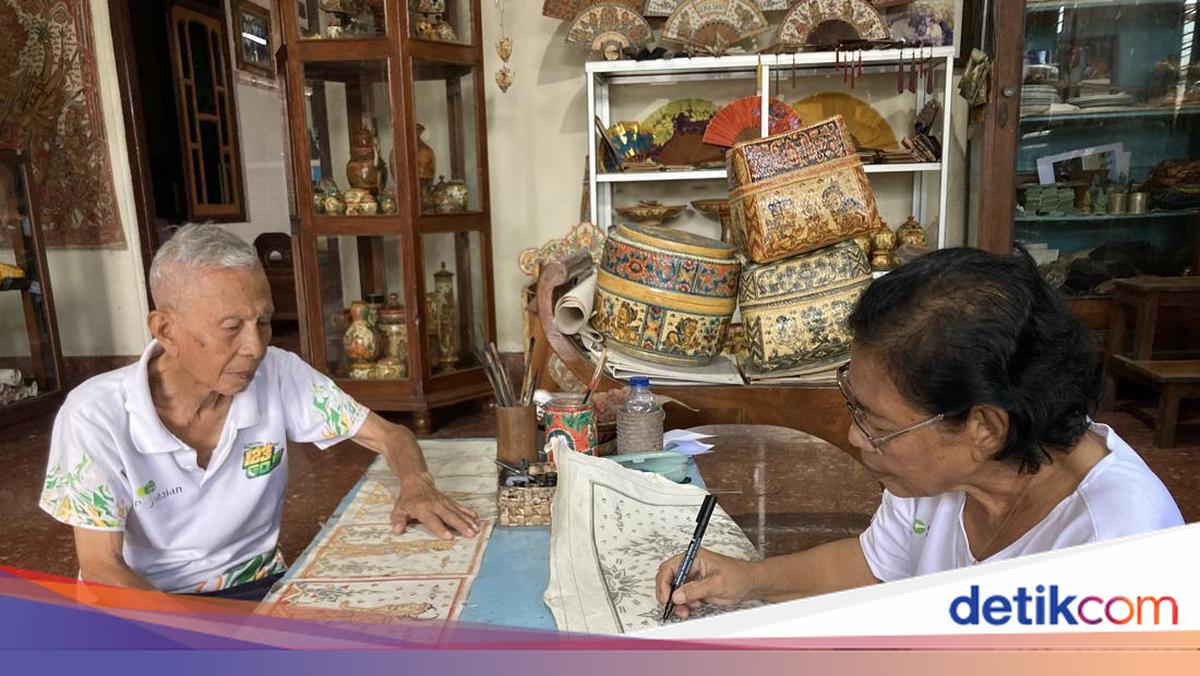
From the era of the New Order’s glory and collapse, the Bali bombings tragedy, the blows of the COVID-19 pandemic, to the current global uncertainties due to the Gulf War, the doors of the Art Shop Traditional Wayang Painting Kamasan I Made Sondra gallery remain open. Standing firm, keeping the classical wayang lines vibrant, undimmed by the changes of time.
Since 1980, hundreds of paintings in the I Made Sondra traditional Kamasan wayang painting art shop have been displayed as silent witnesses to the ups and downs of Indonesia’s tourism fortunes. In the hands of I Made Sondra (83) and his wife Ni Ketut Murki (77), canvases made from plain cloth continue to be painted, even as bombs exploded, the rupiah plummeted, and the world’s gates were tightly shut by the pandemic.
Four and a half decades of endurance are not just about numbers, but proof of the steadfastness of a business. Choosing to continue etching ancestral traditions amid successive economic storms.
On a bright Saturday morning (11/4/2026), detikBali visited the I Made Sondra traditional Kamasan wayang painting art shop at his residence in Banjar Sangging, Kamasan Village, Klungkung Subdistrict, Klungkung Regency. His wife Ni Ketut Murki opened the gallery door with a friendly smile.
“It’s been one month now, since March it’s really quiet,” said Murki explaining the current condition of their art shop.
“Because of this war,” said Sondra completing his wife’s sentence.
This crisis is not the first. So it’s natural that from their faces, expressions appear accustomed to facing the ebb and flow of customers.
From there, Murki invited detikBali back to the past. The year 1980. The beginning of Bali’s tourism golden age before reaching its peak in 1995, known as ‘the golden age of tourism’ in the Island of the Gods.
The initiative to build the gallery stemmed from the many foreign tourists coming to Kamasan. Initially, Murki and her husband Sondra sold their paintings to large galleries in the city. But then, seeing the market potential that could be developed in their own village.
“At first, I sold what I produced myself. After it grew, we started taking paintings from local residents. They also work here,” explained Murki.
Their art shop developed rapidly. Until it faced the 1997 monetary crisis. Although helped by strong foreign exchange rates, the socio-economic impact in the area was still felt.
Passing its first crisis, the I Made Sondra art shop grew even stronger. Until they again faced the emptiness of tourist visits due to the 2002 Bali bombing. Followed by Bali bombing II in 2005.
The storm of crises that reduced tourist arrivals to Bali came again with COVID-19 in 2020. And now the impact of the United States (US)-Israel war against Iran that they are currently feeling.
From one crisis to another, they say they never stopped making paintings. Recently, Murki has also become more active in creating derivative artworks from Kamasan paintings. These include fans, flower vases, keychains, and other souvenirs adorned with characteristic Kamasan wayang paintings.
“We never stop. Anything that can be filled with paintings, we work on,” said Murki.
That spirit of survival did not come out of nowhere. For this elderly couple blessed with four children, painting traditional Kamasan wayang is a tradition. Not just a job to keep the home fires burning, but an awareness of preserving the cultural heritage of their ancestors passed down through generations there.
“Since I was little, I’ve been painting. My mother, my grandmother did it too. All the mothers in Banjar Sangging do it. No one becomes a farmer,” she explained.
When tourist visits are quiet, they can still survive with orders from hotels and offices. One of them is like an order for Kamasan wayang painting souvenirs from a hotel in Ubud.
“Every month we still receive orders from hotels,” she explained.
Images and Prices Vary
Traditional Kamasan wayang paintings are iconic with their distinctive intricate, complex engraving style, colour combinations, and characteristic figures taken from the Hindu epics Mahabharata and Ramayana.
Murki showed paintings of Arjuna, Ganesha, Hanoman, Ramayana. She explained that classical Kamasan art paintings depict main figures from the Mahabharata such as Yudhistira/Punto Dewo, Arjuna, Nakula, Duryodhana, Aswatama, and Kresna. There are also Ramayana figures like Subali, Sugriwa, and Rahwana.
Not only the images in the paintings, but the prices also vary. Depending on the size. Starting from 15x20 cm canvas at Rp 200 thousand, 30x40 cm at Rp 400 thousand, 40x60 cm at Rp 600 thousand, up to large size 60x80 cm at Rp 2 million. There is also a 75x140 cm size priced up to Rp 10 million.
Those prices are for local or domestic guests. Whereas for foreigners, it’s different.
Regarding prices, Murki doesn’t remember changes from year to year since she first sold her paintings.
“I’ve forgotten. How much was the price back then,” she said with a smile.
Believed to Remain Enduring
Traditional Kamasan wayang painting is an art form done collectively. Starting from the process of drawing sketches, then first-stage colouring, second stage, up to the third or final stage.
In her gallery, Murki and Sondra showed detailed images of the painting stages, as well as natural pigments from stones used. “Now we use acrylic,” she explained.
Not far from the table where paintings are coloured, a Kamasan wayang painting that Murki said is hundreds of years old is displayed. There are two paintings. The first is a murtian painting, and the second depicts folktales.
“This is an example made with natural pigments. Its age is already hundreds of years, but the colours haven’t faded at all,” she clarified.
In addition, she also showed her first painting since opening the art shop titled Arjuna in meditation. That painting depicts Arjuna meditating surrounded by girls tempting his asceticism.
“This is from 1980. The canvas is from woven cloth. I coloured it for a whole month,” she recalled.
As a housewife, she also ensures that her children and grandchildren love it and
Source: jawawa.id (https://jawawa.id/newsitem/art-shop-wayang-kamasan-i-made-sondra-an-ancient-gallery-that-refuses-to-fade-1775958644)
Originally published by detikBali (https://www.detik.com/bali/budaya/d-8439584/art-shop-wayang-kamasan-i-made-sondra-galeri-tua-yang-menolak-punah), translated from Indonesian