
Arsjad Rasjid Targets ‘Arab’ Capital Worth Rp103.06 Trillion
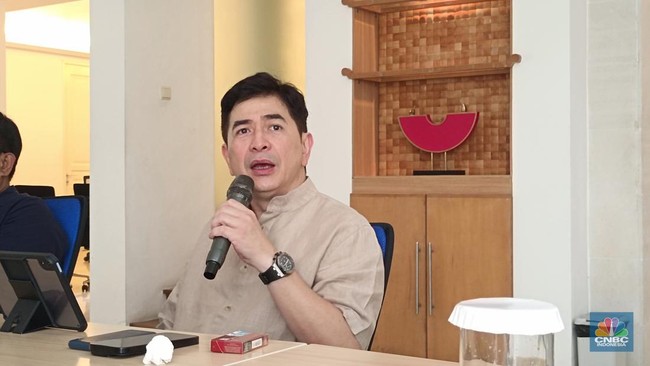
Jakarta, CNBC Indonesia – Conglomerate and Sriwijaya Capital founder Arsjad Rasjid is targeting investment from Middle Eastern countries in productive sectors in Indonesia, with the aim of creating jobs and improving public welfare amid global uncertainty.
According to Arsjad, member countries of the Organisation of Islamic Cooperation (OIC) have substantial sources of capital. The main challenge, however, is ensuring that this capital flows into viable investment projects that deliver tangible benefits to the public.
“Capital is not an end in itself. What matters most is how investment can create jobs, increase productivity and bring prosperity to the public,” Arsjad said at the Business Leaders Summit 2026 in Istanbul, Türkiye, as quoted on Thursday (5 November 2026).
Sovereign wealth funds managed by Gulf countries are estimated to hold US$5.7 trillion, equivalent to Rp103.06 trillion, or nearly 40% of the world’s total sovereign wealth fund assets. Meanwhile, global Islamic finance industry assets stood at nearly US$6 trillion, or Rp108.49 trillion, at the end of 2024 and are projected to continue growing to US$9.7 trillion (Rp175.40 trillion) by 2029.
Despite the vast capital potential, challenges to putting investment into practice remain. The 2026 OIC Economic Outlook report by SESRIC shows that the number of newly announced investment projects in OIC countries rose from 1,706 in 2021 to 3,671 in 2025. However, the average project value fell from US$118.6 million (Rp2.14 trillion) in 2023 to US$56.6 million (Rp1.02 trillion) in 2025.
Arsjad said three key factors are needed to strengthen investment: regulatory certainty, capital and capability. Investors need consistent rules even when leadership changes, while the availability of capital must be matched by improvements in workforce skills, productivity and technology.
“But the three Cs alone are not enough. We need real collaboration between governments, development finance institutions and the private sector. B57+ can act as a bridge for businesses to create concrete business and investment partnerships,” Arsjad said.
One example of cross-regional investment cooperation is the partnership between Sriwijaya Capital, the investment firm founded by Arsjad, and Abu Dhabi-based BlueFive Capital. The partnership aims to strengthen investment flows between the Gulf and South-east Asia, including Indonesia.
In renewable energy, Sriwijaya Capital portfolio company SESNA is working with state-owned electricity company PT PLN (Persero) to explore developing a floating solar power plant in Batam. The initiative aligns with Indonesia’s target of developing up to 100 gigawatts (GW) of solar capacity.
“This is what I find interesting as an investor. When the government and businesses work together, more capital can come in to support development,” Arsjad said.
Arsjad said ASEAN’s experience shows that economic integration requires more than trade agreements: it must also be backed by market connectivity and business participation. One example is the cross-border QRIS payment system, which makes transactions between Indonesia, Singapore, Malaysia and Thailand easier.
“When cross-border transactions become easier, investors see a larger market and more projects that are viable for funding,” Arsjad said.
Source: jawawa.id (https://jawawa.id/newsitem/arsjad-rasjid-targets-arab-capital-worth-rp103-06-trillion-1793850694)
Originally published by CNBC Indonesia (https://www.cnbcindonesia.com/market/20261105090700-17-782489/arsjad-rasjid-bidik-duit-arab-nilainya-tembus-rp10306-triliun), translated from Indonesian