
Arranging SMEs from public spaces: Ambon's efforts to build the people's economy
Building UMKM is no longer just about programmes or assistance. It has become a process of nurturing an ecosystem where space, people, and opportunities interconnect, even if not always smoothly.
Ambon (ANTARA) -
Ambon is gradually reshaping the face of its economy from spaces that have long been considered simple. Amid efforts to strengthen the regional economy, micro, small, and medium enterprise (UMKM) actors are once again positioned as the main foundation, not merely as supplements.
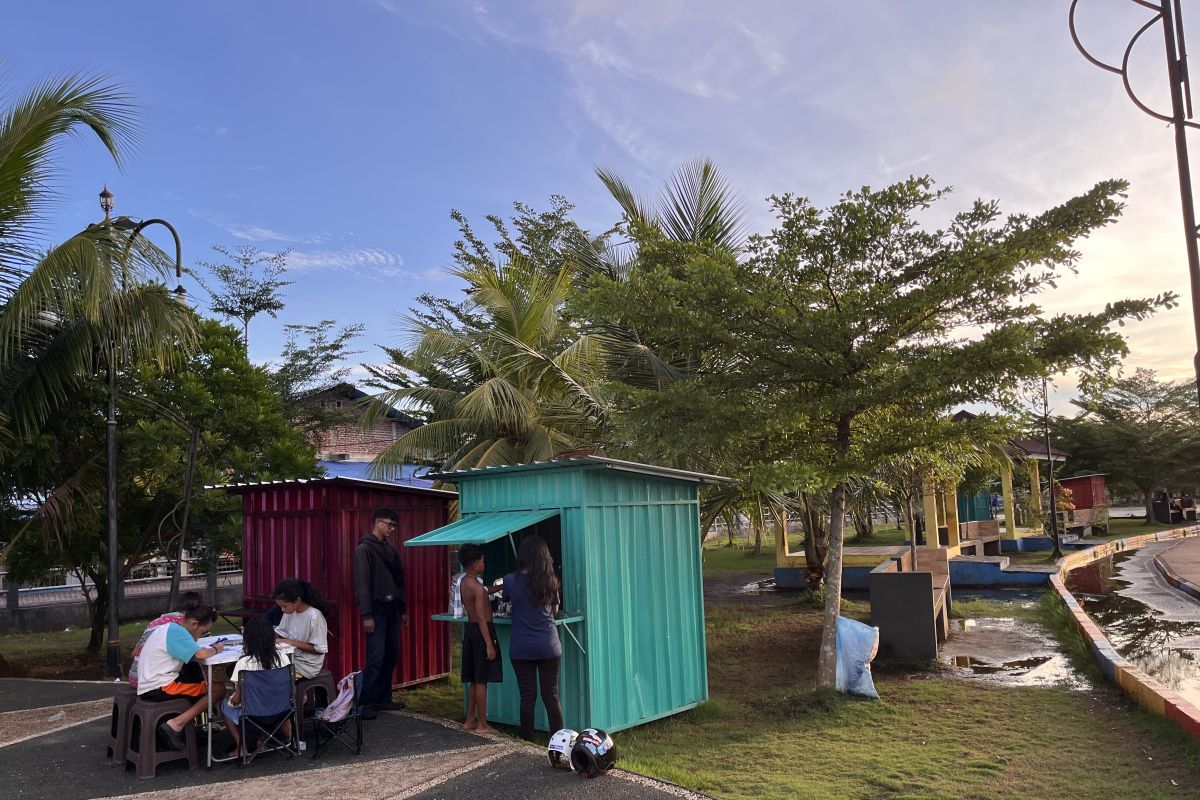
In various corners of the city, these changes are beginning to appear in more tangible forms. Open public spaces that previously served only as gathering spots are now shifting function to become productive areas, where economic activities grow alongside the social life of the community. From here, the arrangement of UMKM begins to find its footing, directly touching the daily lives of residents.
One step taken is the provision of business facilities for UMKM actors. The Ambon City Government has distributed 80 container booths and 200 display cases to support community trading activities.
Public open spaces such as Wainitu, Air Salobar, and Amahusu are also beginning to be arranged not only as social spaces but also as economic spaces. This arrangement is expected to create a more orderly, hygienic business environment that is attractive to the public.
In addition to physical facilities, support is also provided through access to financing, such as Kredit Usaha Rakyat (KUR), assistance for joint business groups, and business development for thousands of UMKM. The government sees that strengthening this sector cannot rely on a single approach but must touch various aspects simultaneously.
These efforts do not stand alone. They grow from the need to address the classic challenges faced by UMKM actors: limited capital, market access, and the ability to adapt to technological developments.
One step that is now beginning to be implemented is the use of the Quick Response Code Indonesian Standard (QRIS) digital payment system in several public open spaces, such as Wainitu, Air Salobar, and Amahusu. This effort is not merely following trends but is part of a strategy to expand inclusion and financial literacy in the community.
“Digitalisation is a necessity so that UMKM actors can survive and develop amid changing times. Through QRIS, transactions are expected to become more efficient, transparent, and encourage business actors to be more adaptive to financial technology,” said Ambon Mayor Bodewin M. Wattimena.
Bodewin views these spaces not only as gathering places but as starting points for building a more inclusive people’s economic ecosystem. From there, various interventions are carried out—from providing business facilities, financial education, to encouraging digitalisation.