
Army Chief Denies Instructions to Dissolve Film Screenings, Questions Funding for 'Pesta Babi'
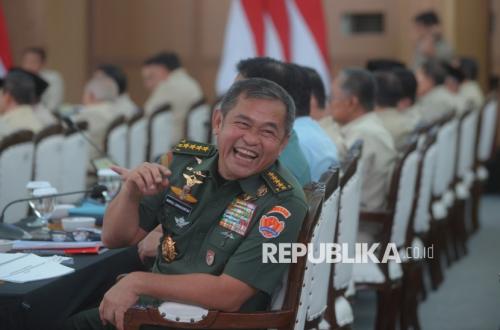
The Chief of Staff of the Indonesian Army (KSAD), General Maruli Simanjuntak, stated that there were no direct instructions issued to his ranks regarding the dissolution of public screenings for the film ‘Pesta Babi: Colonialism in Our Era’. Speaking after a working meeting with Commission I of the House of Representatives (DPR RI) in the parliamentary complex, Senayan, Jakarta, on Tuesday (19/05/2026), Maruli noted that the disbanding of these screenings was a request from local governments.
“The dissolution was initiated by local governments for the sake of regional security. It is the responsibility of regional coordinators and government officials there, who deemed there was a risk of unrest. There were no direct instructions,” he said. According to Maruli, the dissolution of screenings in several areas resulted from coordination and decisions made by local authorities to ensure regional safety. “Local governments have coordination mechanisms. They have the authority to secure their territory and protect students, especially since the accuracy of the claims in this film is not necessarily certain.”
Regarding the substance of the film, Maruli also questioned the funding behind the documentary production. “The issue now is, people are even making videos about how this happened—where is the money coming from? They fly here and there to film. They must be wealthy,” the Army Chief remarked.
Previously, the Coordinating Minister for Law, Human Rights, Immigration, and Correctional Affairs, Yusril Ihza Mahendra, stated that the dissolution of the ‘Pesta Babi’ screenings was not directed by the central government or law enforcement agencies. Confirming this in Jakarta on Thursday (14/05/2026), Yusril noted that not all universities had banned the documentary screenings, suggesting that the pattern of dissolution was not centralised. “Looking at this pattern, the dissolution of the ‘Pesta Babi’ film screenings was not an instruction from the government or law enforcement agencies, which would typically be centralised.”
He explained that the documentary contains criticisms of National Strategic Projects (PSN) in South Papua, which are alleged to disturb environmental sustainability, the customary rights of Papuan communities, and the ecosystem. For Yusril, such criticism is a natural occurrence, even if the narratives are deemed provocative.