
Armed Group Kidnapped Indonesian Minister, Suspected of Being Foreign Intelligence
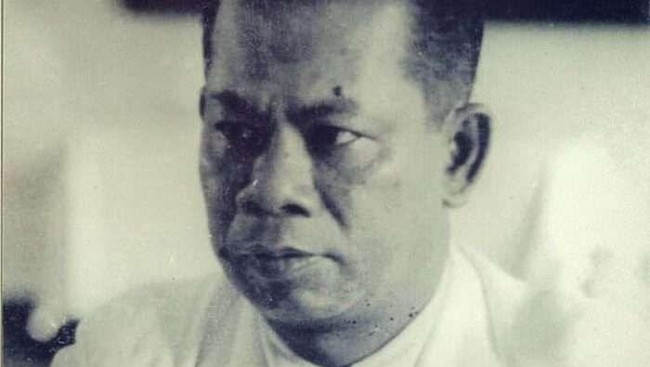
The history of Indonesia holds a tragic tale that befell one of its ministers in the early days of independence. The figure was Otto Iskandar Dinata, commonly known as Otista, who was kidnapped by an armed group after being accused of being a foreign intelligence agent. To this day, his ultimate fate remains a mystery.
Otto Iskandar Dinata is widely known as a national hero. His face is immortalised on the Rp20,000 banknote, while his name is used for main roads in various regions. However, behind his service to the nation, his life’s journey ended with a story full of question marks.
The kidnapping occurred amidst the turmoil in Indonesia following the Proclamation of Independence. Various armed groups emerged with their own interests. Under these conditions, Otto became the target of accusations of being a foreign spy until he was eventually abducted.
Otto was a key figure in the national movement. According to the book ‘Si Jalak Harupat, Biografi Otto Iskandardinata’ (2003), he was active in the Boedi Oetomo organisation during the 1920s. Leading up to independence, Otto was also involved in the political process as a member of the Investigating Committee for Preparatory Work for Independence (BPUPKI) and the Preparatory Committee for Indonesian Independence (PPKI).
After the Proclamation of Independence on 17 August 1945, President Soekarno appointed Otto as Minister of State. At that time, the security situation in Indonesia was still chaotic and the government did not yet have an organised armed forces.
Otto was tasked with helping to form a national military force. The challenge was immense because many armed groups came from different backgrounds, ranging from former members of PETA and Heiho formed by the Japanese to former KNIL soldiers from the Dutch era.
These differing backgrounds triggered sectoral egos. Many groups refused to be merged under a single command and chose to operate independently. Some even opposed the central government through violent means in their struggle for independence. This situation ultimately led to disaster for Otto.
On 19 December 1945, Otto Iskandar Dinata was kidnapped by an armed group called Laskar Hitam in Tangerang. He was then taken towards the coastal area of Mauk Beach. Since then, Otto vanished without a trace.
According to Iip D. Yahya in the book ‘Oto Iskandar di Nata: The Untold Stories’ (2017), the kidnapping was triggered by rumours spread by agents of the Netherlands Indies Civil Administration (NICA). Otto was accused of being a Dutch spy. The issue was allegedly spread deliberately to eliminate figures considered obstacles to Indonesian unity.
Rumours also circulated among Laskar Hitam that Otto controlled one million Dutch guilders. This accusation was used to reinforce the narrative that Otto sided with the Dutch. In fact, according to Iip, the money came from Japanese war booty that happened to be in the form of Dutch guilders.
Following the kidnapping, Otto’s whereabouts were never discovered. He is believed to have been murdered and his body disposed of at sea. Because there was never any certainty regarding his fate, the government eventually designated 20 December 1945 as the date of Otto Iskandar Dinata’s death.
Seven years later, the government held a symbolic funeral in Bandung. The coffin buried did not contain Otto’s body, but only sand and seawater. The symbolic grave is located at the Pasir Pahlawan Monument.