
Arief Poyuono: Danantara Is Key to SOEs Driving 6–7% Economic Growth
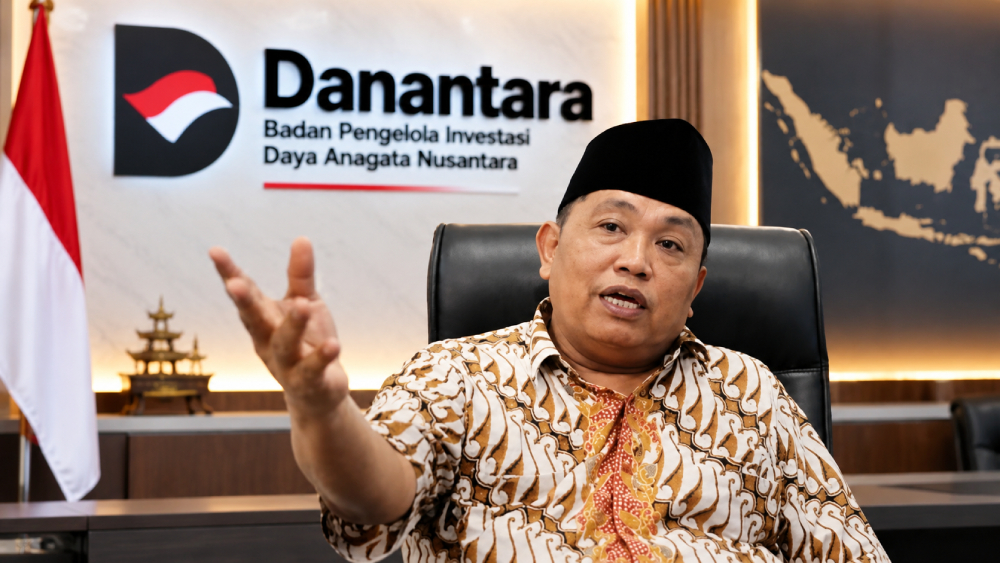
Jakarta – Arief Poyuono, a commissioner at state-owned port operator PT Pelabuhan Indonesia (Pelindo) and an observer of state-owned enterprises (SOEs), supports the establishment of the Daya Anagata Nusantara Investment Management Agency (BPI Danantara). He said the state investment body could become a strategic instrument for raising the productivity of SOE assets and helping Indonesia escape the middle-income trap.
Poyuono said Danantara would not merely manage funds, but would also provide a means of restructuring and consolidating state assets currently spread across various SOEs.
He argued that state asset management should move away from a budget-focused approach towards an investment strategy prioritising productivity, efficiency and returns. “This is a transition from budget-focused bureaucracy to an aggressive, return-oriented capital strategy. By consolidating 844 SOEs under one command, Danantara aims to turn underperforming or subsidy-dependent state companies into highly productive economic assets,” Poyuono said in Jakarta on Saturday (11 October 2026).
He said the consolidation could be an important step towards improving state companies’ performance and maximising their contribution to the national economy.
Poyuono said one of Indonesia’s main challenges was escaping the middle-income trap. Addressing it would require sustainable economic growth, supported by the professional and productive management of state assets.
He said Danantara could increase the contribution of state assets to national income while boosting gross domestic product (GDP) growth. “Danantara is a crucial mechanism for increasing gross national income. The agency is expected to drive sustainable annual GDP growth of between 6% and 7%,” he said.
According to Poyuono, achieving this target would require a focused investment strategy and state companies capable of generating added value for the economy. Optimising SOE assets is expected not only to improve company performance, but also to strengthen national investment capacity in support of long-term development.
As well as promoting economic growth, Poyuono said Danantara had two strategic functions: acting as a financial buffer during global economic crises and preserving national wealth for future generations.
He cited Singapore’s Government of Singapore Investment Corporation (GIC) and Temasek as examples of long-term state wealth management. “Danantara is designed as a structural fund, not an instrument of the state budget. It must serve as both a fiscal bulwark and a legacy of wealth for our children and grandchildren,” he said.
Poyuono said these functions would require disciplined investment governance so that state asset management delivered lasting benefits, including when the economy faced external pressures.
On investment strategy, Poyuono backed a plan to allocate around 20% of Danantara’s managed funds to global investments. He highlighted opportunities including the potential acquisition of property in Mecca to support Indonesian Hajj pilgrims, and technology partnerships with Russia’s Russian Direct Investment Fund (RDIF).
The remaining 80% of managed funds, he said, would be directed towards alternative financing for sustainable infrastructure projects in Indonesia.
Poyuono said the strategy could broaden development funding sources and reduce reliance on foreign borrowing and the state budget (APBN).
However, the effectiveness of the investment strategy would depend on project selection, risk management and the ability to generate returns commensurate with the capital invested.
Addressing concerns about sovereign risk and the potential politicisation of SOEs, Poyuono argued that consolidation through Danantara could instead provide an opportunity to improve the management structure of state companies.
He said the fragmented SOE structure could lead to inefficiency and overlapping responsibilities. Consolidation therefore needed to be accompanied by stronger professionalism and corporate governance.
“Danantara is a carefully designed instrument. Concerns about sovereign risk can be allayed, provided the agency upholds three things: strict corporate governance, full transparency and independence from political bias,” he said.
His remarks underline that Danantara’s success should not be measured solely by the value of assets it manages or the number of investments it makes. Its ability to generate economic value, ensure accountability and keep investment decisions free from political interests will also be crucial.
With professional management, Danantara is expected to raise the productivity of state assets and strengthen Indonesia’s sources of economic growth. Even so, achieving 6–7% growth will require support from multiple economic sectors, consistent policies and oversight of state investment management.
Source: jawawa.id (https://jawawa.id/newsitem/arief-poyuono-danantara-is-key-to-soes-driving-6-7-economic-growth-1791910225)
Originally published by batamtoday.com (https://batamtoday.com/news/arief-poyuono-danantara-jadi-kunci-bumn-pacu-ekonomi-67-persen), translated from Indonesian