
Argentina’s Economy Heads Towards Recession Amid President’s Policies
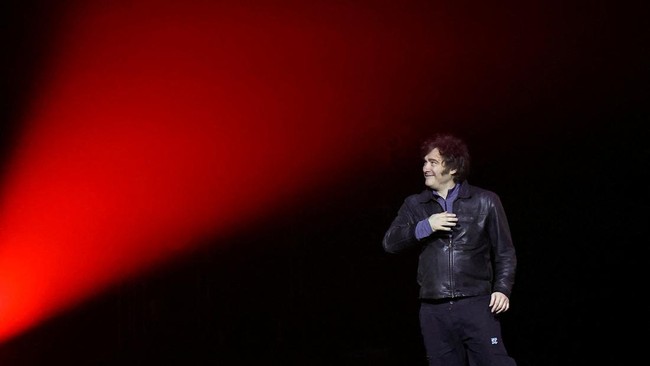
Economists believe Argentina may have entered a recession in the third quarter of 2026, a view also held by consultancy Analytica. The downturn has been driven by President Javier Milei’s austerity measures and tight monetary policy. Economic activity is expected to have contracted for two consecutive quarters in July-September, meeting the generally accepted definition of a recession.
“Argentina’s economy is technically in a moderate recession,” Analytica chief Ricardo Delgado told Reuters on Monday (2 November 2026).
Argentina’s gross domestic product (GDP) fell 0.6% in the second quarter compared with the previous quarter. Delgado expects a further contraction of about 1.5% in the third quarter.
Official data for the quarter will be released in November. A slight recovery is not expected until 2027.
Businesses go bust and cut jobs
According to research institute Fundar, about 32,300 companies — equivalent to 6% of all businesses in Argentina — went bankrupt between Milei taking office in December 2023 and last July.
“The situation is critical,” said Ricardo Kuchikian, who runs the family sock-making company Eseka in Buenos Aires with his brother, Gustavo.
The company recorded losses last year and cut its workforce by about 30%. More than half of the circular knitting machines at its sock factory are now idle.
“Consumption has fallen very sharply over the past three years,” Kuchikian said, adding that Eseka’s sales had plunged by about 40% because of weak consumer demand and competition from cheaper imports after the government eased trade restrictions.
Martin Abigador, director of another family-owned business, fabric distributor Dakuba, reported a similar trend. Sales have fallen 40% since late 2023.
“The company has been unable to keep up with what he called aggressive competition from foreign imports, particularly from China,” he said.
In the first nine months of this year, consumption in Argentina fell 2.7% compared with the same period in 2025. The figures come from market research firm Scentia, which tracks sales at supermarkets, small retail shops and e-commerce platforms.
Policies whose benefits most people have yet to feel
Milei’s extreme austerity measures have helped slow inflation from about 200% to 30% and address other macroeconomic imbalances. However, most people have yet to feel the benefits.
The share of Argentines living below the poverty line has risen again to nearly one-third of the population, after falling to its lowest level in eight years in 2025.
A recent poll by consultancy Giacobbe y Asociados found that approval of Milei edged down to 36% in October, while disapproval rose to 56%. Nevertheless, not every part of the economy is struggling.
Energy, mining and agriculture have benefited from Milei’s economic model. Growth in these sectors has been driven by exports and investment in Argentina’s vast shale oil and gas reserves, as well as rising global demand for minerals such as lithium.
So far, however, the strength of these export-oriented sectors has not been enough to offset the decline in industries reliant on the domestic market. Textiles, car manufacturing, retail trade and construction remain under pressure as people continue to feel the strain on household finances.
Delgado of Analytica expects the gap between sectors’ performance to persist, with economic conditions fluctuating throughout 2027. He warned that household finances are unlikely to improve significantly before the presidential election.
Economic growth is never uniform across sectors
A government spokesman defended Milei’s economic policy, saying that growth was simply uneven.
“This is an economic programme the president believes in, and he will not change it,” the spokesman said, adding that economic growth never occurs uniformly across all sectors.
Milei is expected to run for a second term in the presidential election in October 2027. According to an aggregation of polls by State of Polls, updated ahead of 2 November 2026, Milei’s average support stands at 34.4%.
Source: jawawa.id (https://jawawa.id/newsitem/argentinas-economy-heads-towards-recession-amid-presidents-policies-1793627485)
Originally published by CNBC Indonesia (https://www.cnbcindonesia.com/news/20261102174449-4-781657/ekonomi-negara-ini-menuju-resesi-akibat-kebijakan-presiden), translated from Indonesian