
Arfadia CEO Says 77% of Businesses Surveyed Have No GEO Strategy
Jakarta, CNBC Indonesia – Digital marketing agency PT Arfadia Digital Indonesia has found that 77% of the Indonesian businesses it surveyed do not have a formal strategy to improve brand visibility in AI-powered search engines. This is despite 73% of respondents saying they increased their search engine optimisation (SEO) budgets in 2025–26.
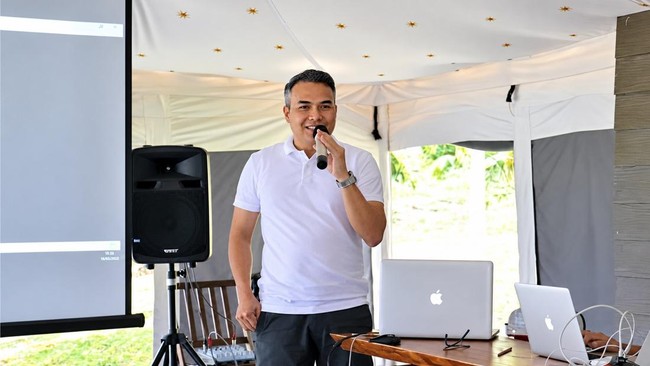
Founder and chief executive of PT Arfadia Digital Indonesia Tessar Napitupulu said the findings came from a survey of 127 businesses conducted in January and February 2026.
“The results show a gap between SEO investment and companies’ readiness for changes in the way consumers seek information through AI services,” he said in an official statement, quoted on Friday (23 October 2026).
In its State of SEO in Indonesia 2026 report, Arfadia also recorded that just 23% of respondents had a formal Generative Engine Optimisation (GEO) strategy. GEO is the practice of increasing the likelihood that a brand will be found, cited or recommended by AI services such as ChatGPT, Gemini, Perplexity and Claude.
Arfadia further reported that respondents with a formal GEO strategy received an average of 3.4 times more AI citations per month than those without one. However, the figure is based on the company’s survey and internal measurements, and does not establish that GEO implementation directly causes an increase in AI citations.
Digital search strategies are changing as AI features are introduced into services used by the public. On 9 September 2025, Google introduced AI Mode in Indonesian, powered by Gemini 2.5, to help users obtain comprehensive answers to complex questions, accompanied by links to web sources.
Research published at the ACM SIGKDD 2024 conference by Princeton researchers and colleagues also found that certain optimisation techniques could increase content visibility in generative search responses by up to 40% under the study’s test conditions.
That result does not guarantee a similar increase for every website, but it indicates that how information is presented can affect the likelihood of content being found and cited by AI systems. Competition on AI platforms also differs from conventional search: generated answers can change even when users ask the same question.
A study by Rand Fishkin of SparkToro and Patrick O’Donnell of Gumshoe.ai in early 2026 involved 600 volunteers running 12 identical prompts on ChatGPT, Claude and Google AI nearly 3,000 times. It reported that the chance of getting the same list of brands in two answers was less than one in 100, while the chance of receiving the same brands in the same order was about one in 1,000.
Nevertheless, some brands appeared in 60–90% of answers for particular query intents. The findings indicate that brand positions can vary, but the frequency with which a brand appears can still serve as one measure of AI visibility.
GEO strategies need to account for differences between AI platforms
The frequency of brand appearances is one indicator businesses can use to monitor visibility on AI services. Companies should test the same questions repeatedly and record the brands and information sources that appear, rather than relying on a single search result.
Referral distributions also vary between platforms. Statcounter data cited in Arfadia’s research materials for September 2026 put the share of AI chatbot referrals in Indonesia at 84.91% for ChatGPT, 8.08% for Perplexity, 6.13% for Gemini and 0.61% for Claude.
These figures refer to the chatbot referral metric used by the source, not to the overall use of AI by Indonesians. The distinction matters because a high share of referrals on one platform does not automatically mean it dominates all AI-powered search activity.
Arfadia’s case data also show that brand citations can be distributed unevenly across services. A supplier of food and beverage equipment to the business-to-business (B2B) market had 334 AI citations when its case study was published: 219 in Google AI Overviews, 67 in ChatGPT, 39 in Perplexity and nine in Copilot.
As of 22 October 2026, using a different measure – brand appearances in AI responses – Ahrefs recorded 991 responses for the company’s website across various platforms, including 33 in Gemini. Arfadia also cited a steel producer that had not appeared in AI responses in December 2024 but was subsequently recorded in 680 responses across six platforms, with 97 keywords ranking first in AI Overviews.
The language used in a query can also affect AI assistants. In a test by Arfadia’s research team, led by the agency’s chief marketing officer and head of international growth, Nicolas Magor, eight AI assistants generated 320 answers to buyer questions in Indonesian and English. On average, only about one-fifth of company names appeared in both language versions.
Of 160 answers to questions in English, only one drew all its sources from Indonesian-language pages. The findings are a consideration for exporters, which may need to provide information in prospective buyers’ languages rather than relying solely on Indonesian-language websites and publications.
Alongside language, businesses should consider website technical accessibility and the consistency of company information. Content must be accessible to and processed by the relevant systems before it has a chance to appear in AI answers, while inconsistent product or business identity information can make it harder for systems to understand a company.
To assess visibility, businesses can start by testing around 10 questions that prospective customers commonly ask on ChatGPT, Gemini and Perplexity. They should repeat the tests and check that their websites can be crawled, product information is consistent, structured data is in use, and original, verifiable data is being published.
The findings in this article draw on three openly available Arfadia research reports with DOIs registered on Zenodo: State of SEO in Indonesia 2026, AI Citation Rate Report 2026 and Indonesia Digital Marketing Benchmark 2026. Published in the first quarter of 2026, the reports used survey data from Indonesian businesses, Arfadia client performance and secondary sources.
Tessar Napitupulu is the founder and chief executive of Arfadia (PT Arfadia Digital Indonesia), a digital marketing agency operating since 2008 and a GEO pioneer in Indonesia since 2023. Some of the practical frameworks in this article are drawn from two of his books, Found Before They Search and Cited or Silent.
Source: jawawa.id (https://jawawa.id/newsitem/arfadia-ceo-says-77-of-businesses-surveyed-have-no-geo-strategy-1792745471)
Originally published by CNBC Indonesia (https://www.cnbcindonesia.com/tech/20261023144940-37-778950/ceo-arfadia-sebut-77-bisnis-yang-disurvei-belum-punya-strategi-geo), translated from Indonesian