
Are Medical Masks Effective at Protecting You from Haze?
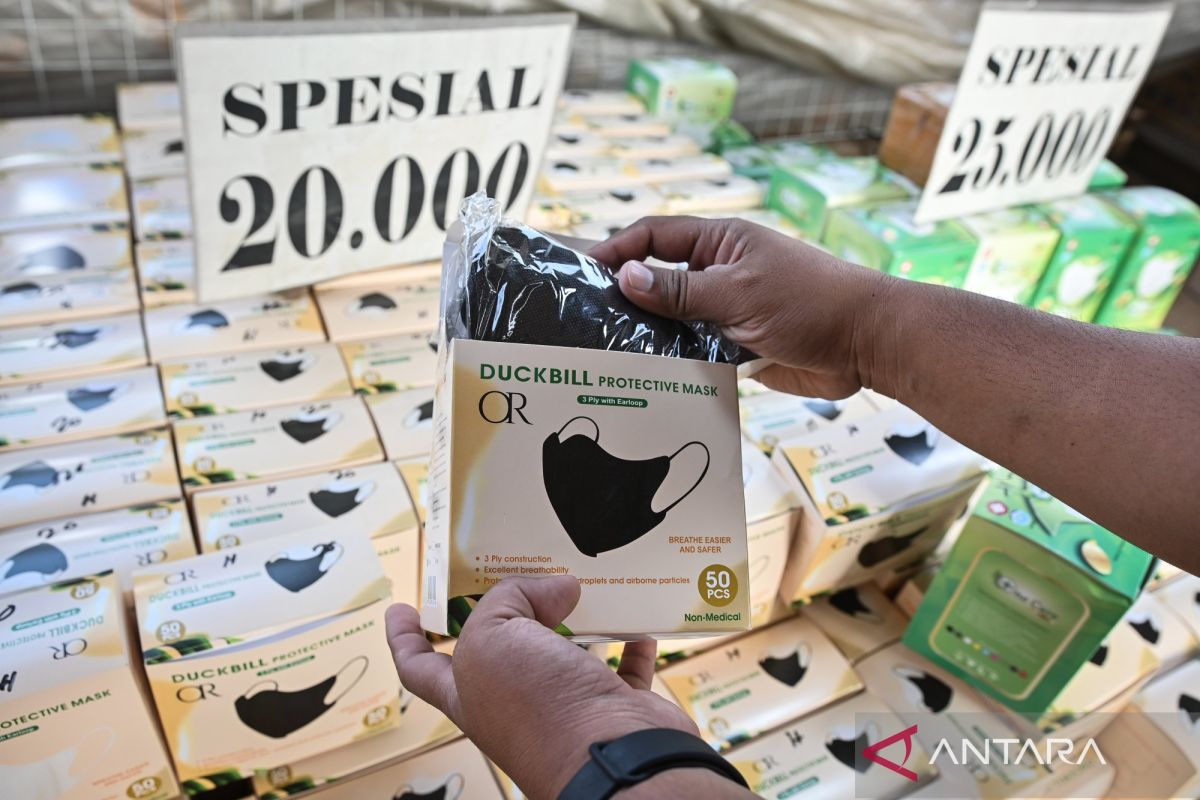
Jakarta (ANTARA) — Haze caused by forest and land fires can harm health, particularly the respiratory system. One measure people often take to reduce exposure to smoke is wearing a medical mask.
But are the masks commonly used every day effective enough to protect against hazardous airborne particles?
Medical masks, or surgical masks, are generally designed to help block droplets and certain particles, but they are not made to seal tightly over the entire face. As a result, fine particles in haze may still enter through gaps around the nose and cheeks.
Guidance from the United States Centers for Disease Control and Prevention (CDC) states that surgical and cloth masks are not designed to filter very small smoke particles optimally. Their protection against fine particles may be limited, so they cannot be relied on as the main form of protection when air quality deteriorates because of fires.
Forest and land-fire smoke contains a mixture of fine particles, gases and other compounds that can be harmful to health. One component to be wary of is PM2.5: particles with a diameter of 2.5 micrometres or less.
Because they are so small, PM2.5 particles can travel deep into the respiratory tract and reach the lungs. Exposure to smoke can trigger coughing, throat irritation and shortness of breath, and worsen conditions in people with asthma or heart or lung disease.
Masks should therefore be used alongside other measures to reduce exposure. Relying on a medical mask alone is not enough, particularly when haze is dense or air quality is unhealthy.
Which masks are more suitable for haze?
If people have to go outdoors during hazy conditions, a particulate respirator such as an N95 may be more suitable than an ordinary medical mask.
Under the filtration standards used in the United States, an N95 respirator is designed to filter at least 95 per cent of certain test particles in the air under standard testing conditions. However, this does not mean it eliminates all health risks from haze.
The protection an N95 provides depends greatly on how well it fits the wearer’s face and how it is used. The mask must fit snugly over the nose and mouth and under the chin. Gaps at the sides of the face can allow unfiltered air to enter the respiratory tract.
N95 respirators also have limitations. They help filter particles but are not designed to remove all the harmful gases or vapours in smoke. Their use should therefore still be accompanied by efforts to avoid exposure.
People should also check product labels and standards when buying a respirator. Do not rely solely on a mask’s resemblance to an N95; check that its stated standard and authenticity are verified.
In addition to choosing suitable respiratory protection, there are several other steps people can take to reduce the risks posed by haze.
Limit outdoor activities. If they are not essential, postpone outdoor activities when smoke is dense or air quality deteriorates. Strenuous exercise should be reduced because it can increase the volume of air inhaled.
Close doors and windows when smoke enters. This can help reduce the amount of polluted air getting into the home. If available, use a suitable air filter to help maintain indoor air quality.
Check air-quality information. Monitor air-quality updates and advice from the relevant authorities. Conditions can change throughout the day, so outdoor activities should be adjusted accordingly.
Prioritise vulnerable groups. Babies, children, pregnant women, older people and those with heart or lung disease should take extra care. They should reduce their exposure to smoke and follow the advice of health professionals.
Recognise signs of respiratory problems. Persistent coughing, wheezing or shortness of breath should be taken seriously. Seek medical help promptly if breathing becomes difficult or symptoms worsen.
Ordinary medical masks therefore do not provide optimal protection against the fine particles in haze. A standards-compliant particulate respirator such as an N95, if properly fitted, can help reduce particle exposure, but it is no substitute for avoiding polluted air.
The most important steps are to limit time outdoors, keep indoor air clean, and follow air-quality updates and official advice. When haze becomes denser, reducing exposure remains the primary way to protect health.
Source: jawawa.id (https://jawawa.id/newsitem/are-medical-masks-effective-at-protecting-you-from-haze-1793065903)
Originally published by Antara (Indonesian) (https://www.antaranews.com/berita/5813683/apakah-masker-medis-efektif-melindungi-diri-dari-kabut-asap), translated from Indonesian