
Are Botox, Thread Lifts, and Fillers Halal or Haram? Here is the MUI Fatwa
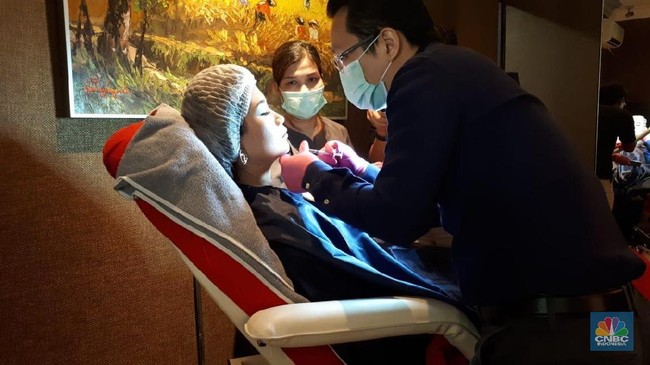
Currently, various beauty services such as Botox injections, thread lifts, and fillers are widely available. However, the question arises: do these procedures fall into the category of haram (forbidden) or halal (permissible)?
For Muslims, self-care is not merely about appearance; the procedural aspects must also be considered, including the ingredients used, the method of execution, medical safety, and the purpose of the treatment.
Rina Maulidiyah, a Halal Auditor at LPPOM, noted in an LPPOM halal journal that aesthetic services can be performed as long as they meet specific requirements. There are three key aspects that Muslims should consider before undergoing such procedures.
The first aspect concerns ingredients. It is essential that the materials used in beauty procedures are free from haram (forbidden) elements and najis (impurities). This regulation covers pre-treatment skincare products, post-treatment products, topical medicines, supporting materials, and injectable fluids.
Clinics must ensure the origin and halal status of the products used. Similarly, consumers have the right to enquire about the brand, composition, and halal certification of products before any procedure is performed.
The second aspect is medical safety, which requires that procedures be carried out by competent medical professionals using sterile equipment without causing harm to the patient. The third aspect is the purpose of the treatment, which is permitted as long as it is for maintaining health, addressing skin problems, or improving conditions in a reasonable manner.
Beauty procedures are not permitted if they aim to excessively alter the original form of God’s creation, or if the intention is to deceive others or create a harmful dependency.
The Indonesian Ulema Council (MUI) has issued several fatwas providing guidelines for aesthetic procedures, including regulations on the permissible limits for using Botox, thread lifts, and fillers.
For instance, MUI Fatwa Number 21/2020 regarding Botox Injections for Beauty and Care outlines several permissible purposes, such as treating wrinkles, improving asymmetrical facial contours, managing scars, and addressing redness or oily skin. The MUI also stipulates several conditions: the procedure must not contradict Sharia, use halal and pure materials, be guaranteed safe without harming oneself, others, or the environment, and be performed by competent and trustworthy experts.
Botox injections become haram if they cause harm, involve deception, lead to dependency, or are linked to forbidden elements.
Furthermore, MUI Fatwa Number 40 of 2020 regarding Thread Lifts for Beauty and Facial Care permits procedures to smooth wrinkles or rejuvenate facial skin. Similarly, thread lifts must use halal and pure materials and must not harm oneself, others, or the environment. The procedure must not contradict Sharia objectives, such as inciting temptation in others, and must be performed by competent and trustworthy personnel. The fatwa also states that the procedure is haram if it causes harm, involves deception, causes dependency, or relates to forbidden matters.
Additionally, MUI Fatwa Number 41 of 2020 regarding Fillers for Beauty and Facial Care allows procedures for smoothing wrinkles, concealing acne or chickenpox scars, filling hollows under the eyes, and masking or improving facial imperfections. The requirements for use are identical to the previous fatwas: using halal and pure materials, ensuring no harm to oneself, others, or the environment, ensuring no contradiction with Sharia objectives, and being performed by competent and trustworthy medical professionals.
Procedures become haram if they alter God’s creation, such as making a nose sharper, a chin pointed, slimming the face, or thinning or thickening the lips. The category of haram is also applied if the procedure causes harm, involves deception, causes dependency, or is linked to forbidden elements.