
Archipelagic Regions Bill: DPD RI's Effort to End Land-Oriented Development Paradigm
Indonesia is the largest archipelagic nation in the world. Yet millions of people living on small, outermost islands and in island territories still face development inequality to this day.
Limited access to education, health services, connectivity and regional fiscal capacity, as well as suboptimal use of marine potential, remain problems hindering the welfare of these communities.
Arising from these conditions, the DPD RI is championing the Islands Region Bill as a new foundation for national development that is fairer and better suited to Indonesia’s geographical character.
That effort has now entered a crucial stage. After formally being deliberated with the DPR RI, the DPD RI’s Islands Region Bill Working Team took part in a series of hearings held by the DPR RI’s Special Committee on the Islands Region Bill together with the Ministry of Home Affairs, the Ministry of Defence, the Ministry of Marine Affairs and Fisheries, and the Ministry of Foreign Affairs.
The cross-ministerial deliberations aim to strengthen the substance of the bill so that it can comprehensively address the development problems of island regions, from governance and fiscal fairness to managing marine potential and strengthening national defence and sovereignty.
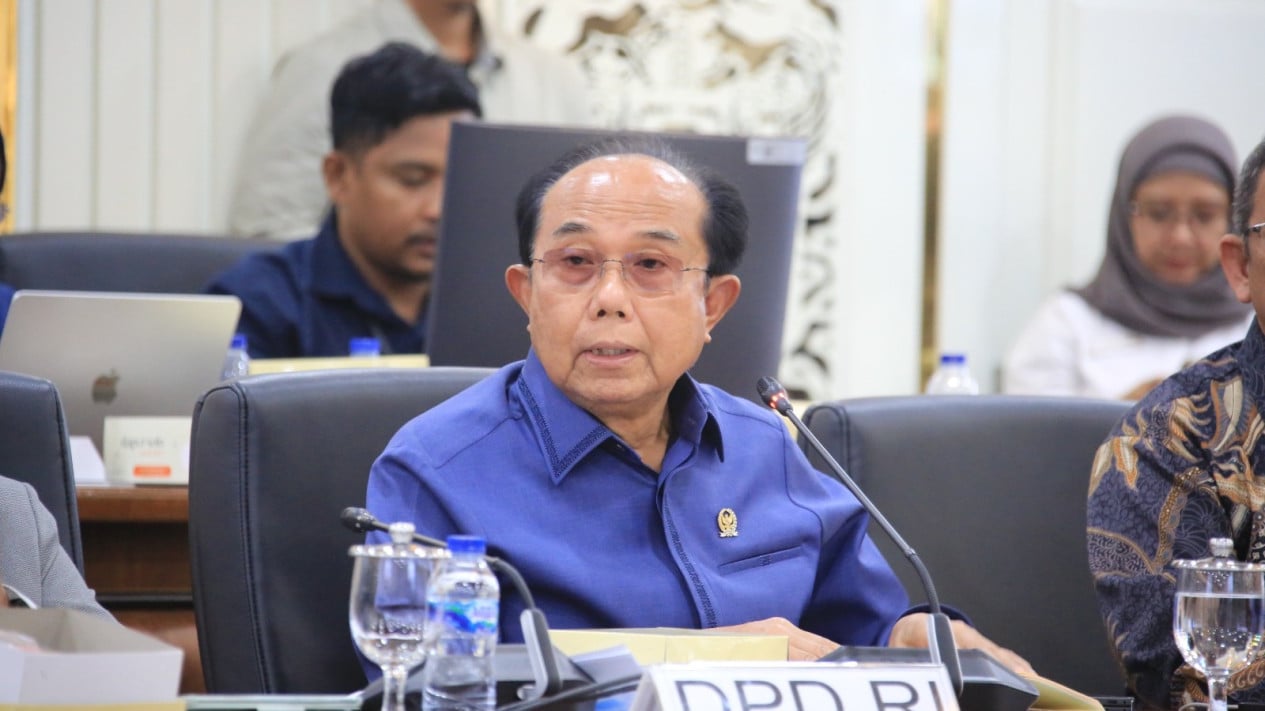
Andi Sofyan Hasdam, Chair of the DPD RI’s Islands Region Bill Working Team, stressed that the bill is an effort to correct a national development paradigm that has long been oriented towards land.
After all, Indonesia has long been recognised by the world as an archipelagic state, so development policy should be able to accommodate the characteristics of island territories more fairly.
“We have recognised since the Djuanda Declaration that Indonesia is an archipelagic state, but it turns out we have been oriented towards land all this time,” said the senator from East Kalimantan.
According to Andi, the Islands Region Bill is not intended to grant special privileges to certain regions, but rather to introduce affirmative policies so that island regions gain equal opportunity in development.
The regulation is expected to strengthen governance, public services, connectivity, the management of regional potential, and funding schemes suited to the characteristics of island territories.
The urgency of the bill is all the more apparent given that around 28.5 million people live in ten island provinces, and some 3.7 million of them still live in poverty.