
Archipelagic Region Bill Accelerated, DPR Targets Completion This Year
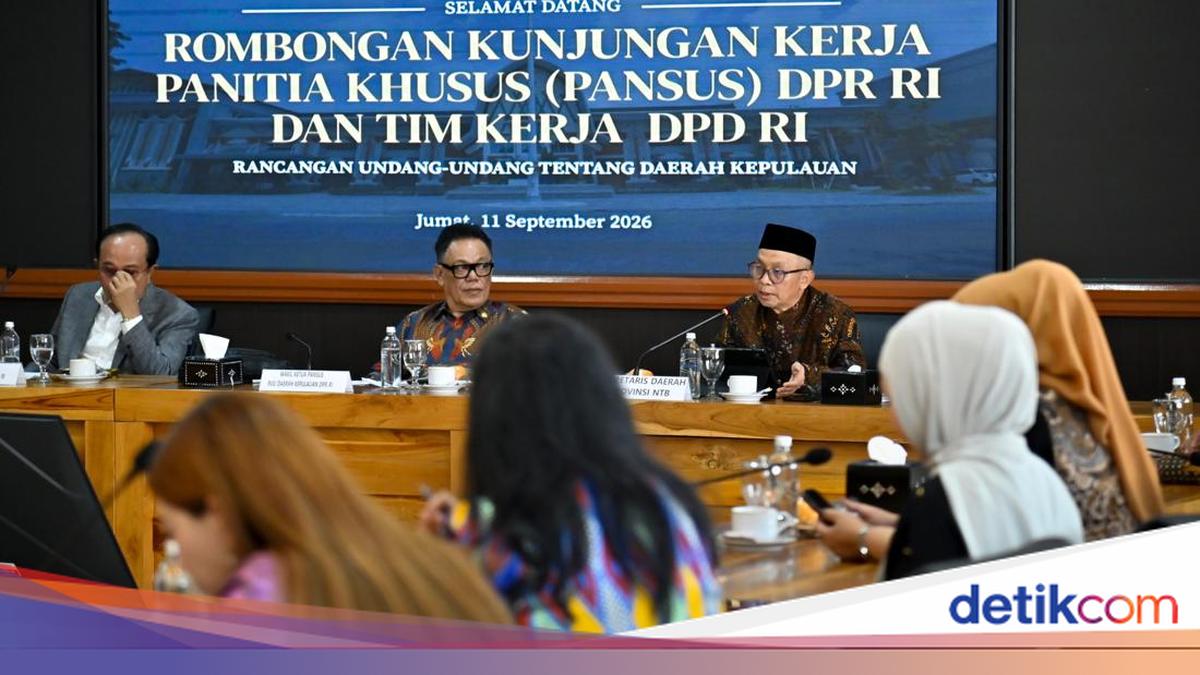
The House of Representatives (DPR RI) and the Regional Representative Council (DPD RI) are targeting the completion of the Archipelandum Bill (RUU Daerah Kepulauan) within this year. The discussion of this regulation is being overseen by eight ministries under the direction of President Prabowo Subianto.
Member of Commission IV of the DPR RI, Herry Dermawan, stated that his team visited West Nusa Tenggara (NTB) to absorb aspirations and map the challenges faced by archipelagic regions. This input will serve as material to refine the draft bill. “We came here to dig deep, essentially to identify problems and obtain input from archipelagic provinces. We know NTB has more than 400 islands, some inhabited and some not,” said Herry at the NTB Governor’s Office on Friday.
Herry noted that the drafting of this law must prioritise meaningful participation from all elements of society. He emphasised that the primary focus of the bill is not merely the geographical area of the islands, but the quality of life for the residents living within them. “The input from NTB was extraordinary and grounded; they simply want basic needs met, including education, health, and connectivity,” he asserted.
He further mentioned that the NTB Provincial Government has already implemented an archipelagic perspective in its governance and curriculum, consistently promoting its identity as the West Nusa Tenggara Archipelagic Province. The PAN politician revealed that the President has issued a Presidential Letter (Surpres) instructing eight ministries to oversee the bill’s discussion. “The President wants it finished this year. There are eight ministries overseeing it, and we are even calling upon other ministries outside the Presidential Letter,” said Herry.
At the parliamentary level, the bill, which has been a DPD RI initiative for three terms, has received full support from all factions in the DPR RI. Currently, the process is awaiting the List of Identified Problems (DIM) from the government. “We are just waiting for the government, after which we will discuss it together. God willing, it will be finalised, especially since the President addressed this directly during the annual joint session of the DPR and DPD,” he added.
Since the Djuanda Declaration of 1957, Indonesia has been legally recognised as an archipelagic state. However, Herry lamented the lack of specific legislation at the law level to regulate archipelagic regions. “Our orientation so far has been land-based, including the calculation of the General Allocation Fund (DAU) which is based on land area. In reality, the sea is an integral part that does not separate us; we must view it as a single entity of land and sea,” he argued.
Separately, DPD RI Member for the NTB constituency, TGH Ibnu Halil, reaffirmed his commitment to overseeing the passage of the Archipelagic Province Bill in the DPR. This regulation is considered highly strategic for accelerating the future development of NTB. “We highly hope for this Archipelagic Bill because it will act as lex specialis. There will be recognition of the special status of archipelagic regions,” said Ibnu Halil.
Ibnu Halil explained that the bill would bring fundamental changes, particularly to the fiscal fund distribution scheme from the central government to the regions. “NTB will certainly gain many benefits if this bill is enacted. That is why it is important, as NTB is an archipelagic region,” he said. He noted that national fiscal distribution currently relies on land area, which is disadvantageous for provinces with narrow landmasses but vast maritime territories. “Currently, national fiscal distribution to regions is based on land area. But once this law is born, regional fiscal distribution will also account for maritime expanse.”
While the bill is currently progressing through the DPR and DPD, Ibally Halil also noted that updating the law regarding the formation of the NTB Province is a crucial requirement. Separately, the Governor of NTB, Lalu Muhamad Iqbal, emphasised that the push for the bill is not merely to request additional budget allocations from the centre. Rather, NTB requires recognition of its regional characteristics. “What we need is recognition of our archipelagic characteristics, so that we are granted the authority, resources, and adequate equipment to manage our maritime potential for the progress of the region and the welfare of the people,” said Iqbal.
Iqbal also stressed the importance of incorporating a national defence perspective into the draft bill, given the strategic geographical position of archipelagic regions that often border sensitive areas. He noted that this geographical position holds vital value in the national defence system and should serve as a primary bargaining point in the discussions at the central level.