
Archaeologists Fear Opening China's First Emperor's Tomb, Here's Why
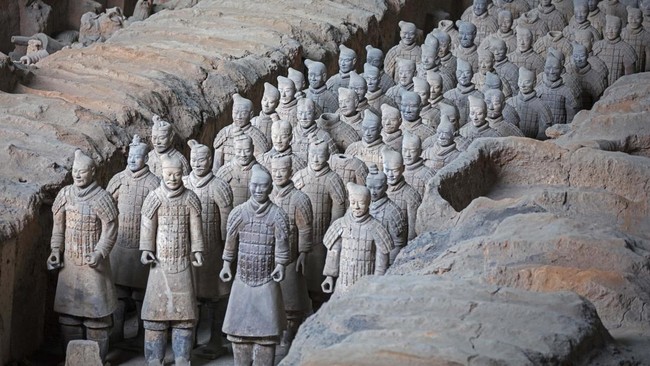
The tomb of China’s first emperor, Qin Shi Huang, remains unopened to this day despite being more than 2,000 years old. Archaeologists have a number of considerations behind the decision not to open the main burial chamber.
One of the greatest concerns is the risk of damage to the structure and artefacts inside the tomb, which may be impossible to restore once exposed to air. In addition, scientists have also found indications of high mercury levels around the tomb complex.
Many parties have suggested that the mercury came from industrial waste. Others have questioned whether the emperor drank mercury believing it would grant him immortality.
Another possibility is that the emperor ordered the construction of rivers of mercury around his tomb, as reported by Geographical on Sunday (16/8/2026).
Because no one has ever opened it, the contents of Qin’s tomb remain unknown. However, the historian Sima Qian, who lived a hundred years after the emperor, described the tomb as being filled with rare artefacts and astonishing treasures.
Craftsmen were also ordered to make bows and arrows ready to be released. These would be used against anyone who entered the tomb.
For context, Emperor Qin Shi Huang ruled from 221 BC to 210 BC. He has been described as a tyrannical monster who sought eternal life by drinking mercury mixed with wine.
Qin is famous for building a massive stone army known as the Terracotta Army, comprising 8,000 human-sized statues along with many horses and war chariots.
The Terracotta Army that fills the tomb is believed to have been intended to protect him in the afterlife.