
ARC USK: Domestic Patchouli Downstreaming Must Be Strengthened for Global Market
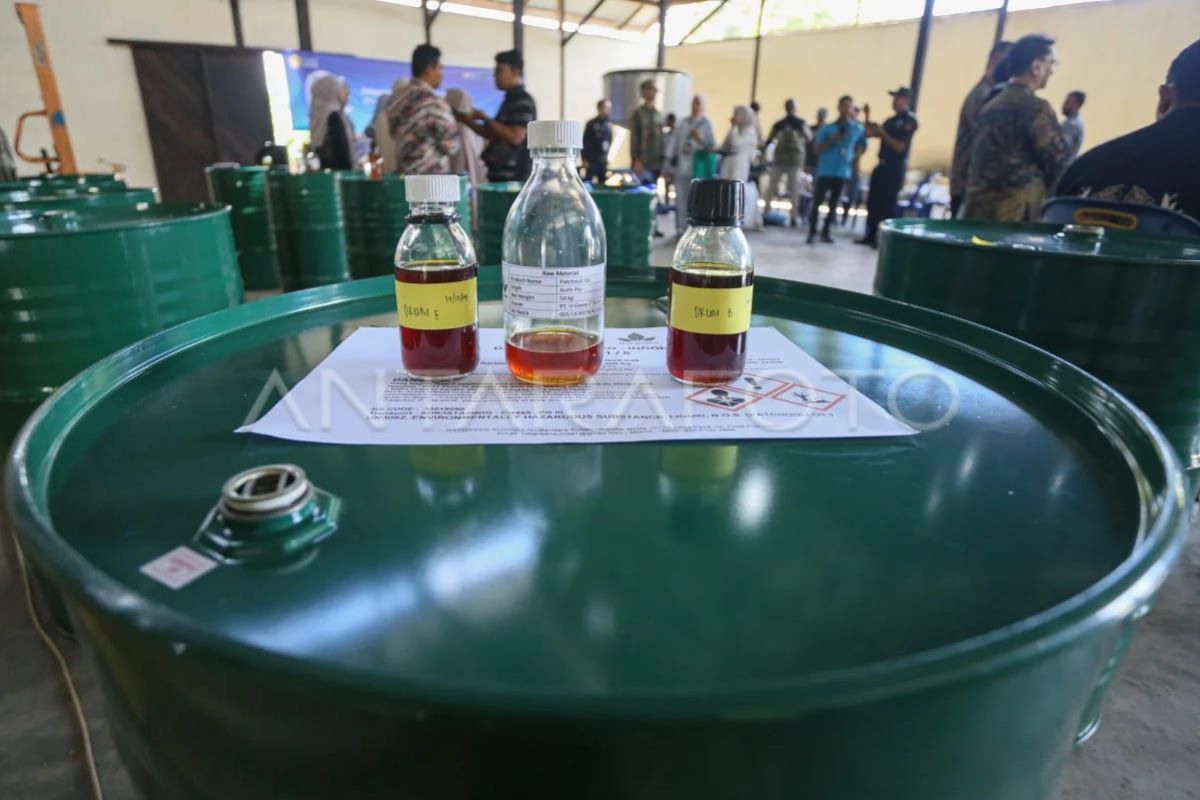
If we fail to meet these standards, the consequence is that our patchouli oil will be rejected.
Banda Aceh (ANTARA) — The Atsiri Research Center at Universitas Syiah Kuala (ARC USK) in Banda Aceh has stated that Indonesia needs to strengthen its supply chain and domestic patchouli downstream industry, given that the global patchouli oil industry is currently facing a wave of fairly stringent new regulations.
“The global patchouli oil industry is facing a wave of strict new regulations, especially from the European Union market. So Indonesia needs to strengthen downstream processing,” said the Head of ARC USK, Syaifullah Muhammad, in Banda Aceh on Friday.
He said that, given this situation, all pentahelix elements in Indonesia must promptly strengthen the supply chain ecosystem, domestic downstream industry, and tighten the standardisation of the national patchouli industry from upstream to downstream.
Syaifullah said the ARC team recently visited France. While in Europe, the team also visited the multinational fragrance company Firmenich and an international perfume workshop.
There, they learned that the global fragrance industry is currently under far stricter regulatory oversight, particularly in the European Union region.
“Among other things, there are new standards such as REACH concerning the withdrawal of non-compliant products from the market, CLP for labelling standards, monitoring of certain substances by ECHA, as well as sustainable packaging rules through PPWR and ISO, which are now being applied massively,” he said.
Syaifullah explained that this compliance initiative actually began in 2025, with the regulatory implementation phase running throughout 2026, and the final compliance deadline in 2028.
These rules will be fully enforced in 2029 for various components (ingredients) of the world’s perfumes, including patchouli oil.
He continued that the regulation will have a direct impact on rising standards across various lines, including strict supply chain traceability documentation requirements.
This situation presents a serious alarm and challenge for Indonesia’s patchouli commodity, particularly in Aceh, where most of the cultivation and distillation processes are still traditionally managed by local communities.
Compliance with standard operating procedures at every stage of production is no longer negotiable — from seedling, cultivation techniques, plant maintenance, distillation, through to packaging and labelling, everything must meet international standards.
“If we fail to meet these standards, the consequence is that our patchouli oil will be rejected by overseas buyers,” he asserted.
Therefore, as a concrete solution, Syaifullah is pushing for integrated, intensive guidance for farmers, distillers, and local exporters so they can adapt to the high standards demanded by the global market.
This is because the key to defending the national patchouli economy also lies in accelerating downstream processing. Indonesia must therefore strengthen its domestic downstream industry, so it can set its own national standards for patchouli oil and its derivative products.
“Through purification and formulation technology, we can process this essential oil into intermediate products such as hi-grade patchouli as well as end products. This step will simultaneously serve as an economic buffer for the national patchouli industry,” said Syaifullah Muhammad.
Source: jawawa.id (https://jawawa.id/newsitem/arc-usk-domestic-patchouli-downstreaming-must-be-strengthened-for-global-market-1783684444)
Originally published by Antara (Indonesian) (https://www.antaranews.com/berita/5644345/arc-usk-hilirisasi-nilam-dalam-negeri-perlu-diperkuat-ke-pasar-global), translated from Indonesian