
Arafah Khutbah: Minister of Hajj Stresses Hajj Must Foster Piety and Humanity
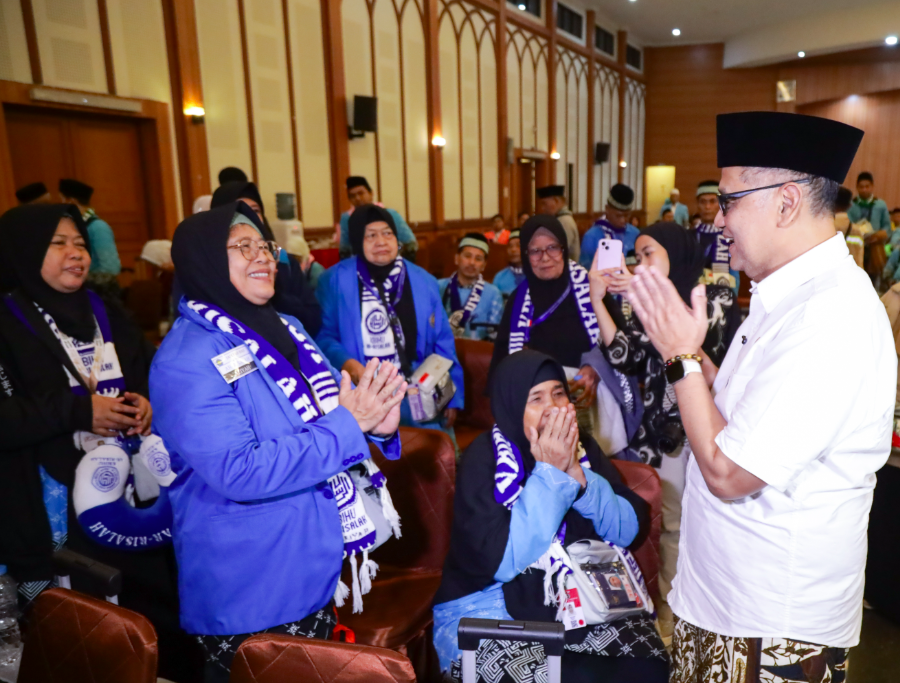
The Minister of Hajj and Umrah of the Republic of Indonesia, Moch Irfan Yusuf, delivered a key message during the Arafah Khutbah 1447 H/2026 M at the Plain of Arafah in Saudi Arabia. In his sermon, the Minister stressed that the standing at Arafah serves as a reminder of human equality, submission, and brotherhood before Allah SWT.
“Today we are in Arafah. In this sacred place, millions of people arrive in the same attire, offering the same prayers, and sharing the same hopes. All bow before Allah SWT,” said Minister Irfan Yusuf on Tuesday (26 May).
He explained that all Indonesian Hajj pilgrims had moved towards Arafah since Monday (25 May) at 07:00 Saudi time. The government, he added, is ensuring the pilgrims’ movement follows the schedule and receives safe and comfortable services ahead of the peak Hajj rituals.
According to the Minister, this year’s Hajj holds historical significance as it is the first time being conducted under the framework of the Republic of Indonesia’s Ministry of Hajj and Umrah, as stipulated in Presidential Regulation No. 92 of 2025.
“This year marks a crucial milestone. Hajj services must demonstrate the state’s more focused, directed, and closer presence to the pilgrims,” he stated.
During the speech, Minister Irfan Yusuf also outlined the operational developments of Indonesia’s Hajj. A total of 527 flight groups (kloters) with 202,551 pilgrims and 2,098 officials have arrived in Mecca. Additionally, 16,596 special Hajj pilgrims are already in Saudi Arabia.
Current service focus is on preparing for the peak Hajj rituals at Arafah, Muzdalifah, and Mina (Armuzna), including tent arrangements, catering, transportation, health services, pilgrim protection, and field officer readiness.
The Minister affirmed that this year’s Hajj follows the ‘Tri Sukses Haji’ concept: first, ritual success to ensure pilgrims’ worship is valid, orderly, and devout; second, a successful Hajj economic ecosystem that benefits the nation and strengthens accountable dam management; third, civilizational success through cultivating pilgrims’ patience, discipline, and courtesy.
“Hajj must not only foster personal piety but also produce positive impacts for society and the nation,” he said.
In his sermon, the Minister also highlighted the importance of balancing the preservation of life (hifz an-nafs) and the validity of worship (hifz ad-din). This includes implementing the ‘murur’ scheme for elderly, high-risk, and comorbid pilgrims to move from Arafah to Mina without stopping at Muzdalifah.
This scheme is designed to reduce crowding and fatigue without compromising the completeness of rituals as guided by officials.
Furthermore, the Minister stressed the government’s commitment to providing elderly, disability, and women-friendly Hajj services. He stated that every pilgrim must feel safe, protected, and receive empathetic service.
“Every limitation must receive support, and every officer must be prompt and understand the specific needs of pilgrims,” he said.
On the service aspect, the government has prepared ready-to-eat Nusantara-flavoured meals during the Armuzna phase. Each pilgrim will receive 15 meal portions distributed from 6 Dzulhijjah onwards to allow focus on worship.
Service digitalisation is strengthened through Command Centre monitoring and the Kawal Haji app to expedite field officer responses. Meanwhile, dam management continues to improve. To date, approximately 145,341 pilgrims have paid dam, either through Adahi in Saudi Arabia or payment mechanisms in Indonesia.
Most of the Indonesian pilgrims’ dam meat is directed to assist the Palestinian people through coordination with the Saudi government.
Closing his sermon, Minister Irfan Yusuf urged all pilgrims to utilise the Arafah moment for self-reflection and drawing closer to Allah SWT through increased prayer, remembrance, and seeking forgiveness.
“Arafah is a space for self-reflection. Let us fill the standing time with the best prayers for our families, national leaders, Indonesia’s safety, and may all pilgrims return home as mabrur hajis,” he concluded. (Fik/P-3)