
Arabs flock to Indonesia seeking plant mentioned in Quran
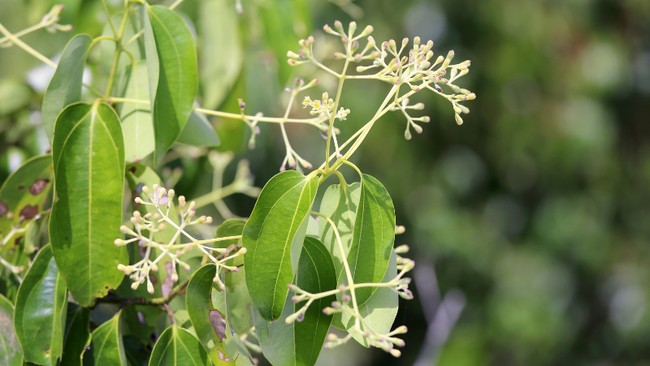
Long before Indonesia became known as the land of spices, the Nusantara region was already renowned in the Arab world for a high-value commodity: camphor. This commodity prompted Arab merchants to sail to Sumatra, establishing early trade routes with local communities.
In the Quran, specifically Surah Al-Insan verse 5, it is mentioned that the virtuous will drink a beverage blended with kafur. Scholars interpret kafur as the essence of the camphor plant, known for its distinctive aroma and high value. The camphor referenced in the Quran does not refer to the small synthetic fragrance products commonly used today, which are typically derived from naphthalene (C10H8). Instead, it is believed to refer to the plant known scientifically as Dryobalanops aromatica, which has a strong aroma and traditional health benefits.
Archaeologist Edward Mc. Kinnon, in Ancient Fansur, Aceh’s Atlantis (2013), noted that trade connections led Arabs to discover that camphor’s origin was in Indonesia, specifically in Sumatra’s Barus. Arab traders frequently cited Barus as a key port for camphor exports. For instance, merchant Ibn Al-Faqih in 902 described Fansur (Barus) as a producer of camphor, cloves, nutmeg, and sandalwood. The 13th-century geographer Ibn Sa’id al Magribi also specified that Fansur’s camphor came from Sumatra. Even earlier, Roman scholar Ptolemy mentioned Barus in the 1st century CE.
Consequently, many Arab traders, particularly merchants, travelled to Sumatra. They undertook long voyages from Arabia to obtain camphor, using large ships to transport high-quality camphor from Barus to international markets. Historian Claude Guillot, in Barus: A Thousand Years Ago (2008), noted that Arabs reached Barus via direct routes from the Persian Gulf through Ceylon (Sri Lanka) to Sumatra’s west coast.
The arrival of Arab traders not only facilitated trade but also spread Islam. Early Islamic influence in Barus, Thobri (Lamri), and Haru is evidenced by ancient Mahligai cemetery tombs dated to the 7th century CE. This supports theories on Islam’s introduction to Indonesia, though debates continue. Regardless, Muslim traders in Barus established trade networks connecting the Arab world with Indonesia, cementing the country’s historical prominence.