
Arabs Flock to Indonesia in Search of Plants Mentioned in the Quran
Arabs Flock to Indonesia in Search of Plants Mentioned in the Quran
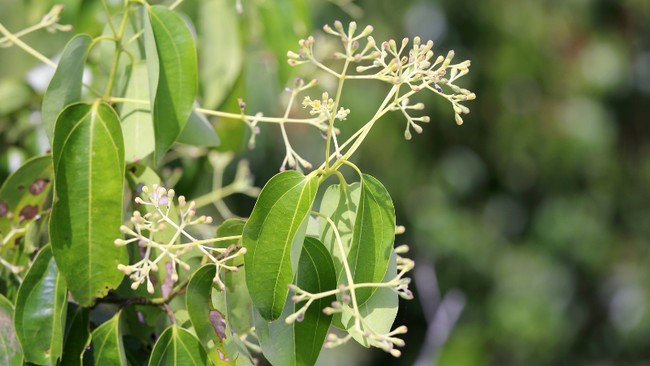
Jakarta, CNBC Indonesia — In the Quran, specifically Surah Al-Insan verse 5, it is mentioned that Allah promises those who do good deeds will drink from a cup containing a beverage mixed with camphor water. Several scholars interpret this camphor as referring to water derived from the camphor tree or kapur barus plant.
However, the camphor in the verse differs from modern mothballs commonly used as air fresheners or for wardrobes. The product known today is generally the result of chemical synthesis from naphthalene (C10H8).
The camphor mentioned in the Quran is believed to come from an aromatic plant with the Latin name Dryobalanops aromatica, a plant that has long been popular in Arab regions due to its distinctive aroma and health benefits, making it consumable.
However, Arabs did not easily obtain it because it was not native to their region. As a result, they had to seek out the center of camphor plants, which eventually led traders to a remote area in the eastern part of the world. This unknown area is now known as Indonesia.
Center of Camphor Plants
Archaeologist Edward Mc. Kinnon in Ancient Fansur, Aceh’s Atlantis (2013) mentions that trade relations gradually made Arabs aware that the center of camphor plants was in Indonesia, specifically on the island of Sumatra. More specifically, it is located in Fansur, now known as Barus.
Arab traders repeatedly mentioned Barus as an important port that transported commodities, one of which was camphor.
Arab trader Ibn Al-Faqih, for example, in 902 already mentioned Fansur as a region producing mothballs, cloves, nutmeg, and sandalwood. Then the geographer Ibn Sa’id al Magribi who lived in the 13th century also detailed that Fansur was a producer of camphor originating from the island of Sumatra. Even further back, Roman scholar Ptolemy mentioned Barus in the 1st century AD.
Based on this, many Arabs, especially traders, flocked to Sumatra. They were willing to make long voyages from Arabia to obtain camphor. Historian Claude Guillot in Barus Seribu Tahun yang Lalu (2008) mentions that Arabs arrived in Barus via a direct journey from the Persian Gulf, passing through Ceylon (Sri Lanka), and then arriving on the west coast of Sumatra.
They usually brought large ships to transport a lot of mothballs which would be sold at high prices in international markets. Gradually, the arrival of Arabs in Sumatra increased after camphor from Barus became known for its high quality, surpassing camphor from Malaya and Kalimantan.
At this point, Barus proved to be a region producing camphor and had developed into an important port in Sumatra.
The Emergence of Islam
The discovery of the location of mothballs in Indonesia led many Arab traders to visit Barus to stop over and eventually settle. If they were going to China, they would definitely stop in Barus first. However, their arrival was not only for trade purposes but also to spread Islam.
As a result, there was an Islamization of the local population in the places where Arab ships arrived, namely Barus (Fansur), Thobri (Lamri), and Haru. The early traces of Islam are believed to have entered Barus as early as the 7th century AD. This is evidenced by the existence of the ancient Mahligai tomb complex in Barus. There are tombstones dating from the 7th century.
From this, a theory emerged about the arrival of Islam in Indonesia, which is still debated. However, it cannot be denied that there was a process of spreading Islam there.
Regardless of the truth of this theory, Muslim traders in Barus succeeded in forming a trade network connecting the Arab world with Indonesia and made the country famous since ancient times.