
Arabian Peninsula on Edge as Houthis Missile Presidential Palace, Triggering Six Huge Explosions
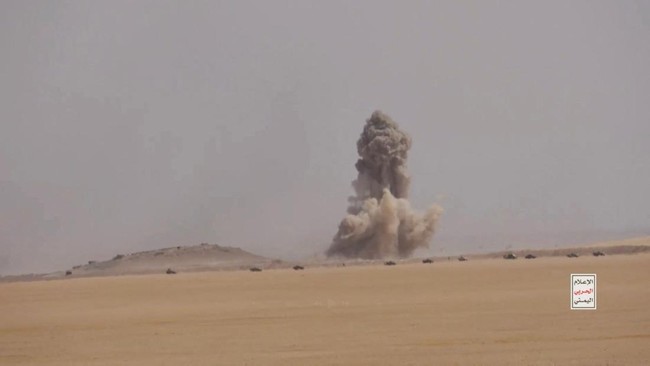
At least six powerful explosions in quick succession rocked the area near Al-Maashiq Presidential Palace, used by Yemen’s internationally recognised government, in the port city of Aden on Thursday. The deadly incident killed at least two people and injured six others, with the Iran-backed Houthi militant group immediately claiming full responsibility for the attack.
Asharq Al-Awsat reported on Friday (16 October 2026) that a direct attack on the palace complex was highly unusual amid intensifying fighting between the militia and the Saudi-led coalition. The series of blasts sparked widespread panic among nearby residents, who fled the scene.
A security official said two explosions occurred at the top of a hill near the palace, while two others struck near the security gate. The Aden-based SABA news agency reported that the government had confirmed the Houthis carried out the attack using a combination of missiles and unmanned aerial vehicles (drones).
In response, Yemen’s Information Ministry quickly confirmed that Prime Minister Shaya Al Zindani and his ministers were safe. Government officials said most Yemeni leaders, both those living in exile and those in Aden, were unharmed. They no longer hold regular meetings inside the palace as a precaution against such threats.
Presidential Leadership Council chairman Dr Rashad Al Alimi contacted ministers after the attack. He said the bombing was an extension of the militia’s indiscriminate terror tactics, which target airports, oil facilities and civilian sites in Yemen and Saudi Arabia, posing a clear threat to regional security and waterways.
“I have instructed the relevant military and security authorities to take decisive action to protect state institutions and respond to the source of the threat,” Al Alimi said.
Yemen’s Cabinet echoed his comments in a statement, saying the attack further exposed the Houthis’ terrorist approach. It vowed that the violence would not deter the government from continuing its efforts to restore the country and end the coup through the Dawn of Yemen Operation.
The Cabinet also urged the United Nations and the international community to take a firm stance, pressure the Houthis to stop targeting civilians and hold those responsible to account.
“Yemen’s future will not be held hostage by a militia that takes up arms against its people, targets the security of its neighbours and relies on violence to conceal Yemen’s rejection of its coup project,” it said.
Elsewhere, the escalation has revived fears of a devastating civil war after four years of relative calm. The worst crisis is now centred on Taiz, which is under a tight Houthi siege. Residents of Yemen’s third-largest city are running short of basic necessities, prices are soaring uncontrollably and petrol stations have run dry. The World Food Programme (WFP) warned that it can no longer reach more than 600,000 people in Taiz who depend on humanitarian aid.
At a press conference in Taiz on Thursday evening, the Health Ministry announced that 120 people had been killed and 307 wounded in fighting recorded up to 5 October, with most casualties in Taiz, Saada and Jawf.
The International Committee of the Red Cross (ICRC) also described Taiz as the area bearing the country’s heaviest casualty burden. A resident, Fathiyya Mohamed Al Mugahed, recounted her struggle to find flour, cooking gas and fuel, all of which remained unavailable.
“The Houthis have surrounded us on every side. Projectiles are the only thing we receive from them,” Al Mugahed said.
Source: jawawa.id (https://jawawa.id/newsitem/arabian-peninsula-on-edge-as-houthis-missile-presidential-palace-triggering-six-huge-explosions-1792111898)
Originally published by CNBC Indonesia (https://www.cnbcindonesia.com/news/20261016055641-4-776653/arab-panas-houthi-rudal-istana-presiden-6-ledakan-besar-pecah), translated from Indonesian