
Arab Infrastructure in Ruins as Iran’s Weapons Leave the US Helpless
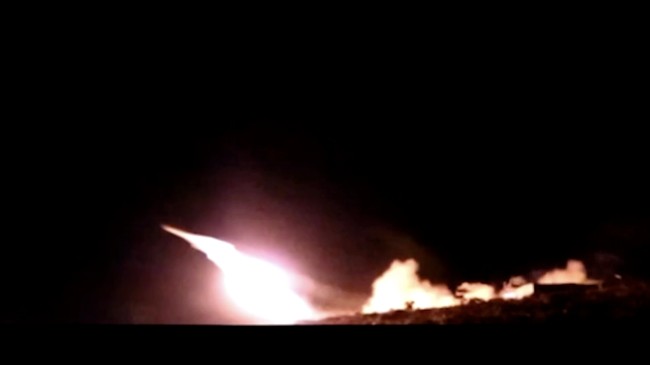
Iran and its allies have covertly carried out dozens of high-precision strikes on vital infrastructure across the Gulf since war broke out with the US and Israel on 28 February 2026. The highly coordinated campaign has disabled crucial equipment, triggered cascading failures and caused massive economic losses across the region, while also helping explain how the Islamic Republic has held out against the military might of the United States (US).
An investigation found that at least 135 Iranian drone and missile strikes had hit 84 civilian infrastructure sites in Arab Gulf states, Reuters reported on Thursday (15 October 2026). The precision strikes deliberately targeted critical equipment that is not visible in satellite imagery, aiming to maximise the destruction.
“Every target is civilian: airports, terminals, refineries, gas-processing plants, residential areas, shopping centres and, most recently, the Barakah nuclear power plant,” said Sultan Al Jaber, chief executive of the Abu Dhabi National Oil Company (ADNOC).
Targets of Iran-backed proxy groups, including Yemen’s Houthis and Iraqi Shi’ite militias, included vital oil-routing systems at the UAE port of Fujairah, a key alternative route for bypassing Iran’s blockade of the Strait of Hormuz. They also struck Qatar’s Ras Laffan liquefied natural gas facility, destroyed pumping stations along Saudi Arabia’s main oil pipeline and repeatedly targeted airports in Saudi Arabia, the UAE, Kuwait and Bahrain.
Fujairah port alone has been hit by Iranian missiles and drones at least 19 times. The first strike, announced on 3 March, hit fuel tanks, causing a fire that burned for three days and forcing two oil-storage companies to suspend operations. A further attack in mid-March destroyed two matrix manifolds, critical transfer systems containing 62 pipeline connections. Oil exports fell to 440,000 barrels a day—less than half the 2025 daily average.
Elsewhere, strikes disabled Emirates Global Aluminium’s Al Taweelah smelter and damaged major Amazon data centres in the UAE and Bahrain. In Kuwait, Iran targeted at least four desalination facilities connected to power plants, an action that could potentially cut off 90% of the country’s drinking-water supply.
In Saudi Arabia, processing facilities and refineries were also badly damaged in a series of deadly attacks, including the destruction of three pumping stations along the East-West Pipeline to the Red Sea port of Yanbu. Following the sabotage, Saudi Arabia’s average daily oil production fell sharply to below seven million barrels, with financial losses estimated at more than US$50 billion (Rp900 trillion).
A deadly attack at King Khalid International Airport in Riyadh also killed at least 12 people last weekend.
Despite the extensive damage, Gulf states have sought to limit information, claiming that the destruction was caused solely by falling debris from intercepted Iranian weapons. The UAE, Bahrain, Qatar, Kuwait and Saudi Arabia have imposed strict laws restricting the circulation of images and videos of missile-hit sites. Experts say the situation on the ground is different.
“Gulf states are now treating damage assessments as if they were state secrets,” said Matthew Reed, president of oil consultancy Foreign Reports.
Iran’s success in carrying out precision strikes is believed to have depended in part on foreign intelligence, possibly supplied by Russia and China, as well as informant networks infiltrating sensitive sites. The article says the destructive attacks ultimately forced the UAE to yield.
It alleges that the UAE secretly agreed to release US$10 billion (Rp180 trillion) in Iranian funds previously frozen in the Emirati banking system, as a tactical move to spare its territory further attacks by Tehran.