
Arab Duo Split! Saudi and UAE Now Urged to Unite Against Houthis in Yemen
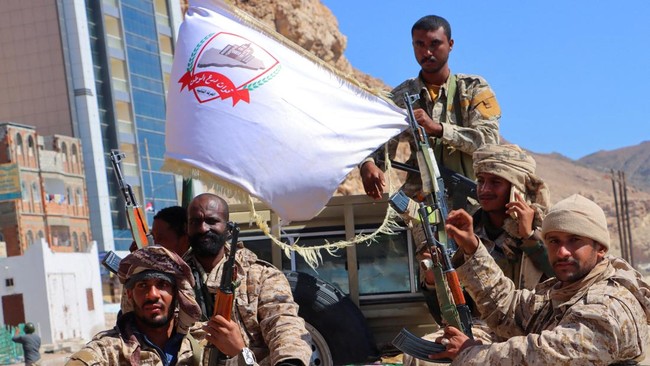
Saudi Arabia is being urged to repair its relationship with the United Arab Emirates (UAE) regarding the conflict in Yemen. Reconciliation between the two nations is seen as a necessary price for Riyadh if it wishes to build a military alliance strong enough to push back the Hounthi group.
According to a report by The Guardian on Wednesday (30/09/2026), Saudi-UAE relations in Yemen have deteriorated since January this year. While both nations previously supported groups fighting the Houthis, the relationship changed drastically when Saudi forces attacked and defeated the Southern Transitional Council (STC), a group affiliated with the UAE.
The attack was intended to thwart attempts by the STC to re-establish a separate state in southern Yemen. Following this, the UAE effectively withdrew from Yemen.
The situation shifted after the Iran-aligned Houthis unexpectedly advanced towards the Bab al-Mandab Strait in mid-September. This southward progress by Houthi forces has fundamentally altered the region’s geopolitical map.
In this offensive, the National Resistance Forces led by Tareq Saleh, which were previously supported by the UAE, suffered defeats, with their defensive lines collapsing rapidly.
The future role of the UAE in Yemen became a key topic during a meeting in Abu Dhabi on Sunday. The meeting was attended by Israeli Prime Minister Benjamin Netanyahu, UAE President Sheikh Mohammed bin Zayed Al Nahyan, and several other Arab nations, including representatives from Saudi Arabia.
Netanyahu reportedly offered assistance to Saudi Arabia to defeat the Houthis. However, Riyadh may find it difficult to accept this offer, particularly as US President Donald Trump has yet to respond to Saudi requests for American assistance in confronting the Houthis in Yemen.
Discussions regarding Yemen continued on Tuesday during a meeting in Riyadh between Saudi Defence Minister Prince Khalid bin Salman Al Saud and UAE Vice President Sheikh Mansub bin Zayed Al Nahyan. This meeting serves as a signal that both parties may be seeking ways to mend their fractured relationship, though initial stages may be limited to cooperation in the energy sector.
The push for common ground has intensified after the Houthis successfully advanced near the Bab al-Mandab Strait, a strategic route for Saudi oil exports. After seizing several territories, Houthi forces are now attempting to consolidate their positions and move towards the city of Taiz in southwestern Yemen.
“Houthi forces are launching waves of simultaneous attacks on the city, attempting to drain the strength of the Taiz Axis forces defending it,” said Baraa Shiban, a Gulf and Yemen expert from the RUSI defence studies institute, who recently spent a week in Taiz.
“Houthi forces are indeed pushed back, but then the following day they attack again from a different front.”
According to Shiban, efforts to end the Saudi-UAE dispute are underway, with several steps being taken to rebuild trust. However, he believes the UAE’s return to Yemen will not be easy, as Abu Dhabi had previously withdrawn and maintains ties with the STC.
“Efforts are being made to end the rift between Saudi Arabia and the UAE, and there may be steps to build trust. However, the UAE has left Yemen, and it is unlikely Riyadh will allow them to return because they are allied with the STC, which would cause problems… the UAE and Saudi Arabia are essentially on opposing sides,” he noted.
STC leader Aidarous al-Zubaidi fled into exile after his forces were attacked by Saudi Arabia. Since then, the STC has been increasingly marginalised from the Yemeni political stage.
Former Yemeni Foreign Minister and STC supporter, Khaled Alyemany, stated that Saudi Arabia may need to reconsider its political approach to the southern Yemen issue. This is because the Giant Brigades, a southern force previously trained by the UAE and linked to the STting, remains one of the most reliable and well-equipped forces on the ground to halt the Houthi advance.
The STC itself has urged the Giant Brigades to reject plans for integration with the Yemeni government forces, fearing such a move would weaken their struggle for independence.
“We cannot fight and war in the north against the Houthis if we do not have the prospect of our independence,” said Alyemany.
He noted that the UN-recognised Yemeni government, currently operating from exile in Riyadh, is asking southern citizens to fight to retake the capital, Sanaa, but has failed to provide guarantees regarding the right of southern Yemenis to self-determination.
“The UN-recognised government… operating from exile in Riyadh, insists that southerners fight to retake the capital, Sana’a, on its behalf, but without any promise regarding the southern right to self-determination,” he said.
“The problem is, as long as the Yemeni government derives its legitimacy from Saudi financiers rather than its people, the result will not be Saudi Arabia’s stated goal, which is security along its southern border,” added Alyemany.
Meanwhile, the White House is reportedly quietly encouraging the UAE and Saudi Arabia to end their dispute. Washington has proposed the formation of an integrated military command involving the Southern Giant Brigades to counter Houthi advances.
There is also a proposal to utilise Israeli intelligence and hire Israeli private security companies. The UAE is known to have utilised Israeli security firms in Yemen in the past during certain operations.
Source: jawawa.id (https://jawawa.id/newsitem/arab-duo-split-saudi-and-uae-now-urged-to-unite-against-houthis-in-yemen-1790729565)
Originally published by CNBC Indonesia (https://www.cnbcindonesia.com/news/20260930063427-4-771959/duo-arab-pecah-saudi-uea-kini-didesak-bersatu-lawan-houthi-di-yaman), translated from Indonesian