
Arab Countries Queue Up for Indonesia, Trade Minister Reveals the Reasons
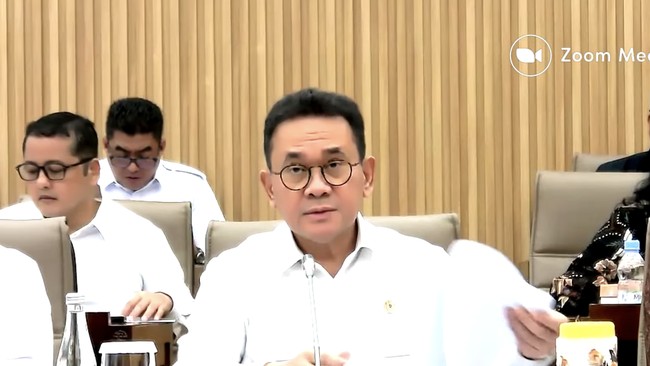
Trade Minister Budi Santoso has revealed that several countries in the Middle East are now actively exploring trade cooperation with Indonesia. This phenomenon follows Indonesia’s success in establishing a Comprehensive Economic Partnership Agreement (CEPA) with the United Arab Emirates (UAE), which is seen as an entry point to the region.
“Why are 40% of our exports to the UAE in the Middle East? Because we already have a CEPA with the UAE. Indeed, making trade agreements with Middle Eastern countries is not easy. Negotiating with that region is indeed challenging. Even with the EU, it took us 10 years. We’ve been negotiating with the Middle East for a long time too,” Budi said at the Kadin Indonesia National Coordination Meeting in Jakarta on Thursday (30/4/2026).
He explained that the strategy to open up the Middle East market is being pursued gradually by using one country as the initial entry point. The UAE was selected as the first partner through the completion of a comprehensive trade agreement or CEPA, which then serves as a reference for success for other countries in the region.
According to him, the success of cooperation with the UAE has encouraged increased interest from other Middle Eastern countries to explore similar negotiations with Indonesia, thereby expanding national export opportunities to the region.
“So how to make the Middle East easier? That’s why we first, so to speak, target one. We invite the UAE to cooperate, and it turns out they are willing. After completing the CEPA with the UAE, now other Middle Eastern countries are starting to actively negotiate with us. So that’s actually one way: once the UAE succeeds with us, other Middle Eastern countries also want to make trade agreements,” he clarified.
Amid the rising interest in cooperation, Budi also acknowledged that the current global trade situation remains full of challenges, including the impact of geopolitical conflicts in the Middle East.
“Now in the trade sector, especially global trade, we are indeed facing many challenges. Last year, we dealt with reciprocal tariffs. Now there’s the war in the Middle East, which certainly has an impact. But our exports are still positive. In January-February, we grew by 2.19%. That means 70 consecutive months of surplus,” he stated.
“Indeed, to the Middle East, it definitely affects us. In January-February, our exports to the Middle East dropped 13%. But we still have a surplus of US$641 million to the Middle East. Our exports to the Middle East are US$9.8 billion or 3.4% of our total world exports. Of that 100% to the Middle East, 40% is to the UAE, 29% to Saudi Arabia, and the rest to several other Middle Eastern countries. To Iran, it’s 2.5% or US$2.5 million,” he detailed.
Even though exports to the region were temporarily pressured, he emphasised that Indonesia still recorded a trade surplus, demonstrating the resilience of national export performance.
In addition, the government continues to expand its network of trade agreements with various countries and regions to strengthen export market access.
“We have completed five trade negotiations: EU-CEPA, Indonesia-Canada-CEPA, Eurasia-FTA, Indonesia-Peru-CEPA, and actually with Tunisia, it’s already done. But up to now, it hasn’t been signed yet, perhaps because the Tunisian Trade Minister wanted to come to Indonesia at that time, but it hasn’t happened yet. So we’re just waiting to sign,” Budi revealed.
Looking ahead, the government hopes that the trend of interest from Middle Eastern countries towards Indonesia can continue to be leveraged to expand export markets, while strengthening Indonesia’s position amid global trade uncertainties.