
APTRI proposes raising government sugar purchase price to Rp16,875 per kg to boost farmers
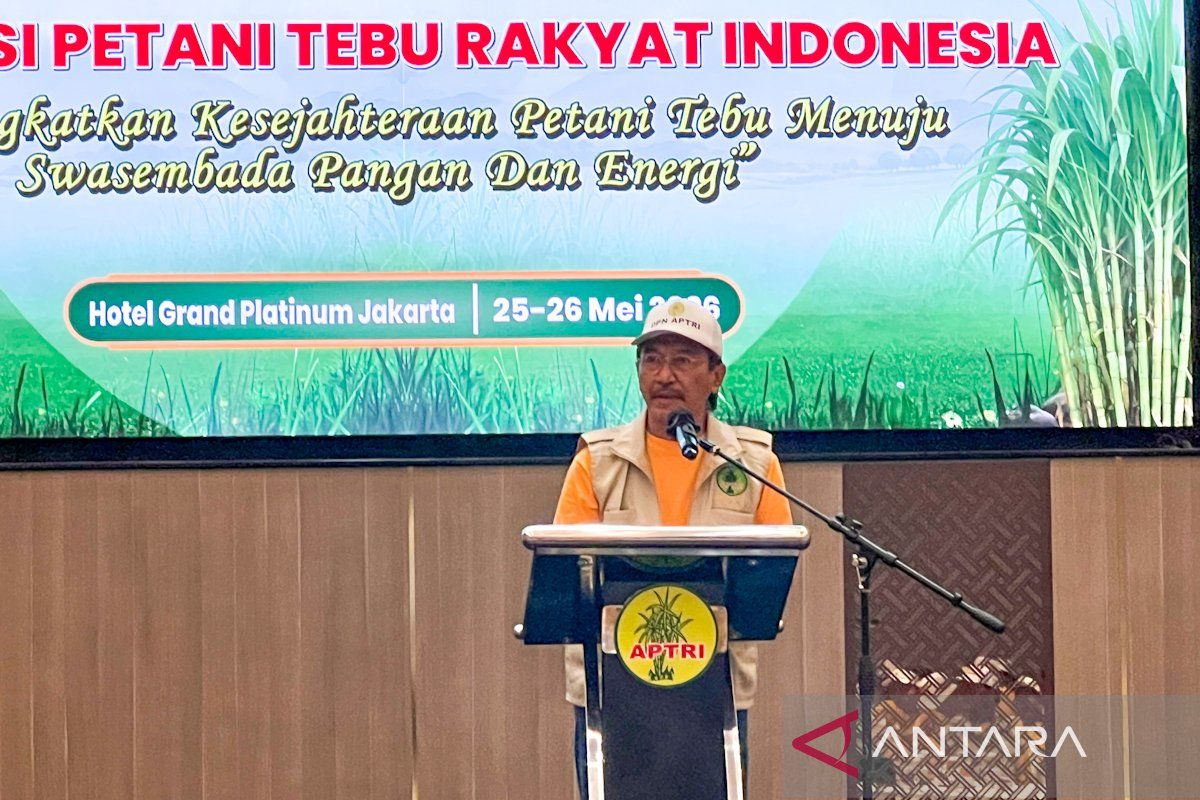
We have submitted a written proposal for Rp16,875 per kg. Jakarta (ANTARA) – The Indonesian Sugarcane Farmers Association (APTRI) has proposed raising the government purchase price (HPP) for sugar to Rp16,875 per kilogram and abolishing the consumer maximum retail price (HET) to strengthen sugarcane farmers’ welfare. ‘We have submitted a written proposal for Rp16,875 per kg,’ said APTRI Chairman Soemitro Samadikoen after the opening of APTRI’s National Working Meeting in Jakarta on Monday. Soemitro explained that the proposal was carefully calculated to account for rising production costs while maintaining economic balance with other food commodities. The current producer-level HPP stands at Rp14,500 per kg. He stated that sugar prices should be around 1.5 times the price of rice to ensure sugarcane farmers’ income remains competitive with other staple crop producers. He added that the ideal selling price for farmers should approach Rp18,000 per kg to provide healthier profit margins amid rising production costs. However, the sugarcane farmers’ association stressed that this figure should not be fixed as the HPP but achieved through more flexible market mechanisms. Therefore, APTRI urged the government to stop capping consumer retail prices (HET) and instead intervene in the market only during excessive price spikes. APTRI said strict price caps discourage traders from selling sugar due to fear of penalties when prices exceed the set limit. This situation risks creating an illusion of scarcity in modern markets despite adequate supply at producer and traditional trader levels. The association also noted that a single consumer price policy fails to incentivise producers to improve sugar quality, as products of varying quality are sold at the same price cap. He added that removing the HET would allow high-quality sugar producers to earn better returns, driving improvements in the national sugar industry. The organisation believes attractive price incentives will encourage farmers to expand sugarcane cultivation areas, including through independent land acquisition without waiting for new zones to be opened. APTRI cited examples where member farmers could increase planting areas if sugarcane farming becomes more profitable. Alongside area expansion, higher farmer incomes are expected to promote more efficient use of production inputs, gradually boosting sugarcane field productivity. APTRI views productivity as key to achieving sugar self-sufficiency, as higher yields per hectare can increase farmer profits without relying solely on price hikes. To maintain market stability after HET removal, APTRI proposed the government establish a national sugar reserve managed by a state agency for intervention during price volatility. APTRI also highlighted the sharp rise in non-subsidised fertiliser prices as the biggest pressure on sugarcane farmers, with ZA Plus costs increasing from Rp4,300 to around Rp8,600 per kg in 2026. APTRI noted that fertiliser prices have risen gradually from Rp5,000 to over Rp8,000, while farmers continue to face national sugar price caps despite rising production costs. Sugarcane farmers also complained about limited subsidised fertiliser allocations, restricted to 2 hectares per farmer with only around 108kg of subsidised ZA. APTRI urged the government to swiftly review HPP and HET policies to ensure farmers have sufficient profit margins to offset rising fertiliser, labour, and operational costs. At the same event, Radian Bagiyono, Assistant Deputy for Competitiveness of Plantation and Horticulture Products under the Food and Agriculture Business Coordination Deputy of the Coordinating Ministry for Food Affairs, stated the government continues to balance farmer and consumer interests in sugar policies. Regarding APTRI’s proposal to adjust HPP and remove HET, Radian said the government would review the outcome of the sugarcane farmers’ association’s audience with Coordinating Minister for Food Affairs Zulkifli Hasan. He added that further discussions could proceed via a limited inter-ministerial coordination meeting if necessary to evaluate proposals in the national sugar sector. Radian also stated that APTRI’s HET removal option is among the inputs to be reviewed by relevant ministries, including Trade, Industry, and Agriculture, before any government decision is made.