
APTI Warns Government: PP 28/2024 Could Devastate Industry and Millions of Workers
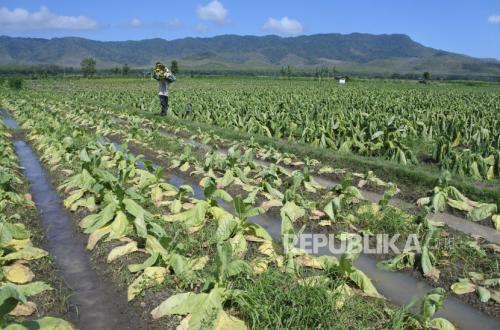
JAKARTA – Yudha Sudarmaji, an official of the Indonesian Tobacco Farmers Association (APTI), has warned the government that the impact of implementing Government Regulation (PP) 28/2024 will not stop at the level of farmers. The regulation, which contains derivative rules under Law No. 17 of 2023 on Health, is seen as threatening the survival of millions of tobacco farmers.
He estimated that declining production in the Tobacco Products Industry (IHT) resulting from various restrictions would trigger reduced uptake of locally grown tobacco, potentially replaced by imported raw materials.
“What worries us most is the decline in uptake of farmers’ tobacco. If industry no longer needs tobacco with the character produced by local farmers, then their harvests will go unsold,” Yudha said in a press statement on Wednesday (29 July 2026).
Yudha said Indonesia’s tobacco ecosystem involves around six million people, ranging from farmers and farm labourers to processing workers and factory employees. He therefore urged the government to review the derivative rules of PP 28/2024 and open a dialogue with stakeholders in the tobacco sector before the rules are enforced.
“We want the government to pay attention to the continuity of tobacco farmers. For many regions, including Temanggung, tobacco is the community’s main source of livelihood,” he concluded.
Earlier, hundreds of tobacco farmers from various tobacco-producing centres across Indonesia staged a protest outside the office of the Coordinating Ministry for Human Development and Culture (Kemenko PMK) in Jakarta on Tuesday (21 July 2026). The demonstrators demanded the government revoke the derivative rules of Government Regulation (PP) No. 28 of 2024.
The protest was joined by around 300 to 500 farmers from a number of tobacco-producing regions, including Temanggung, Wonosobo, Magelang, Boyolali, Klaten, West Java and East Java. Participants travelled from their respective regions starting the day before.
The protest coordinator, Yamuhadi, stressed that the demonstration was a joint movement of tobacco farmers across regions, not merely representatives from Temanggung. “This is not only an action by Temanggung tobacco farmers, but a joint action by tobacco farmers from various regions such as West Java, East Java, Wonosobo, Klaten, Magelang, Boyolali and other areas,” he said.
The farmers’ main objection is to provisions in PP 28/2024 and its derivative rules regulating limits on tar and nicotine content in tobacco products. According to Yamuhadi, the policy does not fit the natural character of local tobacco, which is genetically predisposed to tar and nicotine levels above the thresholds the government intends to set.
“Our tobacco plants naturally have high nicotine content, and that cannot be changed because it is the character of the plant,” he said.
Beyond tar and nicotine limits, farmers also reject plans to introduce plain packaging for cigarette products. This policy is seen as narrowing the IHT’s room to operate, suppressing factories’ uptake of harvests, and ultimately severing the economic chain for upstream farmers.
Yamuhadi threatened to mobilise a larger crowd if the government continues to ratify the derivative rules. He said enforcing the policy without considering farmers’ aspirations would amount to the ‘mass killing’ of livelihoods, given that tobacco is the most economical crop for highland communities during the dry season.