
APSMI Annual Summit 2026 Highlights the Importance of Health Literacy in the AI Era
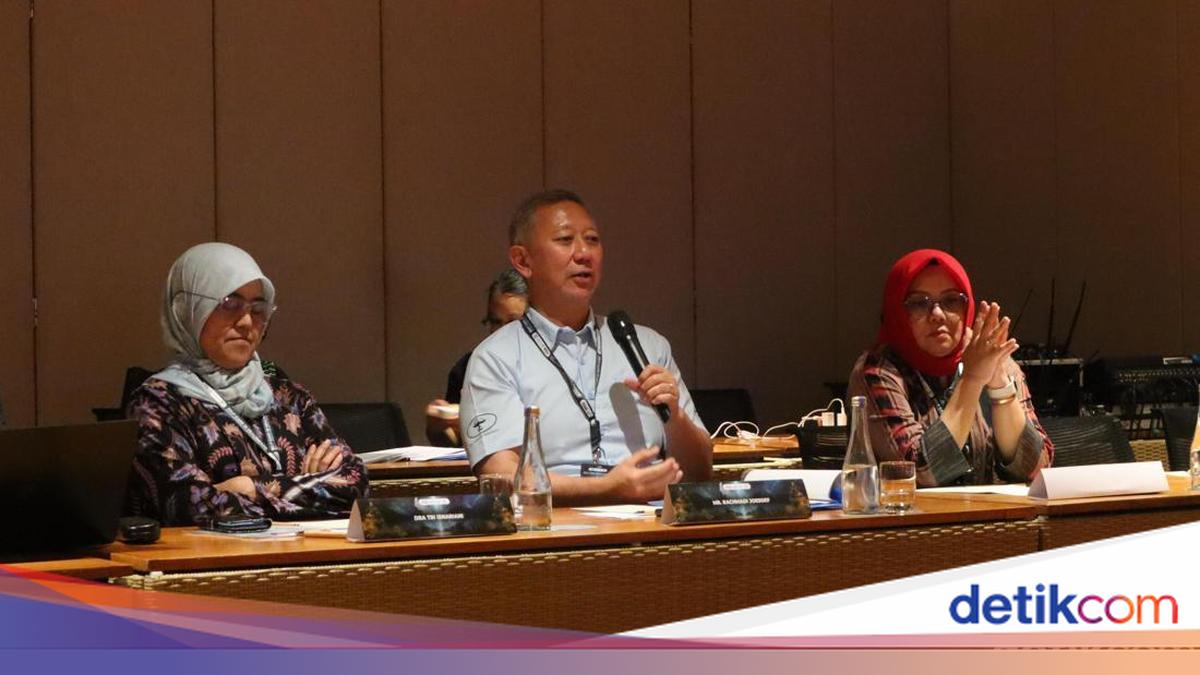
The widespread use of artificial intelligence (AI) to seek health information was one of the issues highlighted at the Asia-Pacific Self-Medication Industry (APSMI) Annual Summit 2026. The public needs sound health literacy to assess information and practise responsible self-medication, participants said.
The summit was held at the Paradisus by Melia hotel in Nusa Dua, Bali, on Friday (30 October 2026). It brought together governments, regulators, health experts and pharmaceutical industry players from across the Asia-Pacific to strengthen collaboration and promote safe self-medication.
Dita Novianti, Director of Pharmaceutical Production and Distribution at the Ministry of Health, said health literacy levels in Indonesia varied widely. The government, she said, was running several education programmes to improve public understanding of medicine use.
“Literacy levels in Indonesia vary greatly, from very low to very high. That is why we have initiated many programmes at the Ministry of Health,” Dita said.
One of the key programmes is the Smart Use of Medicines Community Movement (GeMa CerMat). It teaches people how to read medicine labels, use medicines correctly, and store and dispose of medicines that are no longer needed.
The Ministry of Health is also working to build the capacity of staff at minimarkets and supermarkets authorised to sell over-the-counter and limited over-the-counter medicines, so they can provide consumers with accurate guidance. It is also delivering early education through schools and using social media.
Dita said many people still did not understand medicine classifications, indicated by coloured circles on packaging. Each class of medicine, she noted, has different rules governing its use and availability.
“We need proper health literacy. Some medicines require a doctor’s prescription, while others can be sold over the counter,” Dita said.
“Medicines that can be sold over the counter include non-prescription and limited non-prescription medicines. Those marked with a blue or green dot can be bought at pharmacies or supermarkets. Other medicines require a doctor’s prescription because their use carries risks and must be supervised by a doctor or someone with the appropriate expertise,” she added.
Dita also cited the use of antibiotics, which some members of the public still do not fully understand. Patients need to follow the dosage and duration of treatment prescribed by their doctors, she said.
“Antibiotics are medicines used to kill microbes. Doctors always say to finish the course, because if you do not, the bacteria can become stronger. Then, if you take antibiotics again in the future, the bacteria may be resistant and the treatment will not work,” she explained.
Challenges in the AI era and the role of regulators
Dita outlined the challenges for self-medication as the use of AI to find health information becomes more widespread. The convenience AI offers must be matched by people’s ability to screen information, she said, so they do not rely on unverified recommendations.
“We counter information when it appears inaccurate. As public literacy improves, people will be able to distinguish good information from bad,” Dita said.
From the regulatory side, Tri Asti Isnariani, Director of Drug Registration at the National Agency of Drug and Food Control (BPOM), stressed the importance of transparent information for every medicine granted marketing authorisation. Such transparency is a crucial element assessed during the licensing process, she said.
“Every approved medicine must be accompanied by information intended for its users. Transparency of that information is one of the things we assess during the licensing process,” Isnariani said.
At the meeting, APSMI also introduced its first regional survey, conducted with IPSOS, on digital e-labelling and the simplification of regulations for over-the-counter (OTC) medicines. The findings will be discussed in greater depth at the Self-CARER forum.
Self-medication’s contribution to the health system
APSMI Chairman Rachmadi Joesoef said appropriate self-medication could significantly reduce pressure on the health system. By treating minor ailments independently with suitable over-the-counter medicines, he said, medical staff time and resources could be directed towards patients who genuinely need further care.
“Self-medication makes an important and measurable contribution to the health system. Research by the Global Self-Care Federation shows that self-medication saves the global health system US$144 billion a year, while saving 2.2 billion hours of doctors’ time and 13 billion hours of travel and waiting time for the public,” Rachmadi said.
Rachmadi said APSMI had established a working group to address strategic issues discussed at the meeting, including digital health development, information provision, tackling misinformation and regulatory simplification.
“We must be able to address this through our digital efforts, information provision, action on misinformation and regulatory streamlining. We must ensure regulation is efficient while maintaining safety and quality,” Rachmadi said.
Source: jawawa.id (https://jawawa.id/newsitem/apsmi-annual-summit-2026-highlights-the-importance-of-health-literacy-in-the-ai-era-1793379035)
Originally published by detikBali (https://www.detik.com/bali/berita/d-8731895/apsmi-annual-summit-2026-soroti-pentingnya-literasi-kesehatan-di-era-ai), translated from Indonesian