
Aprindo pushes for shorter fortified rice distribution chain to lower prices
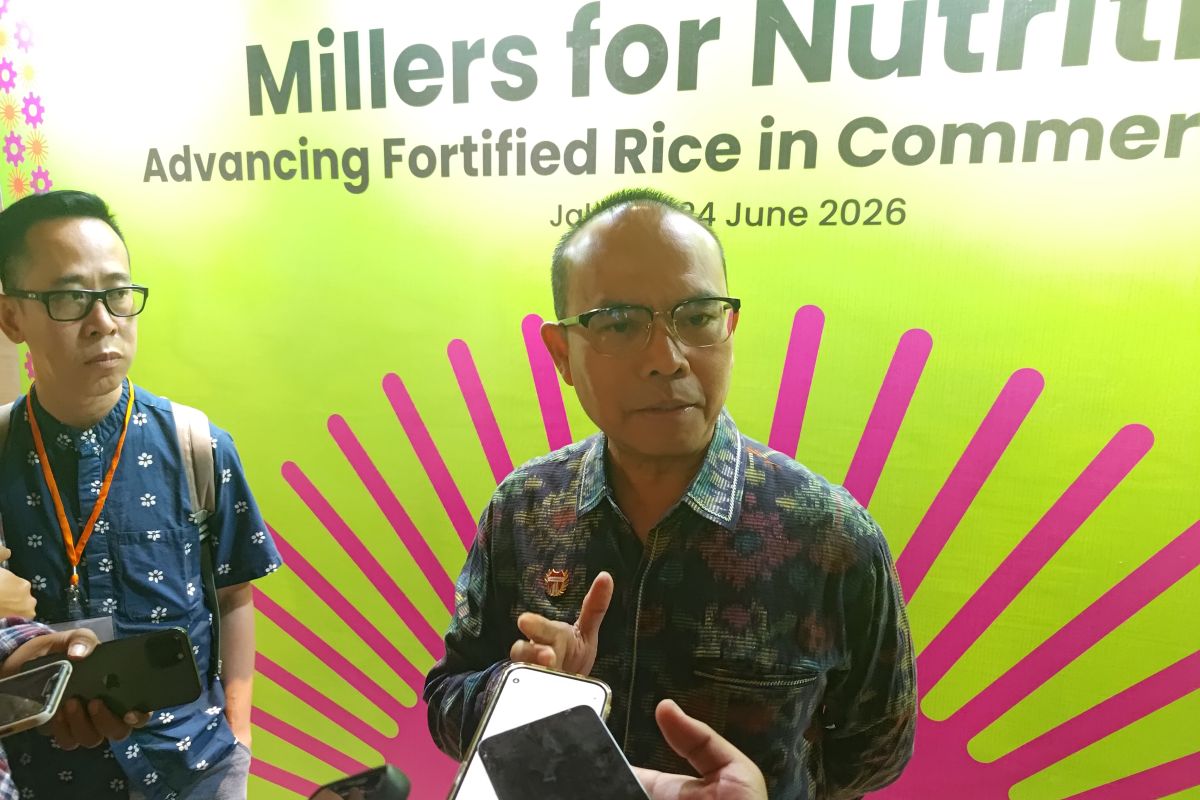
The Indonesian Retail Entrepreneurs Association (Aprindo) is pushing for a shortening of the fortified rice distribution chain to suppress product selling prices, making it more affordable for the public and expanding access to nutritious food. “We will assist from the distribution aspect so that the network chain is not too long, because the longer the process, the higher the costs,” said Aprindo Executive Director Dasep Suryanto during a panel discussion titled “Making Quality Fortified Rice Affordable in Retail Market” in Jakarta on Wednesday. According to Dasep, shortening the distribution path can be achieved by strengthening direct relationships between rice mills and modern retailers so that costs arising along the supply chain can be reduced. He said this step is necessary because the price of fortified rice circulating in the market currently still has a fairly wide range. “Currently in retail we are having difficulty obtaining premium rice. What is available now is actually a lot of fortified rice, but the price range of this fortified rice is very wide,” he stated. Dasep noted that the price of fortified rice in the modern retail market currently ranges from Rp90,000 to over Rp130,000 per five-kilogramme pack. According to him, this condition is a challenge for retailers who want to provide nutritious food products at prices affordable to more consumers. Besides distribution, Aprindo also proposes a policy that can maintain the price range of fortified rice so it is not too far apart between products with similar nutritional content. “We want the public to easily obtain rice containing sufficient nutrients, but at an affordable price,” he said. Dasep added that retailers are also ready to support consumer education regarding the benefits of fortified rice so that purchasing decisions are not solely based on product price. Aprindo’s proposal is in line with the government’s attention to the affordability aspect of fortified rice prices. The National Food Agency (Bapanas) has pushed for price supervision of fortified rice so that it remains accessible to the wider public and is not released at excessively high prices. The government notes that rice consumption among Indonesians reaches approximately 87 kg per capita per year, making rice an effective fortification medium to reach the public without changing daily consumption patterns. Bapanas has also stressed that the development of fortified rice must be supported by the readiness of the entire supply chain, from the fortified rice kernel industry, rice mills, and distribution systems, to product quality supervision. Meanwhile, President Director of PT Jatim Grha Utama Mirza Muttaqien assessed that the regulatory foundation and standards for fortified rice in Indonesia are already in place, so the next focus is expanding the adoption and market for the product. He noted the government has issued a number of regulations and standards, including the Indonesian National Standard (SNI) for fortified rice kernels and fortified rice, giving business actors a clearer reference in product development. “The question now is how to accelerate its adoption, expand its market, and magnify its impact on society,” Mirza said. He explained that the domestic industry is beginning to have production capacity for fortified rice kernel (FRK) to support the development of fortified rice, with available FRK production capacity reaching approximately 1,000 tonnes per month. According to Mirza, this capacity is equivalent to around 100,000 tonnes of fortified rice when using a blending composition of 1 percent FRK and 99 percent milled rice. Strengthening the ecosystem from upstream to downstream, he continued, must still be driven through collaboration between the government, the rice milling industry, FRK producers, and retailers so that the distribution of fortified rice becomes wider and product prices are more competitive in the market.