
Approved: Laws for 15 Regencies/Cities in Kalimantan to Strengthen Local Government Legal Certainty
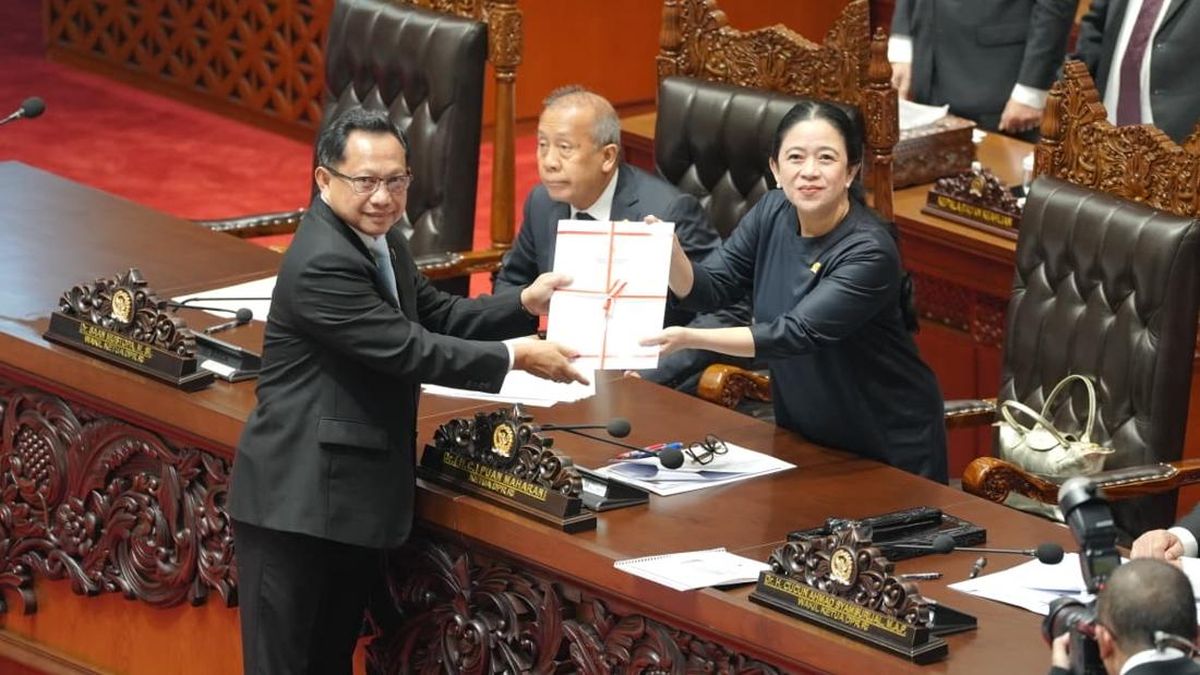
The government has approved 15 Bills concerning Regencies/Cities in three Kalimantan provinces during the Indonesian House of Representatives (DPR RI) Plenary Session held on Tuesday (22/9).
Minister of Home Affairs Muhammad Tito Karnavian expressed optimism that this approval will strengthen legal certainty in the administration of local governments. The regulatory update is deemed necessary to align the legal basis for regional formation with the constitution and current territorial arrangements.
This was stated by the Minister of Home Affairs during the plenary session, which was agenda-driven by Level II Discussions/Decision-Making on the 15 Bills regarding Regencies/Cities in the DPR RI Plenary Meeting Room, Jakarta.
Tito explained that the drafting of these 15 Bills is part of an effort to update the legal foundations of regencies and cities, particularly to align their constitutional basis with the 1945 Constitution of the Republic of Indonesia.
This is because several regions still rely on legal bases referring to the 1949 Constitution of the United States of Indonesia (UUD RIS) or the Provisional Constitution of 1950 (UUDS 1950).
According to him, such adjustments are necessary so that regions possess a clear legal basis that also serves as the foundation for various derivative regulations, including regional regulations (perda).
“In order to achieve legal certainty without controversy, and simultaneously to serve as the legal basis for all derivative regulations below it, including regional regulations,” said Tito.
In addition to updating the legal basis, the substance of the 15 Bills has also been adjusted to reflect developments in territorial arrangement, including conditions following the formation of New Autonomous Regions (DOB) or regional expansion, as well as the affirmation of the status of regency capitals within a single sub-district.
The regulations also include the specific characteristics of each region. According to Tito, including regional characteristics is a form of state recognition of regional diversity, affirming Indonesia’s plurality while remaining integrated within the framework of the Unitary State of the Republic of Indonesia (NKRI).
“The inclusion of regional characteristics as part of the substance in these 15 Bills also serves as an indicator of state recognition of each region’s characteristics, while emphasising that Indonesia is a plural, multicultural, multi-ethnic, multi-racial, and multi-landscape nation, yet integrated within the Unitary State of the Republic of Indonesia under the motto Bhinneka Tunggal Ika,” said Tito.
In their drafting, the 15 Bills adopt substance from 20 Laws regarding Provinces and 142 Laws regarding Regencies/Cities that were passed during the 2022 to 2025 period. This process is part of a regulatory update regarding regions involving the DPR RI and the government.
The 15 regions covered by the Bills include seven regencies/cities in West Kalimantan Province: Kapuas Hulu Regency, Sintang Regency, Mempawah Regency, Sambas Regency, Sanggau Regency, Ketapang Regency, and Pontianak City.
Furthermore, five regions in Central Kalimantan Province include Kapuas Regency, North Barito Regency, South Barito Regency, East Kotawaringin Regency, and West Kotawaringin Regency.
Lastly, three regions in South Kalimantan Province include North Hulu Sungai Regency, South Hulu Sungai Regency, and Central Hulu Sungai Regency.
“The government believes that the 15 Regency/City Bills, which are an initiative of the DPR RI, will strengthen the implementation of local government, particularly regarding the certainty of its legal basis,” concluded the Minister of Home Affairs.
Source: jawawa.id (https://jawawa.id/newsitem/approved-laws-for-15-regencies-cities-in-kalimantan-to-strengthen-local-government-legal-certainty-1790067753)
Originally published by CNN Indonesia (https://www.cnnindonesia.com/nasional/20260922150422-25-1406868/sah-uu-15-kabupaten-kota-kalimantan-perkuat-kepastian-hukum-pemda), translated from Indonesian