
Approved: Italian-Malaysian Giants to Develop 8 Trillion Cubic Feet of Gas in East Kalimantan
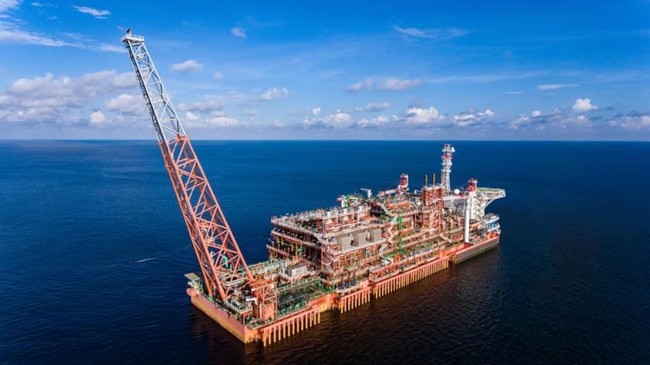
Jakarta, CNBC Indonesia — The government has approved the Plan of Development (POD) for the Geliga field in the Ganal production-sharing contract area, six months after the discovery of substantial reserves. The approval covers the development of an estimated 8 trillion cubic feet (TCF) of natural gas resources from the combined Geliga and Gula fields in the Kutei Basin, East Kalimantan.
The two fields are being developed by Searah, a joint venture between Italian energy giant Eni and Malaysian oil and gas company Petronas. Each company holds a 50% stake in the Geliga field.
Eni said in an official statement that the POD was approved on 23 November 2026. The approval also strengthens the company’s position as one of Indonesia’s major gas producers.
“Approval of the POD for the Geliga field marks a new milestone in the development of Eni’s activities in Indonesia’s Kutei Basin, while demonstrating the company’s expertise in exploration, rapid project execution and disciplined delivery,” Eni said on its website, as quoted on Wednesday (25 November 2026).
The development encompasses 5.9 TCF of gas in place and 250 million barrels of associated condensate from the Geliga field. This is combined with the previously discovered Gula field’s potential of 2.2 TCF of gas in place.
Eni said the integration of the two fields would form the Kutei Basin’s third production hub. The Geliga-Gula hub is expected to reach peak production of 1 billion cubic feet of gas per day and 50,000 barrels of condensate per day.
The new hub will complement the basin’s two existing hubs: the South Hub, which is already producing, and the North Hub, which is entering the construction phase.
Through the three hubs, Eni is targeting total gross production in East Kalimantan of 3 billion cubic feet of gas per day and 140,000 barrels of condensate per day by the end of this decade.
“This production will serve domestic and international markets, leveraging synergies with existing facilities in the area, including the Bontang LNG plant and the Jangkrik Floating Production Unit (FPU),” Eni said.
Development of the Geliga field will use 15 subsea wells, flowlines and a new floating production, storage and offloading (FPSO) vessel. The FPSO is designed to process up to 1 billion cubic feet of gas and 80,000 barrels of condensate per day, with storage capacity of 1.4 million barrels.
Gas processed on the FPSO will be transported by pipeline to the onshore receiving facilities at the Santan Terminal and into the East Kalimantan gas pipeline network. Some of the gas will be liquefied at the Bontang LNG plant for export, while the remainder will be supplied to the domestic market.
The development of the new Geliga hub will be coordinated with the North Hub project, which is scheduled to begin operations in 2028, to optimise construction costs and schedules.
Searah manages 19 production and development assets: 14 in Indonesia and five in Malaysia. It currently produces around 350,000 barrels of oil equivalent per day (boepd) and aims to exceed 500,000 boepd by 2028.
Eni is also continuing to work with SKK Migas to increase local content and make use of the Bontang LNG plant’s capacity.
Outside this project, Eni operates the Peri-Mahakam PSC, Makassar Strait PSC and Sapukala Block. In October 2026, it also agreed to sell part of its participating interests in Searah assets to Pertamina and Medco.
Source: jawawa.id (https://jawawa.id/newsitem/approved-italian-malaysian-giants-to-develop-8-trillion-cubic-feet-of-gas-in-east-kalimantan-1795575064)
Originally published by CNBC Indonesia (https://www.cnbcindonesia.com/news/20261125072955-4-788143/tok-raksasa-italia-malaysia-garap-8-triliun-kaki-kubik-gas-di-kaltim), translated from Indonesian