
Approaching Seven Decades, Djony Bunarto Tjondro Reveals Astra's Fundamental Elements
As PT Astra International Tbk approaches nearly seven decades of operation, the company reaffirms its commitment to remaining relevant amid changes in the economy, technology, and global dynamics. Astra International assesses that the foundation of company values, business diversification, and strengthening of human resources are the main factors maintaining solid and sustainable performance.
This was conveyed by Astra’s President Director Djony Bunarto Tjondro in an interview discussing the company’s journey, strategy, and future direction.
“Sixty-nine years is not just a count of time, but a story of millions of steps that grow and move together with the nation. For nearly seven decades, Astra has consistently created and contributed to the country to become a source of national pride. In that journey, there are two very fundamental elements, namely the Catur Dharma philosophy and the people legacy that maintain the continuity of company values across generations,” said Djony.
Djony explained that Astra was built on the philosophy of being a shady tree, a company that not only grows in business but also benefits society. The Catur Dharma values were passed down by Astra’s founder, William Soeryadjaya, and serve as a compass in every business decision and company strategy.
“Catur Dharma is not just a written principle, but a value lived in every decision, every collaboration, and every step of the company. This value forms the basis for determining strategic direction through the 3P Roadmap, covering Portfolio, People, and Public Contribution, which balances performance and sustainability while strengthening the company’s resilience to align current and future needs.”
According to him, Astra’s sustainability does not only depend on systems or strategies, but on the quality of people who execute them. “The people legacy is an important element that maintains Astra’s continuity from one generation to the next,” he emphasised.
He added that Astra places human resource development as the company’s main strength. “We continue to seek and develop new talents and prepare leaders who have capabilities, character, and loyalty to the organisation. Business models and technology will always change, but people with good character and values determine the organisation’s success.”
Leadership regeneration is carried out through individual development programmes, cross-business rotations, and assignments with increasing responsibilities so that potential leaders gain diverse experiences.
According to Djony, the leadership succession process at Astra is planned well in advance through strategic planning to ensure organisational continuity. “Every era has its people, and every person has their time,” he added.
Furthermore, he stated that Astra has faced various external pressures, from the COVID-19 pandemic, commodity price fluctuations, to increasing industry competition over the past six years. Nevertheless, the company’s net profit increased from Rp16.2 trillion in 2020 to Rp32.8 trillion in 2025.
Currently, Astra has 321 subsidiaries with more than 190,000 employees spread across seven business lines, including automotive and mobility, financial services, heavy equipment and mining, agribusiness, infrastructure, information technology, and property.
The company’s resilience is supported by business portfolio diversification, decades of operational experience, product and service quality, and a broad business ecosystem synergy.
The Astra Group is now pursuing new growth opportunities through selective investments in various sectors, such as healthcare services and non-coal minerals. In addition, the company is also strengthening investments in the used car segment and digital banking services.
“We develop the portfolio through optimisation of current businesses, development of related business lines, and investments in potential new sectors. Expansion is carried out carefully and measured, balancing short-term performance with long-term transformation,” he revealed.
In addition to business aspects, Astra places social contributions as part of its long-term goals. “Astra must remain a beneficial asset to the nation and state. Every step we take is directed to contribute to society, empower them, and support social welfare,” said Djony.
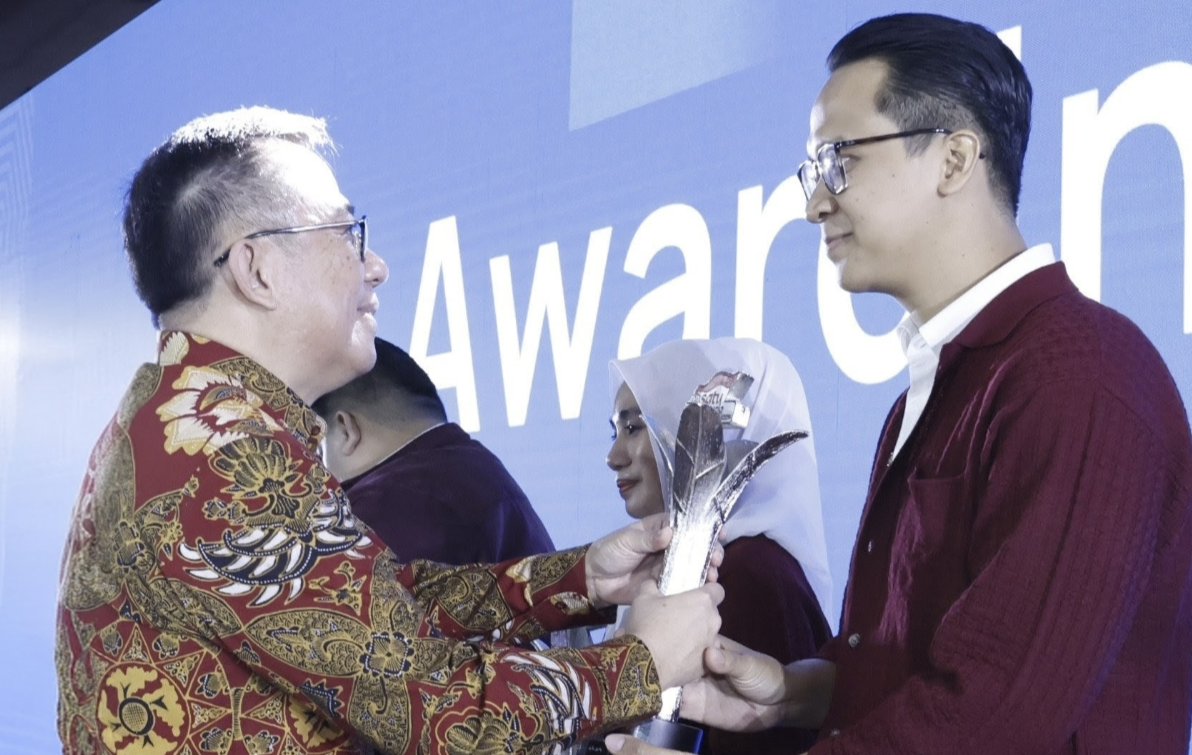
Various social programmes are implemented through Desa Sejahtera Astra, SATU Indonesia Awards, and the Nurani Astra humanitarian programme, aimed at providing direct benefits as well as long-term impacts for communities throughout Indonesia.
He added that large companies are not built in a short time, but pass through many obstacles at every moment, strengthened by experience from every challenge. “With a strong value foundation, a spirit of togetherness, and a commitment to continuous learning, Astra can become the shady tree in line with the founder’s aspirations for Prosperity Together with the Nation,” he concluded.