
Appointed as Special Presidential Advisor, Said Iqbal Promises to Abolish Outsourcing
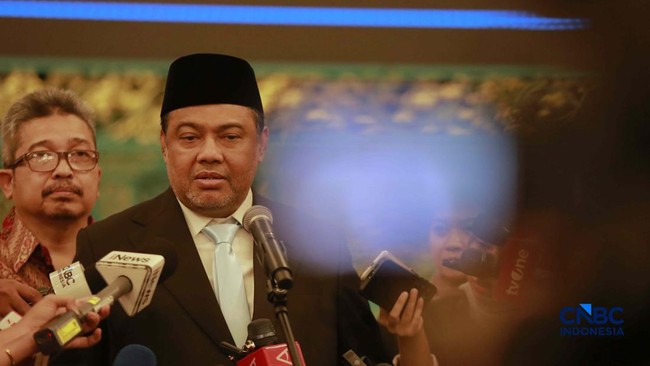
President Prabowo Subianto officially inaugurated Said Iqbal as the Special Presidential Advisor for Labour and Worker Welfare at the State Palace on Monday (8/6/2026). Iqbal has pledged to provide direct reports and insights regarding labour welfare to the President.
“There are several matters that I will report directly to the President through coordination with the Minister of the State Secretariat,” said Iqbal during his statement. One of the key areas to be reported involves the 8% economic growth target. He emphasised that such growth must be balanced with equitable wealth redistribution. “In our view, growth must be balanced with even wealth redistribution, equality of opportunity, and ensuring everyone has a chance. In simple terms, you may become wealthy, but do not impoverish us,” he stated.
Regarding labour welfare, Said Iqbal believes that future welfare must encompass job security, income certainty, and social security. These perspectives will be presented to the President to serve as material for policy analysis. “These are the three areas we will focus on: providing advice, opinions, and policy analysis to the President regarding labour welfare,” he added.
Furthermore, Said Iqbal will present his views on fair wages for workers, as well as the protection of migrant workers, who he noted still require greater state protection. “These matters will be conveyed to the President in the form of advice, opinions, ideas, and policy analysis. Naturally, I will approach several ministers to discuss these issues,” he said.
On the subject of outsourcing, Said Iqbal intends to oversee the discussions regarding the Labour Law. He aims to ensure that the draft legislation includes provisions to abolish outsourcing or outsourced labour. “We must ensure that in the draft law, outsourcing can be abolished. If that is not possible, at the very least, it should be strictly limited—for example, to only four or five types of supporting roles,” he said.
Additionally, he will lead discussions regarding fair wages, arguing that if workers receive a decent wage, they will possess greater purchasing power. “The issue we face now is that the purchasing power of the community, including labourers, is declining. Increasing purchasing power is one of the most important instruments, and that is through fair wages. Fair wages are also something that needs to be explored and included in the Labour Law in the near future,” he concluded.