
Apple’s First Touchscreen MacBook Pro: Is It Worth Buying?
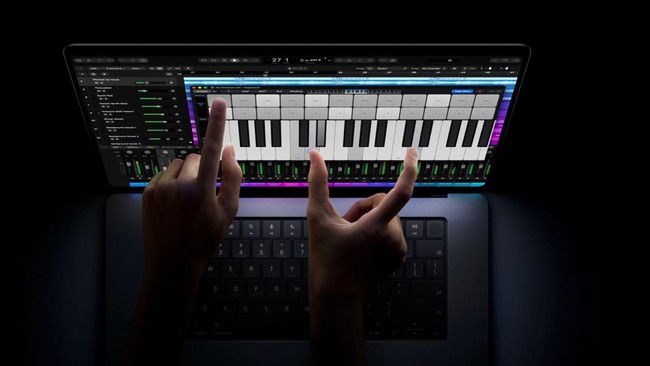
Jakarta, CNBC Indonesia – Apple has officially introduced a MacBook Pro equipped with a touchscreen. The company calls its panel the “PROLED XDR Display”, claiming it offers professional users a new way to interact with content.
However, the feature has prompted doubts. In its review, technology publication TechRadar said the touchscreen may not offer benefits commensurate with the price increase users must pay.
One of the main concerns is ergonomics. Touch interaction is considered unnecessary for many tasks and could quickly tire users during extended periods of use. They would have to keep lifting their arms and reaching towards the screen, a movement that can cause arm discomfort.
Apple has highlighted several uses for the new feature. Graphic designers, for example, can use the entire screen as a canvas when drawing, rather than being limited to the trackpad area. Musicians, meanwhile, can play digital instruments directly on the screen.
Nevertheless, the technology publication questioned whether these activities would really be comfortable over long periods. Playing an instrument while keeping one’s hands raised to reach a laptop screen could be tiring for the arms.
If users only touch the screen occasionally before returning to the keyboard and trackpad, the feature’s value becomes even more questionable, particularly as it costs an extra US$400 (around Rp6.3 million) compared with the standard MacBook Pro.
The additional cost does also cover an OLED panel upgrade, which offers improved image quality. However, TechRadar argued that the touchscreen needed a stronger justification, especially on a premium-priced Apple product.
Doubts about the concept of touchscreen laptops are not new. Apple co-founder Steve Jobs once strongly criticised the idea, saying it was ergonomically unsound.
“After a while, you start to get tired. If you use it for longer, your arm feels as though it’s going to fall off,” Jobs said during his lifetime, as quoted by TechRadar on Monday (2 November 2026).
TechRadar said Jobs’s criticism remains highly relevant. Although Apple may have designed the touchscreen to feel comfortable when first tried, human anatomy has not changed. Prolonged use still carries a risk of arm muscle fatigue and pain.
Sharp criticism has also been directed at Apple’s underlying rationale for adding the feature. In an interview with Wired, Apple’s new chief executive, John Ternus, said the company wanted to ensure that adding a touchscreen would not make the product worse, heavier or thicker.
“We had to get to a point where adding touch didn’t make the product worse in any way. It doesn’t make it heavier, and it doesn’t make it thicker. That was made possible by OLED, the best display we’ve ever put in a Mac. All of those elements came together,” Ternus said when Wired asked why Apple was releasing a touchscreen MacBook.
TechRadar said Ternus’s comments did not adequately explain why consumers urgently needed to buy a touchscreen MacBook Pro.
The publication added that Apple has traditionally been known not merely for following trends, but for trying to deliver the best technological breakthroughs.
Ultimately, it viewed the touchscreen as more of a compromise to follow Windows laptop makers than a revolutionary innovation offering users a new experience.