
Apple Sues OpenAI, Alleging Theft of Trade Secrets Through Mass Recruitment of Former Staff
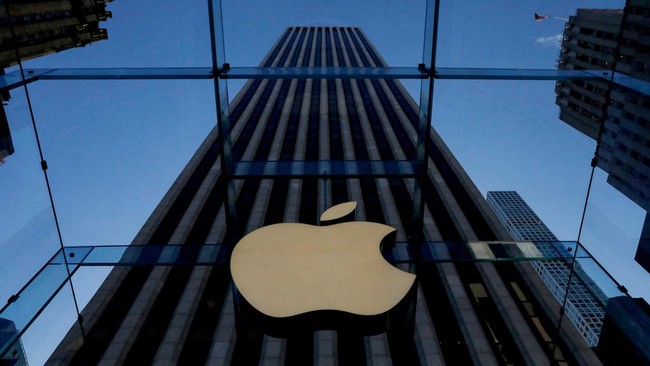
Apple has sued OpenAI in a United States federal court, accusing the company of obtaining access to confidential information through the recruitment of a number of its former employees. The lawsuit also implicates the design firm io Products, as well as two former Apple senior executives who now work at OpenAI.
In the lawsuit filed on Friday, Apple alleges the defendants engaged in a “pattern of theft” of secret product development and various internal company work. At least two former senior Apple employees are said to have sent internal company information to personal email addresses before joining OpenAI.
Responding to the suit, OpenAI spokesperson Drew Pusateri denied Apple’s accusations. “We are not interested in another company’s trade secrets,” Pusateri said, adding that OpenAI is still studying the contents of the lawsuit and remains “focused on developing innovative technology that empowers people everywhere.”
Meanwhile, an Apple spokesperson told the BBC the lawsuit is based on “significant evidence.”
This lawsuit marks a new chapter in the relationship between Apple and OpenAI. Previously, Apple CEO Tim Cook, who is soon to step down, brought ChatGPT into the Apple device ecosystem as part of the development of artificial intelligence features. However, this year, Apple began shifting more of its own AI features to run using Google’s Gemini model.
When Tim Cook announced his resignation plans in April, OpenAI CEO Sam Altman even praised him as “a legend,” stating he was “incredibly grateful for all he has done.” Now, Apple is accusing OpenAI of executing a “strategy to extract Apple’s confidential information.”
Besides OpenAI, Apple is also suing io Products, a design startup founded by former Apple senior executive Jony Ive and acquired by OpenAI last year. Two former Apple senior executives are also named as defendants: Chang Liu, who worked as a senior electrical engineer at Apple for eight years, and Tang Yew Tan, the former vice president of iPhone and Apple Watch design who spent 24 years at the company. Tan currently serves as the head of OpenAI’s hardware division.
Apple claims its former employees exploited access to “sensitive projects, trusted partnership relationships, exclusive manufacturing techniques, and unreleased products,” allowing OpenAI to obtain details about the company’s product and operational plans. Apple also accuses OpenAI of attempting to extract additional information when interviewing current Apple employees. The lawsuit states that OpenAI interviewers asked candidates to bring “original parts” as “props” from Apple to “show and explain” during the interview process.
Apple alleges all the defendants “acted together and as an enterprise, exploiting Apple’s confidential information to advance OpenAI’s efforts to enter the consumer hardware market.” OpenAI is expected to launch its first hardware device, a keyboard to be used with its AI devices, this month. The company is also planning an initial public offering.
In its lawsuit, Apple stated that because “OpenAI’s misconduct is normalised and exemplified by its leaders,” its “nascent hardware business rests on a foundation that is profoundly shaky, rotten to its core because of its illegal reliance on misappropriated trade secrets.” Apple also said it had attempted to raise its concerns with OpenAI since February but received no response. Consequently, Apple is asking the court to immediately prohibit OpenAI from accessing or using the confidential information it allegedly possesses, while also seeking unspecified financial damages.
More than 400 former Apple employees now work for OpenAI, Apple said in its filing, adding that it is “unsurprising” that some of them know confidential information. “That OpenAI now employs people who were once entrusted with Apple’s trade secrets does not give OpenAI the right to use that information to accelerate its own hardware efforts,” the iPhone maker wrote in its complaint.
Apple also alleged that OpenAI employees sought confidential information from Apple suppliers. At one point, OpenAI allegedly asked one such supplier to perform what Apple described as a secret metal finishing technique, under the belief that OpenAI had Apple’s permission to use the technique.
Mark Lemley, a professor at Stanford Law School, said Apple’s complaint “has the potential to be a very big case” but noted that some of Apple’s allegations, such as OpenAI hiring hundreds of Apple employees, are not illegal in California, where Silicon Valley emerged partly thanks to state laws allowing employees to move to competitors. “But if Apple’s claims that employees brought confidential documents with them, and that OpenAI used those documents, are true, that is a problem for OpenAI,” Lemley said.
Camilla Hrdy, a law professor at Rutgers Law School, said the case could be complex because most prior trade secret cases involving AI have centred on software rather than hardware. “These trade secret lawsuits are filed frequently in tech, and we usually learn a lot more as the case progresses. OpenAI is not a defendant without the means to defend itself,” Hrdy said.
Source: jawawa.id (https://jawawa.id/newsitem/apple-sues-openai-alleging-theft-of-trade-secrets-through-mass-recruitment-of-former-staff-1783763503)
Originally published by CNBC Indonesia (https://www.cnbcindonesia.com/tech/20260711115648-37-750059/400-karyawan-apple-kabur-jadi-maling-buat-perusahaan-sebelah), translated from Indonesian