
Apple Loses Rp 4,482 Trillion in Market Value Due to This Unexpected Factor
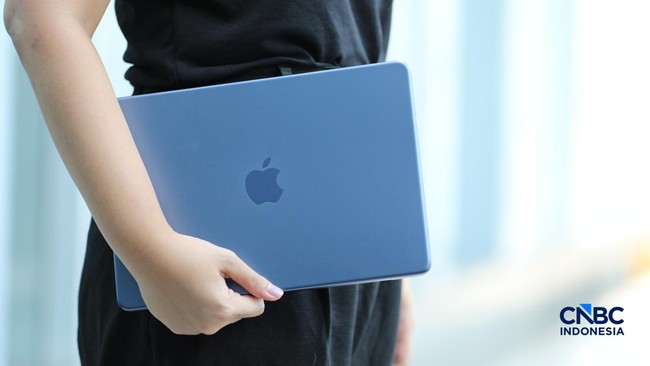
Apple’s shares tumbled more than 5% in Thursday’s trading (2.6/2026) after the company announced massive price increases for its MacBook and iPad product lines globally.
Apple stated that the price surge was triggered by an unprecedented shortage of memory and storage chips resulting from the explosion in demand for artificial intelligence (AI). The price increases took effect on Apple’s online stores on Thursday and include the MacBook Neo, MacBook Air, MacBook Pro, iPad Air, and iPad Pro. Meanwhile, Apple decided not to raise the price of the iPhone.
Apple’s online store was briefly inaccessible on Thursday morning before being updated with the new price list. Following the announcement, Apple’s shares closed down approximately 5.3%, wiping around US$275 billion (roughly Rp 4,482 trillion) off the company’s market capitalisation.
This decline brings Apple closer to Alphabet in the global market capitalisation race. Before Thursday’s trading, Nvidia remained the largest company by market value at approximately US$5.4 trillion, followed by Apple and Microsoft. However, Alphabet has been frequently swapping positions for second place with Apple in recent weeks.
In detail, the starting price for the MacBook Neo rose to US$699 from its previous US$599. The MacBook Air is now priced starting from US$1,299, up from US$1,099, while the 14-inch MacBook Pro increased to US$1,999 from US$1,699.
In the tablet segment, the price of the 11-inch iPad Pro increased to US$1,199 from US$999. Meanwhile, the iPad Air is now sold starting from US$749, up from US$599.
Apple acknowledged that the increase in component costs is occurring much faster than the company has previously experienced. “We have never seen component price increases this large and this rapid. We have been protecting our customers from such increases, but we have now reached a point where we must begin raising prices on several products, including the iPad and Mac increases announced today,” said an Apple spokesperson, as quoted by the Washington Times.
“We know this is not the news anyone wants to hear, and we are working tirelessly to find solutions,” they added.
Signals of the price hike were actually conveyed by Apple CEO Tim Cook last week. In an interview with The Wallle Street Journal, Cook stated that the price increases had become “unavoidable” due to soaring component costs.
“There is less supply just as consumers want more devices, and memory manufacturers are passing on very large price increases,” said Cook. He further described the crisis as a “once-in-a-hundred-years flood,” a situation he has not witnessed in his four-decade career in the technology industry.
The root of the problem lies in the global shortage of dynamic random access memory (DRAM) chips, a key component used in almost all modern electronic devices. According to research firm TrendForce, conventional DRAM contract prices surged by 90%-95% quarterly in Q1-2026. In the current quarter, prices are expected to rise by another 58%-63%.
The surge, which some analysts have dubbed “RAMageddon,” is driven by the explosion of AI data centre construction. Companies such as Nvidia have signed long-term supply contracts with memory chip manufacturers, further limiting supply for the consumer electronics market. Micron even revealed it has secured long-term supply commitments worth US$22 billion. In its latest financial report, the company’s revenue surged more than fourfold to US$41.46 billion from US$9.3 billion in the same period last year, driven by demand for AI memory and storage products.
Meanwhile, Goldman Sachs and Morgan Stanley predict that the memory chip supply shortage will persist until at least 2027, keeping memory prices high.
Apple is not the only company passing increased costs on to consumers. Nintendo has announced a US$50 price increase for its flagship console starting in September. Sony and Microsoft have also recently raised the prices of their PlayStation and Xbox consoles. In the computer market, Lenovo, Dell, and HP have also increased the prices of their PCs, servers, and laptops.
The price hike for the MacBook Neo also erases the price advantage Apple previously held over the Dell XPS 13. Dell’s latest laptop, launched this month, starts at US$699, exactly the same as the new MacBook Neo price. Previously, the MacBook Neo was US$100 cheaper since its launch in March.
Despite the pressure on Apple’s stock, Wedbush analyst Dan Ives maintained an “outperform” recommendation with a target price of US$400. He believes Apple’s premium customer base means the company will not lose many consumers despite the price increases.
Moving forward, market attention will turn to the next generation of iPhone scheduled for launch this September. Apple is also expected to introduce its first foldable iPhone model, with an initial price expected to exceed US$2,000.