
Apolo Safanpo: Wanam National Strategic Project a Path to Prosperity for Indigenous Papuans
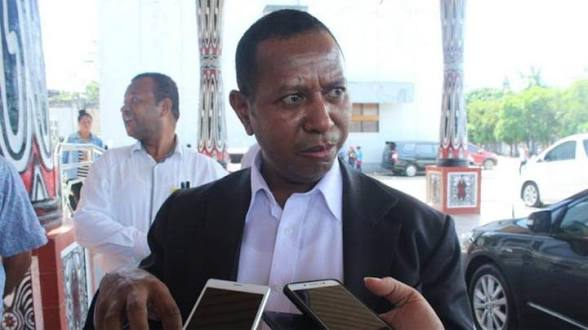
Amid propaganda depicting Papua solely as a region of conflict and human rights violations, the South Papua provincial government views the presence of various projects in their region as part of the development process and job creation. Ultimately, this will address the fundamental problems faced by the Papuan people. South Papua Governor Apolo Safanpo sees the state’s presence in developing Papua realised through various National Strategic Projects (PSN) focused on food and energy security. The programme includes the development of large-scale rice paddies for national rice production and the construction of sugarcane plantations integrated with the bioethanol industry. “The main purpose of this development is to improve the people’s welfare. All countries undertake development with one goal: so that their people can live more prosperously,” said Apolo, cited on Wednesday (10/6). He argued that economic development must not stop merely because of political debate or growing rejection campaigns. Indeed, the various social problems that have been the root of inequality in Papua must be answered through increased public welfare. Therefore, the PSN in South Papua is designed not only to build infrastructure but also to create new economic opportunities that can be directly enjoyed by local communities, particularly Indigenous Papuans (OAP). In the energy sector, for example, the integrated sugarcane bioethanol plantation project currently employs around 3,500 workers. This number is targeted to increase to 15,000 workers by 2027. The South Papua Provincial Government is also actively encouraging local communities to become the primary beneficiaries of the development. The regional government is asking project implementing companies to provide a dominant share for local workers. “We request that around 80 per cent of the workforce comes from the local community, so that the benefits of development are truly felt by the people of South Papua,” said Apolo. According to Apolo, the existence of these projects is a tangible form of the state’s presence, which for decades has often been demanded by various parties. Therefore, the government considers it important to view development holistically and objectively, including the economic impact generated for the surrounding community. The government does not deny the dynamics and differing views within the community regarding the implementation of the PSN. Some groups support it, while others raise objections. For Apolo, however, such differing stances are common in every development process. What is most important is ensuring all citizens receive complete information and do not only accept narratives from a single viewpoint. “If there are those who accept or reject it, it must be based on understanding. The government’s task is to explain things properly so that the public can assess it objectively,” he explained. He also stressed that environmental aspects remain a concern at every stage of development. The various ongoing projects are required to meet environmental impact analysis provisions and implement sustainable management and monitoring programmes. For the regional government, development and the protection of people’s rights are not two conflicting things. On the contrary, both must go hand in hand so that the Papuan people gain tangible benefits from the wealth of resources their region possesses. With this approach, the South Papua Provincial Government hopes the PSN can become a long-term solution for strengthening national food security, creating jobs, increasing community income, while also answering various criticisms that have developed regarding the social and economic conditions in Papua. “Development must be measured by the improved standard of living of the people. That is our main focus,” concluded Apolo.