
Apocalyptic Dopamine: Why Do We Prefer Discussing the Dajjal Over War Strategies?
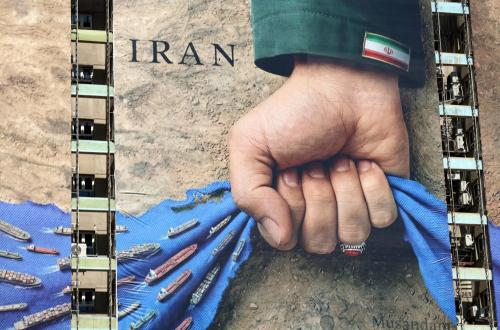
Every time a missile streaks across the Middle Eastern sky, our timelines tremble. Not just from the explosions, but from the flood of narratives and speculative interpretations. Vendors of end-times discourse emerge in droves.
Wars are read as prophecies. Military maps are interpreted as end-times charts. Even state actors are dragged into theological labels: who is the “defender of truth”, who is the embodiment of Al-Masih ad-Dajjal, and who is the embodiment of Al-Mahdi.
At this point, the issue is not merely bias. The problem is that we are beginning to lose the boundary between faith and analysis, between preaching and propaganda.
Simplified Geopolitics
Today’s Middle East conflict involves: regional power rivalries, struggles for energy and trade routes, competition for influence between major powers.
Yet in the digital public space, all of that is often trimmed down to one simple sentence: “This is the end-times war.”
In reality, it is far more complicated. Iran does not act solely because of ideology, nor do the Gulf states purely because of religion. There are calculations of power, security, and economics that determine policy directions.
Today’s Middle East conflict is not merely a symbolic battle. It stands on concrete numbers.
Iran has a military budget of around $10–15 billion per year, more than 600,000 active personnel, and thousands of ballistic missiles with ranges up to 2,000 km.
Meanwhile, Israel records a military budget of around $24 billion, fully supported by the United States, and possesses layered defence systems such as Iron Dome, David’s Sling, and Arrow.
On the other side, Gulf states like Saudi Arabia and the United Arab Emirates allocate tens of billions of dollars for defence, purchasing advanced weapon systems from the West and serving as locations for US military bases.
And do not forget the most crucial fact: Around 20% of the world’s oil supply passes through the Strait of Hormuz. This means a single escalation could shake the global economy.
Clashing Alliances and Blocs
The conflict map is not two simple camps, but a complex network of alliances: Iran and its proxy network (Lebanon, Iraq, Yemen). Israel with full US support. Gulf states with ambiguous positions: between US security, power guarantees, and regional stability. Global powers like China and Russia observing and exploiting gaps.
On paper, this is a war of economic interests and political dominance, not a purely theological war.
However, in the digital space, everything is reduced to: “This is the war of truth versus falsehood.”
From Data to Dogma
This is where the dangerous shift occurs. Complex data—about military, energy, and alliances—is abandoned. What is taken is only the narrative that strengthens beliefs.
Yet the Qur’an has already warned: “Do not follow what you have no knowledge of.” (QS. Al-Isra: 36)
When facts are ignored and speculation is prioritised, we no longer read reality. We merely repeat beliefs.
Who Benefits from End-Times Narratives?
Simplistic eschatological narratives have a strategic function: mobilising the masses without needing complex explanations, closing off criticism of certain actors, turning political conflicts into moral obligations.
In this condition, the public stops asking: who is attacking whom, who are the real victims, and who benefits economically and politically.
What remains is only: “Is this the right side or not?” And that is the easiest question to manipulate.
Sirah: Between Revelation and Realism
In the sirah, Prophet Muhammad never mixed every conflict with end-times narratives.
When facing great pressures, he remained: reading the enemy’s strengths, devising strategies, and choosing the right timing.
The Treaty of Hudaibiyah is a classic example: a decision that emotionally felt heavy, but strategically opened the path to victory.
The lesson is clear: even in religious struggles, reality and rationality must not be ignored.
Apocalyptic Dopamine and Polarisation
Social media accelerates everything. Every attack becomes viral content, end-times narratives are lifted to trending status, causing the public to split. Public emotions peak and then fade. A few weeks later, the same pattern repeats with a new conflict.
This can be called geopolitical amnesia. The public no longer has a long memory, only short reactions. And in this condition, any narrative can be easily planted.
Some euphoria praises one side as the “defender of Islam”. Others curse as “traitors to the ummah”.
Amid that, civilian victims—in Gaza, in the Gulf, in conflict areas—the closure of Masjid Al-Aqsa for 40 days and the Judaification of Masjid Ibrahimi in the city of Al-Khalil (Hebron) disappear from the attention of the ummah and leaders.
What remains is only bombastic narratives around Armageddon and the end times.
When Everyone Becomes Dajjal
When every opponent is labelled as part of the Dajjal, discussion stops. There is no more room for analysis, only verdicts.
Yet in the hadith, Dajjal is not a flexible symbol. He is a specific fitnah that has not yet appeared in the form described with certainty.
Turning it into a political label actually damages its own meaning.
Back to Principles: Faith Without Paranoia
Believing in the end times is part of aqidah. But making every conflict evidence that we are already in the final phase is a form of collective paranoia.
The Qur’an teaches balance: “So that you may not grieve over what has passed you by and not be overjoyed over what has been given to you.” (QS. Al-Hadid: 23)
This means, even in major situations, the ummah is asked to remain stable—not lost in euphoria, not drowned in fear.
The Prophet taught optimism, not pessimism, even when facing the peak of dire moments. His saying: “If the Hour comes while you have a seedling in your hand, then plant it.”
The Middle East Today
The Middle East today is: a field of energy conflicts