
Apkasindo Prepares Oil Palm Farmers to Strengthen Early Fire Mitigation
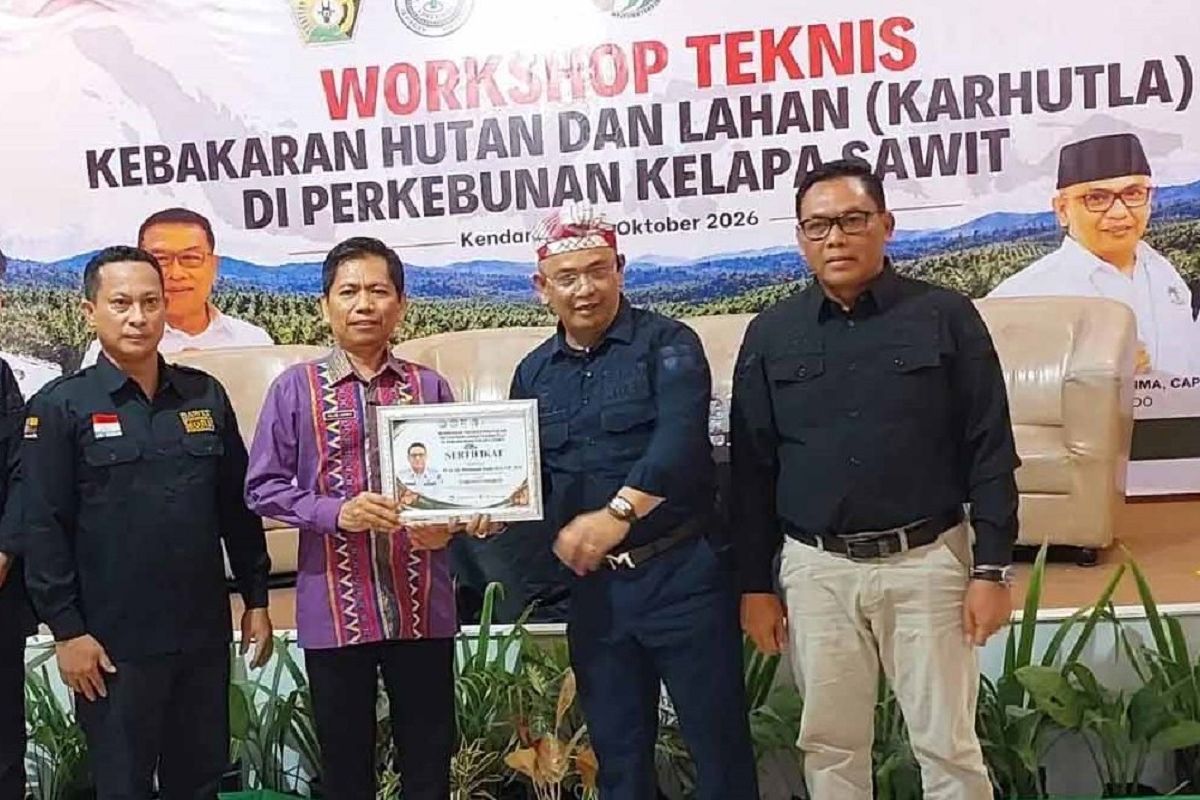
Oil palm farmers need to understand mitigation measures and initial response procedures when a potential fire emerges around plantations.
Jakarta (ANTARA) – The Indonesian Oil Palm Farmers Association (Apkasindo) is strengthening oil palm farmers’ capacity for early mitigation to prevent and reduce the risk of forest and land fires.
Apkasindo’s national executive board chairman, Gulat Medali Emas Manurung, said fire prevention required preparedness and the involvement of various parties, including oil palm growers. It should therefore be a shared concern, so fires do not spread and cause wider impacts.
In a statement in Jakarta on Tuesday, he said the ability to recognise potential fires and take initial action was essential knowledge for growers.
“Oil palm farmers need to understand mitigation measures and initial response procedures when a potential fire emerges around plantations,” Gulat said in remarks at a technical workshop on fire mitigation in Kendari, Southeast Sulawesi.
He said the event, supported by the Plantation Fund Management Agency (BPDP), was intended to improve growers’ understanding of mitigation, early detection and initial fire response.
BPDP’s support for the event is in line with efforts to strengthen sustainable oil palm plantation governance and protect the environment. Building growers’ capacity is an important part of ensuring these principles are applied at plantation level.
He added that the initiative also formed part of efforts to strengthen the application of sustainability principles in oil palm plantation management.
Gulat stressed that mitigation was necessary in all regions, including areas that received less media attention in coverage of forest and land fires. Prevention, he said, was far more important than waiting for a fire to break out before responding.
Agus Imam Saputro, head of Apkasindo’s Southeast Sulawesi regional board, said coordination among stakeholders needed to continue to make fire control more effective.
He said the two-day event gave participants an opportunity to broaden their understanding and knowledge of forest and land fire management.
The material presented by speakers, he added, was expected to equip participants to devise prevention and response measures suited to conditions on the ground.
Apkasindo also called for fire mitigation to be treated not merely as an activity undertaken when the dry season arrives, but as part of everyday plantation management.
Improving farmers’ knowledge, preparedness and early detection, alongside cross-sector coordination, is expected to reduce fire risks and minimise their impact on the environment and communities.
Preventing forest and land fires, therefore, is not solely the responsibility of the government or disaster-management agencies, but a shared commitment among all parties involved in oil palm plantation management.
Ihlas Landu, representing the head of the Southeast Sulawesi Plantation and Horticulture Office, said the involvement of the government, farmers’ organisations and related institutions was an important asset in strengthening fire prevention.
He said oil palm growers had a strategic role in supporting mitigation through responsible plantation management and the consistent application of preventive measures.
“Oil palm farmers have a role in supporting fire mitigation through responsible plantation management. These preventive measures need to be carried out consistently, not only after a fire has already broken out,” he said.
Source: jawawa.id (https://jawawa.id/newsitem/apkasindo-prepares-oil-palm-farmers-to-strengthen-early-fire-mitigation-1794300677)
Originally published by Antara (Indonesian) (https://www.antaranews.com/berita/5843839/apkasindo-siapkan-petani-sawit-perkuat-mitigasi-dini-karhutla), translated from Indonesian