
Apkasindo: Ganoderma and plummeting FFB prices threaten smallholder oil palm
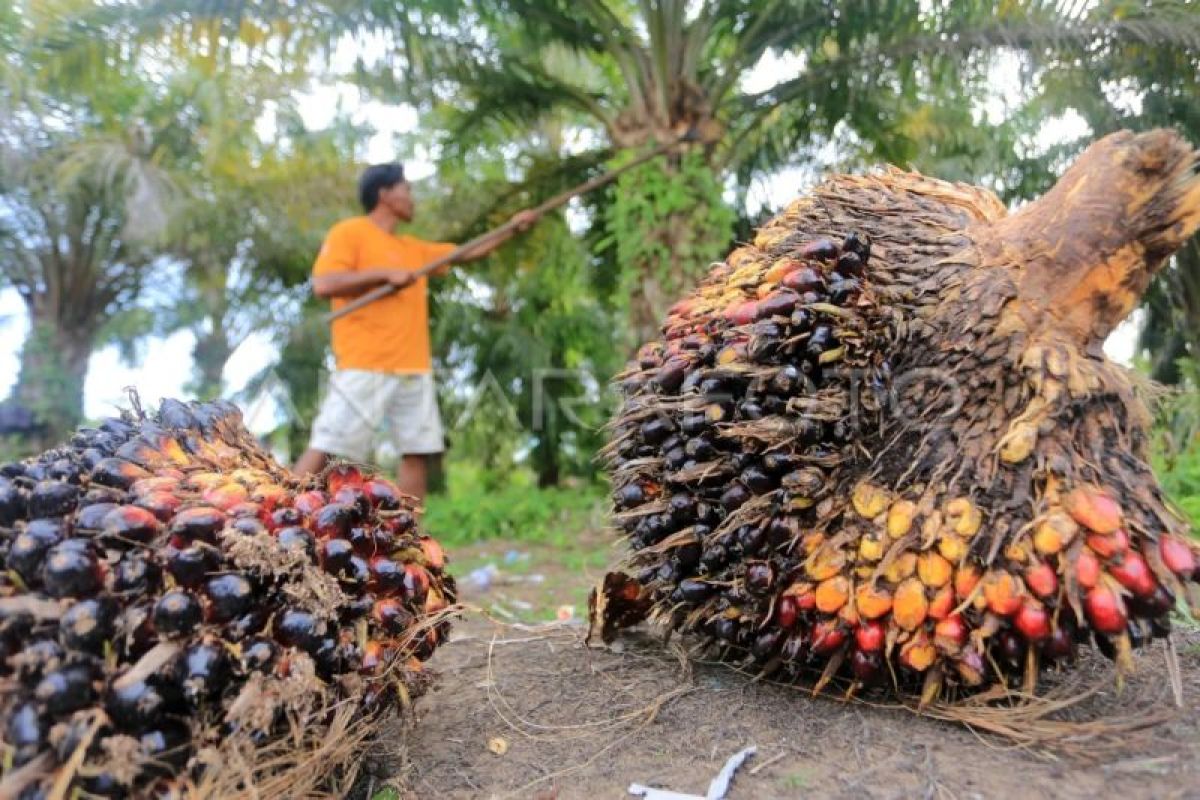
The Indonesian Oil Palm Farmers Association (Apkasindo) has highlighted two major threats facing smallholder oil palm plantations, namely the spread of ganoderma disease and the plummeting price of oil palm fresh fruit bunches (FFB) in various regions. Apkasindo Chairman Gulat Medali Emas Manurung revealed that the spread of ganoderma disease is beginning to threaten smallholder oil palm plantations in a number of areas. “Ganoderma is a very dangerous disease because it attacks the roots and stems of plants without symptoms that are easily recognisable by farmers,” he said in a statement in Jakarta on Friday. Unlike horn beetle attacks, which are visible to the naked eye, he added, ganoderma works slowly until it causes plants to wilt and die. “Ganoderma is a cold-blooded killer. It is not visible like other pests, but it can cause plants to wilt and die in a relatively short time,” he stressed during a workshop on empowering oil palm farmers in controlling ganoderma and horn beetles for plantation sustainability in Penajam Paser Utara Regency, East Kalimantan. Gulat noted that several oil palm plantation centres in East Kalimantan have begun reporting an increase in attacks of the disease, necessitating early anticipatory measures. Regarding the plummeting FFB prices, which in recent weeks have caused oil palm farmers to suffer losses, he said one of the main causes is the malfunctioning of the daily crude palm oil (CPO) tender at the Nusantara Joint Marketing Office (KPBN). When the tender experiences repeated withdrawals or failed transactions, he added, the market loses its price reference, which has been the benchmark for FFB price formation. He stated that the greatest impact is felt by independent smallholders, who control around 93 per cent of the total 6.8 million hectares of smallholder oil palm plantations. Without a clear price reference, commercial palm oil mills have greater leeway to determine FFB purchase prices. Meanwhile, plasma farmers, who account for only about seven per cent, still have protection through local government price-setting mechanisms, but they remain affected because the price formula refers to previous CPO price trends, which have declined. Therefore, Apkasindo is urging the government to immediately reactivate the Indonesia CPO Exchange and ensure the KPBN tender operates normally to create fair price transparency for farmers. In addition, the association also supports government measures to take firm action against palm oil mills that purchase farmers’ FFB below reasonable prices. “Companies that deliberately depress prices with unjustifiable reasons must be dealt with firmly. Steps could include forming a task force or revoking business licences,” said Gulat. Meanwhile, Apkasindo East Kalimantan Chairman Betman Siahaan revealed that Penajam Paser Utara and Paser Regencies are the areas most affected by ganoderma and horn beetle attacks. He assessed that many farmers still do not understand the early symptoms of ganoderma disease, so treatment is often delayed. “Many farmers think the plants died because they were struck by lightning, when the real cause is a fungal infection in the roots and stems,” he said during the activity supported by the Plantation Fund Management Agency (BPDP). Addressing the decline in FFB prices in East Kalimantan based on the results of the Apkasindo national meeting, FFB prices, which were previously around Rp3,000 per kilogram, had at one point plummeted to Rp1,200 per kilogram. At that price, he added, most of the farmers’ income is consumed by harvesting and transport costs, which reach around Rp1,000 per kilogram. “The farmers’ net profit is only around Rp200 per kilogram. Many farmers end up choosing to postpone harvesting because it is no longer economical,” he said. This condition has also impacted collector businesses, which suffer huge losses due to palm oil stockpiles when prices drop suddenly. Apkasindo East Kalimantan assesses that a number of palm oil mills are imposing purchase restrictions through a quota system, even though CPO prices have not experienced a significant decline. Therefore, the association is pushing for the implementation of a single national FFB price and the acceleration of the establishment of a state-owned enterprise for CPO distribution to reduce monopolistic practices in the palm oil trading system.