
Apkasi prepares biomass supply chain to involve local economy
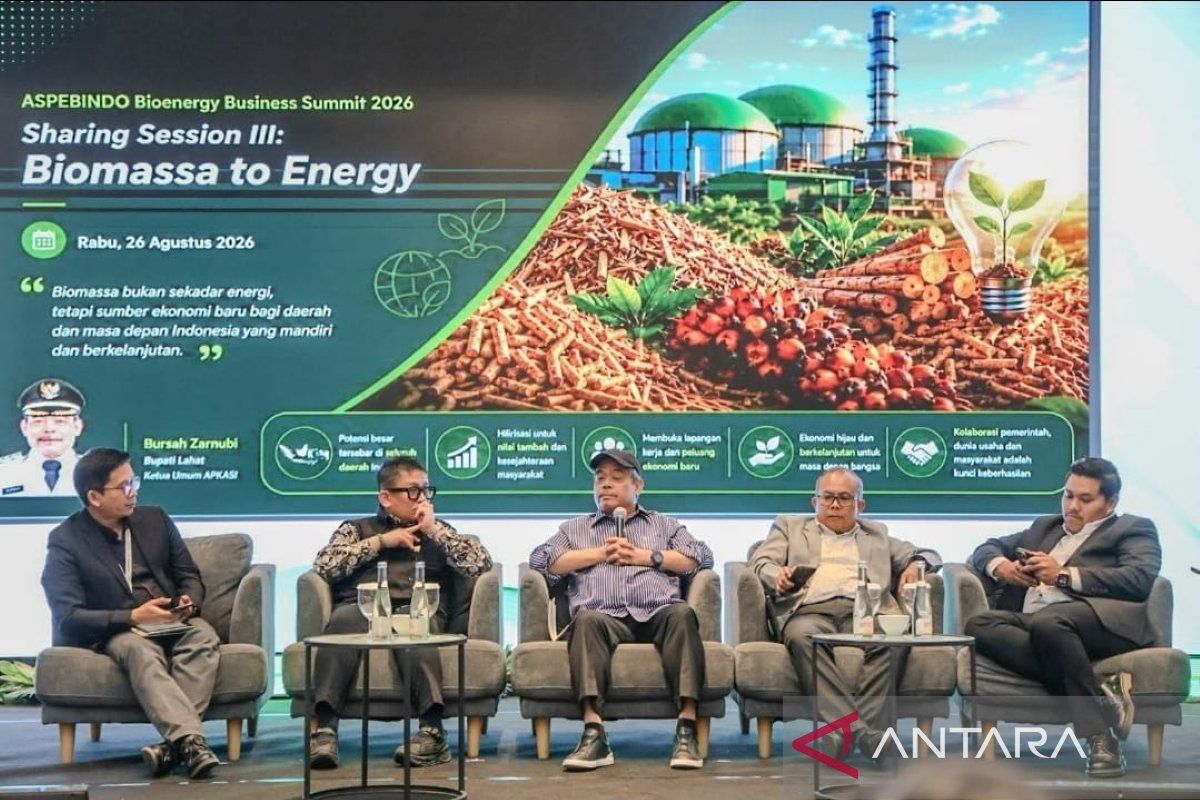
The Association of Indonesian Regency Governments (Apkasi) is preparing a mapping of biomass sources in 416 regencies to build a bioenergy supply chain involving farmers, cooperatives, workers, and local businesses, thereby expanding economic activity in the regions.
Apkasi Chairman Bursah Zarnubi said that bioenergy raw material sources spread across the regions, ranging from oil palm plantations, agriculture, timber, livestock to waste management, can be developed into value-added economic activities if connected to processing industries and investment.
“The development of the bioenergy sector is now a concrete solution to reduce dependence on imported fuel, create local jobs, and encourage downstream processing based on domestic natural resources,” Bursah said at the Aspebindo Bioenergy Business Summit 2026 in Jakarta on Wednesday.
According to him, Apkasi will facilitate the mapping of biomass potential, coordination with regency governments, field surveys, and access for bioenergy investment in the regions.
The mapping is needed to determine the availability and continuity of raw materials that can be developed economically while connecting biomass-producing regions with industry players.
Bursah said bioenergy development needs to be designed so that regions do not merely become suppliers of raw materials. Processing of resources in production areas is necessary so that part of the added value from the industry remains in the regions.
Therefore, farmers, cooperatives, and local businesses need to enter the supply chain, from the provision and collection of raw materials to processing and distribution activities.
“The added value from bioenergy development must be enjoyed by producing regions, including local communities and businesses that are part of the supply chain,” he said.
According to Bursah, this pattern can expand people’s sources of income while creating new business activities in biomass-producing areas.
Industrial development also has the potential to open up labour needs at various points in the business chain, such as raw material collection, processing, transportation, and supporting activities for the bioenergy industry.
He assessed that local economic involvement is increasingly important as the national biodiesel policy develops from B30 and B40 towards B50, which requires support for raw materials and supply chains.
Within this ecosystem, regency governments can play a role in preparing the mapping of raw material sources, labour, supporting infrastructure, and connecting communities and businesses with investors.
Apkasi also considers supply continuity and logistics costs to be important parts in determining the economic feasibility of the biomass industry. Therefore, bioenergy development requires a logistics roadmap and supporting infrastructure connected to raw material centres.
In addition to industrial investment, Bursah said corporate social responsibility programmes can be directed towards increasing the capacity of communities and cooperatives so they are able to take part in the bioenergy supply chain.
The economic potential of carbon is also considered to be developable as part of the bioenergy economic model so that the economic activities formed still pay attention to environmental sustainability.
“The majority of biomass sources are in the regions, and Apkasi is ready to facilitate coordination, field surveys, and the entry of investment if Aspebindo and business players go directly to create new economic growth centres in the regions,” he said.
According to him, the development of this supply chain is in line with the domestic resource downstreaming agenda because biomass available in the regions is directed not to stop as raw material, but to be processed into value-added energy products.
With the involvement of farmers, cooperatives, and local businesses, bioenergy development is expected not only to increase national energy supply but also to expand production activities, employment opportunities, and sources of income for communities in biomass-producing regencies.
Source: jawawa.id (https://jawawa.id/newsitem/apkasi-prepares-biomass-supply-chain-to-involve-local-economy-1787795685)
Originally published by Antara (Indonesian) (https://www.antaranews.com/berita/5712644/apkasi-siapkan-rantai-pasok-biomassa-libatkan-ekonomi-lokal), translated from Indonesian