
APJII Survey: Indonesia’s Internet Penetration in 2026 Reaches 81.7 Percent
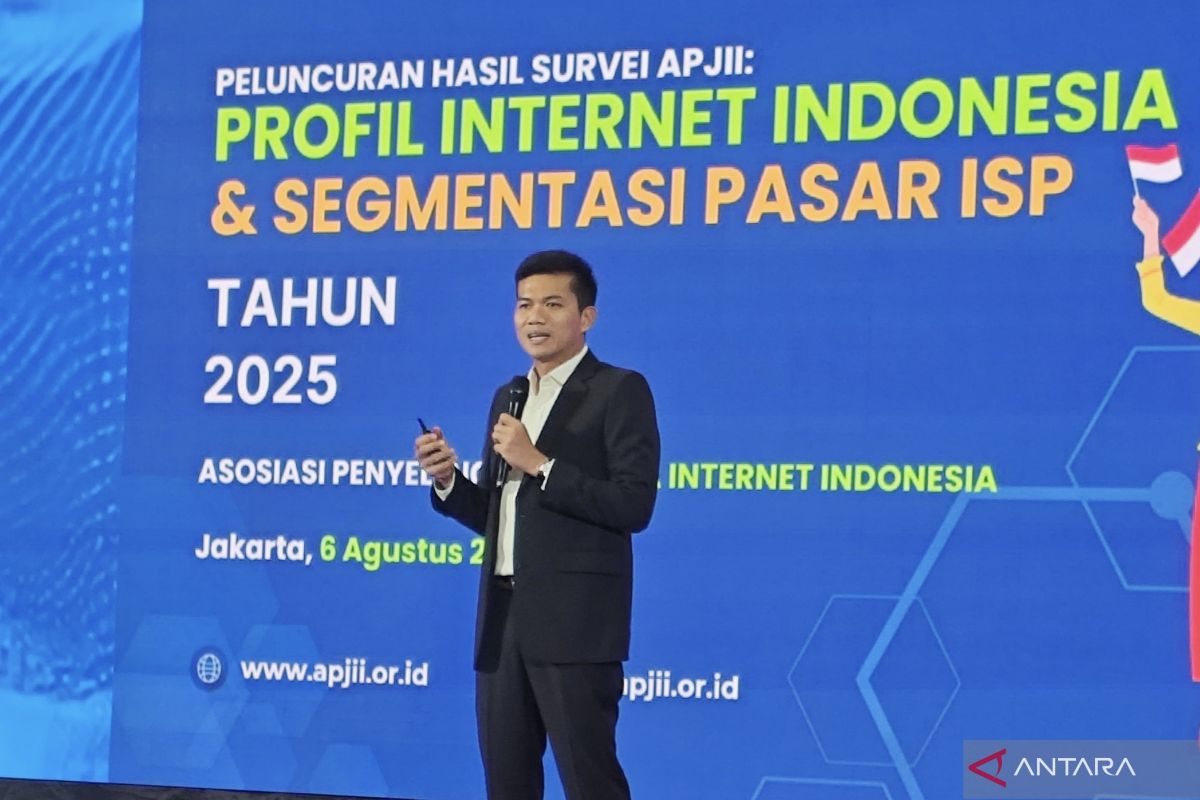
Jakarta — The Indonesia Internet Service Providers Association (APJII) released the results of the Indonesia Internet Profile Survey 2026, which recorded internet penetration nationwide at 81.7 percent, or 235,261,078 people, from a total population of 287,303,234.
The survey provides a comprehensive picture of internet penetration levels, internet user behaviour, patterns of digital access, cybersecurity levels, and the development of fixed broadband services in Indonesia.
“Based on the latest APJII survey, Indonesia currently has around 287 million inhabitants. And for 2026, internet penetration in Indonesia has increased compared with 2025,” said APJII Chairman Muhammad Arif in a statement received in Jakarta on Thursday.
The figure shows an increase from the previous year, which stood at 80.66 percent, and also demonstrates that internet has become a key necessity across various sectors of life.
Arif said the rise in internet penetration indicates the national digital transformation continues to move forward progressively and become more inclusive.
Regionally, Java Island still makes the largest contribution to national internet users, with penetration reaching 85.95 percent and a user contribution of 58.24 percent. Kalimantan recorded penetration of 80.40 percent and user contribution of 6.20 percent; Sumatra 78.24 percent and 20.74 percent; Bali and Nusa Tenggara 78.14 percent and 5.26 percent; Sulawesi 72.58 percent and 6.62 percent; Maluku and Papua 69.74 percent and 2.94 percent.
These data show that internet access equity is continuing to develop, although there remain inter-regional digital gaps that require joint attention.
Demographically, internet penetration among men was 83.95 percent with a contribution of 50.03 percent, while among women it was 79.79 percent with a contribution of 49.97 percent, indicating that the gender gap in internet access is narrowing.
The survey also shows that education level correlates with internet usage. The highest penetration is recorded among higher education institutions at 92.49 percent, followed by senior high school/vocational school students at 90.44 percent, junior high at 82.48 percent, and those with no schooling/primary at 74.84 percent.
Based on generations, internet penetration is highest among Gen Z at 89.02 percent and Millennials at 90.34 percent, indicating the dominance of the younger generation in digital technology use.
In terms of activities, employed people had the largest internet usage, with penetration at 84.9 percent.
Regarding reasons for using the internet, communication and social networking activities were the largest factor at 19.9 percent, followed by digital entertainment such as streaming and gaming at 19.7 percent, information and news searches at 19.6 percent, and e-commerce transactions and digital services at 18.7 percent.
This shows that the internet has become an important part of Indonesians’ social and economic activities.
On the other hand, among those not yet connected to the internet, the main reasons were not owning a device capable of connecting to the internet (34 percent), not knowing how to use digital devices (31.5 percent), and the price of internet quotas still being perceived as expensive (17.2 percent).
Meanwhile, the most common digital security issues experienced in 2026 were online fraud at 13.6 percent and personal data theft/hacking/phishing at 7.8 percent.
In addition, APJII’s 2026 survey also recorded growth in fixed broadband customers. The number of people subscribing to fixed broadband reached 99,515,436, up 3.6 percent from the previous year. The majority of fixed broadband customers use cable/fibre services at 37.9 percent.
APJII notes that the survey results are expected to serve as a strategic reference for the government, internet industry players, academics, and all stakeholders in formulating policies and strategies for developing a more inclusive, safe, and sustainable national digital ecosystem.
“We hope the results of this survey will be useful not only for APJII, but also for APJII members and all Indonesians who need it,” Arif concluded.