
APJATI: Sanctions against migrant worker companies must be developmental
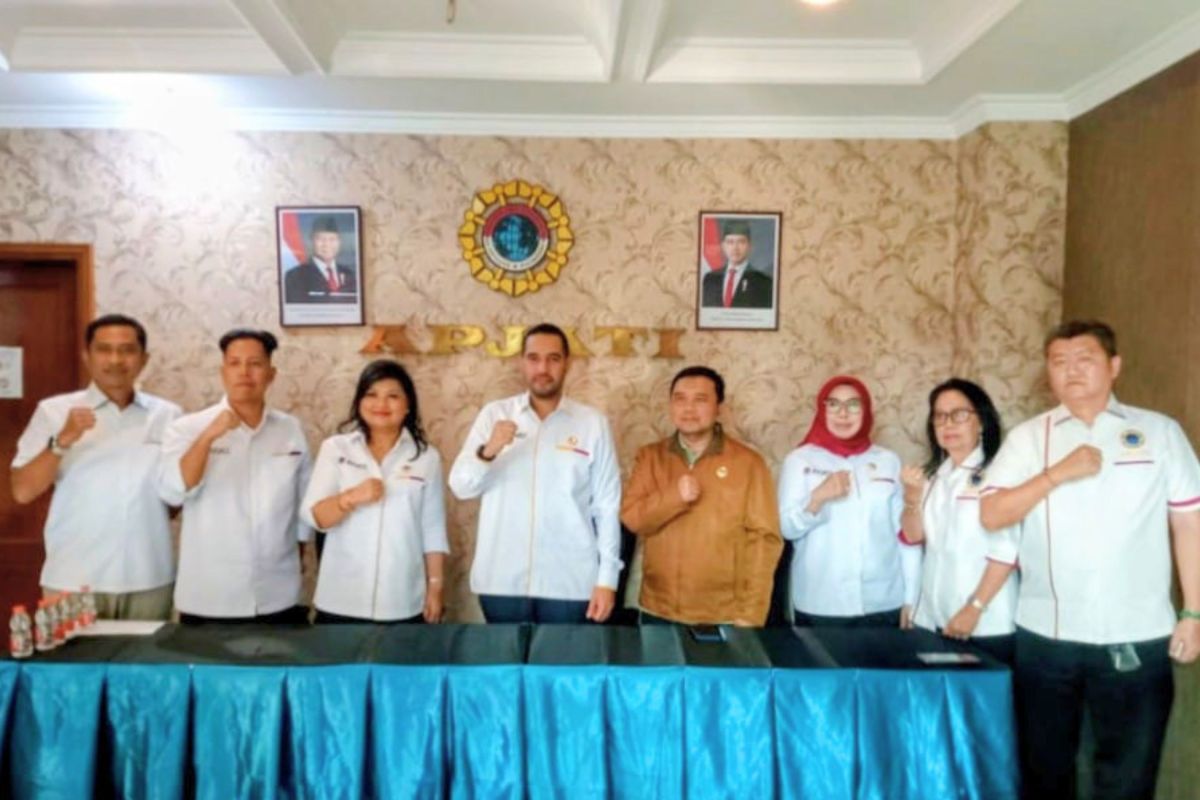
Jakarta (ANTARA) - The Association of Indonesian Manpower Supply Companies (APJATI) has stated that administrative sanctions against Indonesian Migrant Worker Placement Companies (P3MI) must be corrective in nature.
APJATI Executive Board Chairman Said Saleh Alwaini said the association supports law enforcement against any violation, but not humiliating companies through the affixing of stickers or publications that stigmatise them as though they had committed criminal acts.
“A stigmatising approach has the potential to damage reputations, destroy the trust of overseas partners, halt recruitment and, ultimately, close off job opportunities for prospective Indonesian migrant workers,” Said said in a statement received in Jakarta on Wednesday.
He therefore highlighted the plan by the Ministry of Indonesian Migrant Workers (KP2MI) to revoke the licences of 61 P3MI companies that recorded no placements within one year.
APJATI, he said, does not reject enforcement of the rules, but questions the fairness and proportionality of their application.
According to him, most causes of the absence of placements lie beyond companies’ control and originate on the government side, namely the Middle East moratorium that has yet to be lifted, the slow ratification of job orders to Japan, regulatory gaps in several sectors, and a public service system that is not yet optimal.
Consequently, Said argued that imposing licence-revocation sanctions for circumstances caused by government obstacles contradicts the principle of justice.
“As long as those obligations rest on implementing regulations, their application must still be subject to the principles of proportionality and legal certainty,” he said.
Second, every administrative sanction must comply with the general principles of good governance, including prudence, proportionality and the prohibition on abusing authority, as regulated under the State Administration Law.
Third, he said, closing official placement channels has a direct impact on Indonesian migrant workers: when the procedural channel is shut, prospective workers are pushed towards non-procedural channels that strip away protection altogether.
This, he explained, contradicts the spirit of Article 27 paragraph (2) and Article 28D paragraph (2) of the 1945 Constitution, which guarantee every citizen’s right to decent work and fair treatment.
APJATI therefore asked that the plan to close the 61 P3MI companies be reviewed by prioritising guidance, case-by-case verification and a period to remedy the situation (an opportunity to adjust) before the heaviest sanction is imposed.
On the other hand, he noted that to this day KP2MI has no clear national standard operating procedure covering the flow for receiving reports, verification, clarification, investigation, mediation, decision-making, and objection mechanisms.
Reports from the public, he said, must be treated as preliminary information requiring professional verification, not immediately used as the basis to conclude that a P3MI has committed a violation.
“KP2MI’s call centre function also needs to be strengthened as an objective problem-solving channel, not merely an entry point for imposing sanctions,” Said said.
He therefore hopes President Prabowo Subianto will carry out a thorough evaluation of KP2MI’s performance as it approaches two years since its transformation from BP2MI into a full ministry.
APJATI affirmed its position as a partner, not an opponent, and thus fully supports the migrant worker protection agenda, while demanding that policies affecting business continuity and employment be grounded in legal certainty, justice and the general principles of good governance.
Said said KP2MI’s success should not be measured by the number of companies closed, but by faster services, clearer regulations, stronger protection for migrant workers, more procedural placements, and the establishment of a healthy partnership with P3MI companies as the state’s primary partners.
He expressed hope that President Prabowo would give serious attention so that the institutional reform genuinely delivers real change for Indonesian migrant workers.