
APINDO Urges Government and Parliament to Review Labour Bill
The Indonesian Employers Association (APINDO), alongside various sectoral associations, has expressed deep concern regarding the Draft Labour Protection Bill. The business community believes the substance of the Bill risks reverting to the approach used in Law No. 13/2003 without fundamental updates capable of addressing modern economic challenges, the green transition, and global competition.
Adopting regulations from 23 years ago is considered irrelevant amidst current labour market dynamics. Indonesia is currently facing an influx of 3 to 4 million new members of the workforce annually, a youth unemployment rate of 17%, a dominant informal sector, and rising rates of layoffs. Simultaneously, the business world is facing pressures from weakening purchasing power, rising energy costs, and geopolitical uncertainty.
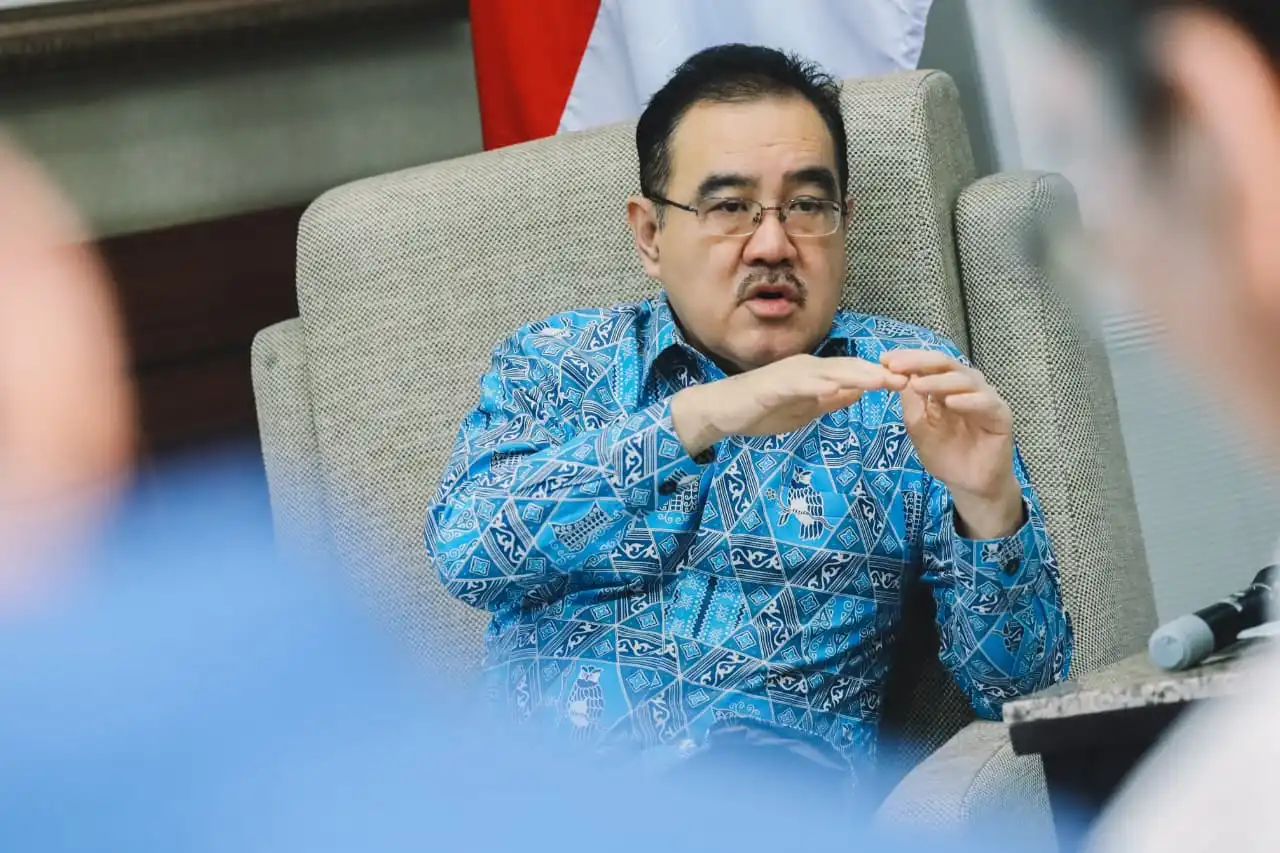
The Chairman of APINDO East Java, Eddy Widjan and Widjanarko, urged that the drafting of regulations involve all stakeholders comprehensively, rather than merely responding to momentary pressures.
“This law should not only accommodate labour demands during protests but also consider the voices of job seekers and the difficulties faced by the business world, so that it can expand productive employment while ensuring worker protection is implemented,” said Eddy.
In the context of labour absorption, data from the Ministry of Investment and Downstreaming/BKPM for the first half of 2026 recorded investment realisation of Rp1,010.6 trillion, which absorbed 1,448,862 Indonesian workers (approximately Rp697.5 million of investment per worker). APINDO maintains that a healthy investment climate is the primary key to ensuring the continued absorption of formal labour.
The General Chairwoman of APINDO, Shinta W. Kamdani, emphasised that worker protection, the expansion of job opportunities, and business sustainability must be treated as a mutually supporting agenda.
“Workers need certainty regarding rights and decent income. Job seekers need opportunities. To meet both, companies must be able to survive, invest, and recruit. If regulations instead narrow that capability, workers and their families will bear the consequences,” Shinta asserted.
Shinta added that failing to design flexible and adaptive policies risks prolonging the vicious cycle of unemployment and intergenerational poverty.
To address these challenges, APINDO proposes the implementation of the ‘flexicurity’ principle—a balance between worker protection, flexibility in employment relationships, and business certainty. APINDO also proposed that labour reform should focus on creating 2 million new formal jobs per year and increasing the proportion of competency-certified workers to 30% by 2030.
APINDO’s Head of Labour, Bob Azam, emphasised the importance of shifting the regulatory focus from merely regulating employment to creating employment.
“As markets shift and technology evolves, companies must be able to adapt. At the same time, protection must be real: wages must be paid, social security must be available, post-layoff rights must be honoured, and workers must be assisted in returning to work through competency training,” Bob explained.
The business community is urging the Government and Parliament to postpone the ratification of the Labour Protection Bill until a cumulative impact assessment and substantive tripartite dialogue are conducted.
“The success of a law should be measured by fulfilled worker rights, increased formal employment, sustainable businesses, and rising welfare. Improve its substance before it is passed,” Shinta concluded.