
Apindo Pushes for Central Java to Become a Global Investment and Manufacturing Hub
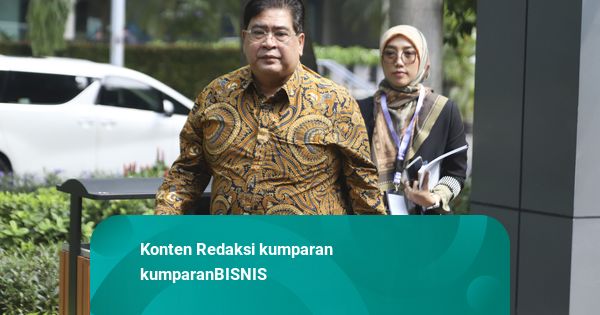
The Indonesian Employers’ Association (Apindo) is pushing for Central Java to become a world-class hub for investment, manufacturing, logistics, and supply chains capable of competing with regional investment centres, including Vietnam.
Apindo’s Head of Employment, Bob Azam, stated that Central Java has a significant opportunity to become the most competitive region in attracting new investment. According to him, several indicators show Central Java’s competitiveness is strengthening, including high economic growth in several industrial areas and a level of investment efficiency that is better than the national average.
“Accelerating the development of logistics infrastructure, strengthening ports, developing dry ports in Batang and Kendal, and integrating industrial estates with national and global supply chain networks are priority agendas that must be realised immediately so that Central Java can become an international-scale investment and logistics centre,” Bob said in a written statement on Friday (19/6).
Bob also presented study results indicating that Central Java possesses strong strategic assets, ranging from its geographical position at the heart of Java Island, the availability of a competitive and abundant workforce, continuously developing industrial estates, a conducive investment climate, to increasingly better infrastructure and connectivity support.
Amid a wave of global industrial relocation triggered by China’s strategy and rising production costs in several investment destination countries, Central Java is considered to be in a highly strategic position to capture new investment flows and become a driver of national economic growth.
Apindo’s Expert Council member, Anton J. Supit, added that the momentum for accelerating investment needs to be supported by strengthening global market access, including through the completion and implementation of the Indonesia-European Union Comprehensive Economic Partnership Agreement (IEU-CEPA), which has the potential to increase Indonesia’s attractiveness as an investment destination and export base.
Anton also proposed the formation of a small team involving the Central Java Provincial Government, the Ministry of National Development Planning (Bappenas), and Apindo to oversee strategic agendas requiring central government support, particularly regarding port development, logistics, industrial estate connectivity, and the acceleration of priority investments.
“Central Java has all the prerequisites to become a national pilot project in accelerating manufacturing investment. With consistent policy support, integrated logistics improvements, strengthened industrial supply chains, and close collaboration between the government and the business community, Central Java has the opportunity to become the most competitive investment centre in Indonesia as well as an example of successful regional economic transformation capable of attracting global investment,” he explained.
Meanwhile, Central Java Governor Ahmad Luthfi explained that Central Java serves as a new economic growth centre, connecting industrial strengths across Java Island. According to him, Central Java also has advantages in the form of a safe and conducive social environment, competitive labour costs, support from vocational high schools (SMK), vocational training, and job training centres (BLK) that are increasingly connected to industry needs, as well as the regional government’s commitment to overseeing regulations, infrastructure, and ease of doing business.
“Regarding logistics, port revitalisation has been proposed to the central government, and the development of the Batang Dry Port has received approval as part of strengthening the investment ecosystem in Central Java,” he added.