
Apindo proposes five tax principles to boost state revenue
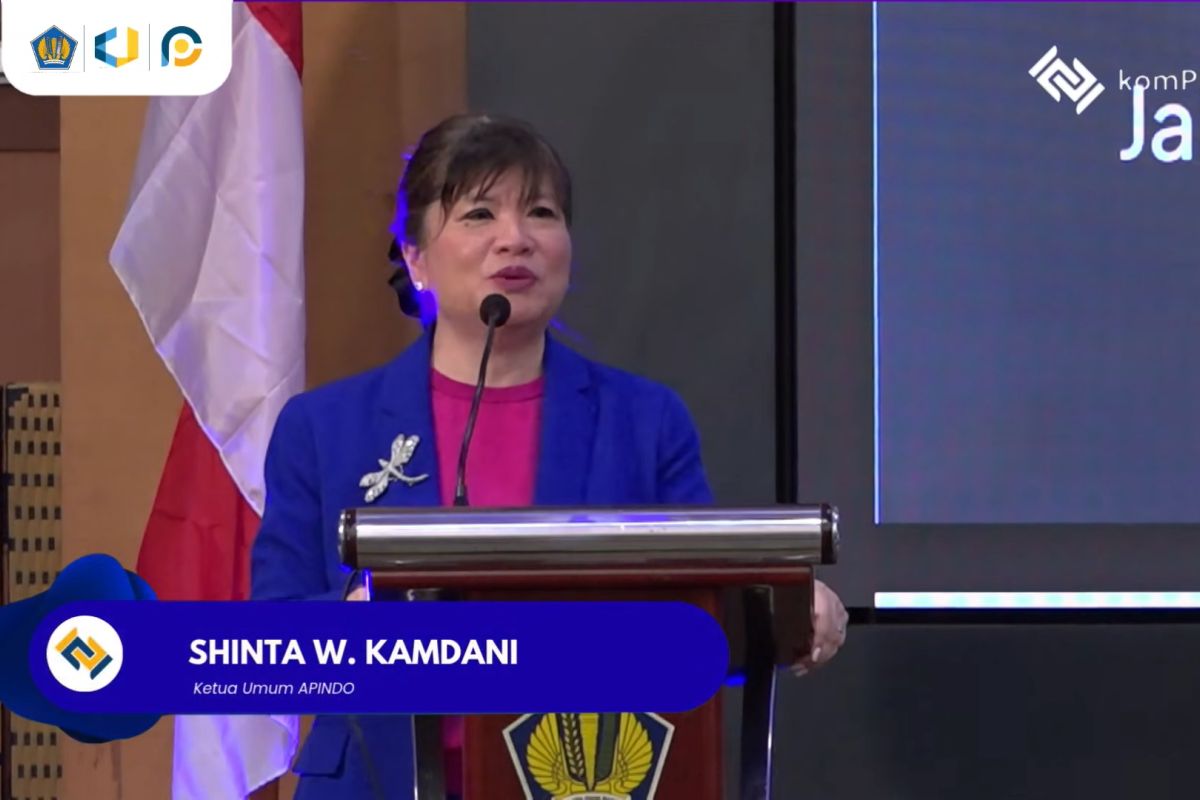
Jakarta (ANTARA) - Chair of the Indonesian Employers Association (Apindo), Shinta Kamdani, has proposed five principles for tax policy to drive an increase in state revenue through bolstering the business world.
Shinta referred to the concept as the “5C framework for growth-oriented taxation”, which underscores the importance of tax policies aligned with economic growth and investment.
“Tax policy needs to adopt principles that align with economic growth and investment. So I call it the 5Cs,” Shinta stated during a discussion event at the Tax Training Centre in Jakarta on Wednesday.
The first principle is clarity in policy design. According to Shinta, tax policies must be designed clearly, transparently, and easily understood to help business actors plan business strategies and investments without uncertainty.
Second is consistency in implementation. She emphasised that the implementation of tax policies must be consistent across all regions and sectors so that the business world can predict the long-term impact of taxes, while also strengthening investor confidence and creating a stable business climate.
Third is compliance fairness. Shinta views that tax regulations must be applied fairly and proportionately, taking into account the capacity and characteristics of taxpayers.
“So regulations that can account for the capacity and characteristics of taxpayers and are non-discriminatory,” she said.
Fourth is coverage extension. She asserted that the government needs to prioritise tax extensification, not just intensification, especially by encouraging informal business actors to enter the formal sector. This step is seen as able to increase fiscal inclusion, expand the tax base, and support contributions from young workers and developing businesses.
Fifth is competitiveness driven. Tax policies, she said, must be able to drive industrial competitiveness and investment through competitive rates, incentives, and procedural ease.
Furthermore, she added that the government needs to understand these five principles because increasing state revenue heavily depends on the condition of the business world and a healthy economy.
On the other hand, business sustainability also depends on prudent fiscal conditions, so a balance is needed between fiscal policies and support for the business sector.
“In the end, efforts to improve Indonesia’s fiscal condition and business sustainability go hand in hand, and when the business world is strong, state revenue can grow, and when state revenue is healthy, the business climate will also be more stable,” Shinta explained.